

Special Reports are longer, often more technical, documents consisting of entire articles, government statements, and other documents relevant to security and peace in Northeast Asia.
NAPSNet, Special Reports
An Initial Exploration of the Potential for Deep Borehole Disposal of Nuclear Wastes in South Korea
Jungmin Kang, an Associate of the Nautilus Institute-ARI in Seoul and Visiting Scholar at John Hopkins University School of Advanced International Studies, writes, “Considering its potential safety superiority compared with normal geologic disposal, deep borehole disposal could be an alternative, which could be more acceptable to local communities, for the eventual disposal of spent fuel and/or HLW in South Korea.”
Go to the articleDeep Borehole Disposal of Nuclear Spent Fuel and High Level Waste as a Focus of Regional East Asia Nuclear Fuel Cycle Cooperation
Peter Hayes, Executive Director of the Nautilus Institute, and David von Hippel, Nautilus Institute Senior Associate, explore the feasibility of deep borehole nuclear waste storage in East Asia. The report presents summaries of the current concept of deep borehole disposal of nuclear wastes, key unknowns and uncertainties about deep borehole-related technologies as they apply to nuclear spent fuel disposal, the status of deep borehole research both internationally and in the countries of the region, and–finally–next steps in the exploration of the applicability of the deep borehole concept to cooperative nuclear waste management solutions in East Asia.
Go to the articleA Return Trip to North Korea’s Yongbyon Nuclear Complex
Siegfried S. Hecker, Co-Director of the Center for International Security and Cooperation (CISAC) and Professor of Management Science and Engineering at Stanford University, writes “It is clear that waiting patiently for Pyongyang to return to the Six-Party talks on terms acceptable to the United States and its allies will exacerbate the problem. A military attack is out of the question. Tightening sanctions further is likewise a dead end, particularly given the advances made in their nuclear program and the economic improvements we saw in general in Pyongyang. The only hope appears to be engagement. The United States and its partners should respond to the latest nuclear developments so as to encourage Pyongyang to finally pursue nuclear electricity in lieu of the bomb. That will require addressing North Korea’s underlying insecurity. A high-level North Korean government official told us that the October 2000 Joint Communiqué, which brought Secretary Madeleine Albright to Pyongyang, is a good place to start.”
Go to the articleImplementation of U.N. Security Council Resolution 1874
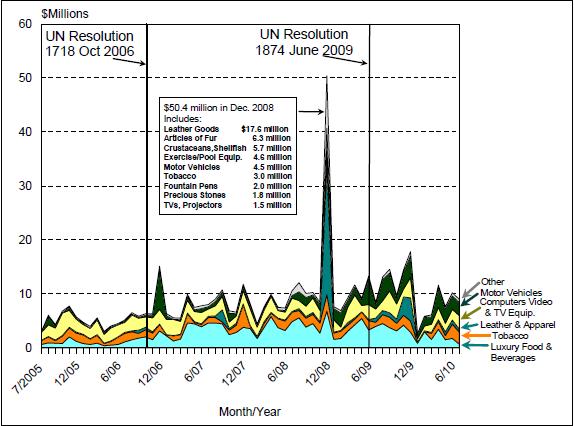
The Congressional Research Service writes, “While a full U.S. trade embargo on North Korea is not in place, the United States nevertheless has very limited trade with the country. Therefore, one option for focusing U.S. policy is to influence, or at least closely monitor, other states’ national measures to implement the sanctions under UNSCR 1874. This could be accomplished by focusing attention on North Korea’s main intermediaries, including China, as well as transshipment countries such as Singapore, Malaysia and the United Arab Emirates”.
Go to the articleChanging Dynamics of U.S. Extended Nuclear Deterrence on the Korean Peninsula
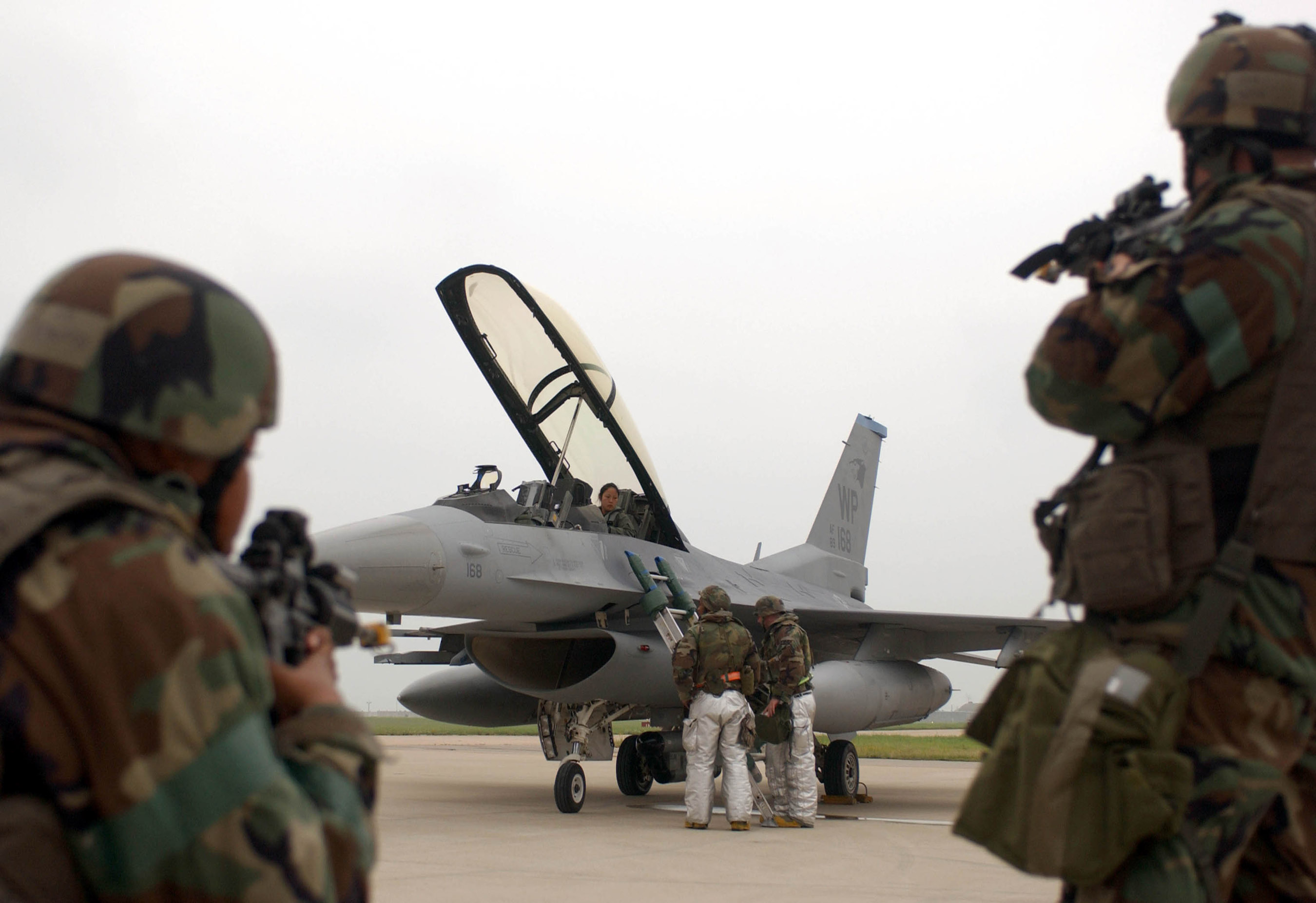
Cheon Seongwhun writes, “…some safeguard measures are necessary to supplement the diminishing American nuclear umbrella on the Korean peninsula. Noting that the uniqueness of the threat to South Korea makes it a suitable place to actively apply the new concept of the regionally tailored deterrence architecture, this paper proposes to implement a dual-track approach of negotiation of the North Korean nuclear crisis in tandem with preparation for the redeployment of U.S. tactical nuclear weapons in the ROK. If the negotiation track fails to resolve the crisis, then United States should redeploy a few dozen tactical nuclear weapons in South Korea and offer to hold mutual nuclear disarmament talks with North Korea to barter the withdrawal of U.S. tactical nuclear weapons for the elimination of North Korean nuclear weapons.”
Go to the articleNorth Korea: Migration Patterns and Prospects
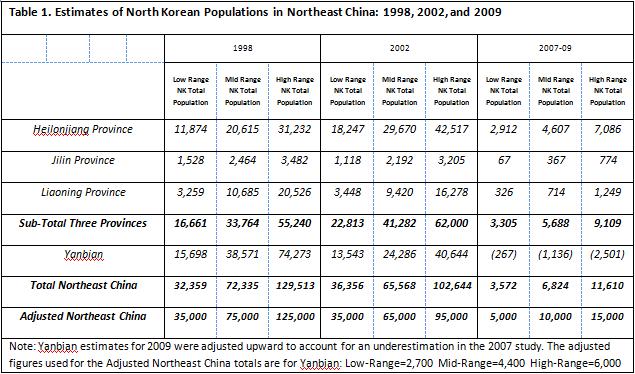
Courtland Robinson, Assistant Professor at the Center for Refugee and Disaster Response at the John Hopkins Bloomberg School of Public Health, writes “It is my view that migration, in and of itself, is not likely to bring about regime collapse or change, but it can serve either as a catalyst to unification or as a hindrance, depending on how it is “managed.” I put that word in quotes because much that passes for migration management is more a matter of mismanagement, further reinforcing the view that migration will seek its own terms despite (and often in reaction to) the policies and programs that seek to regulate it.”
Go to the articleThe Korean Peninsula: Challenges and Opportunities for Russia
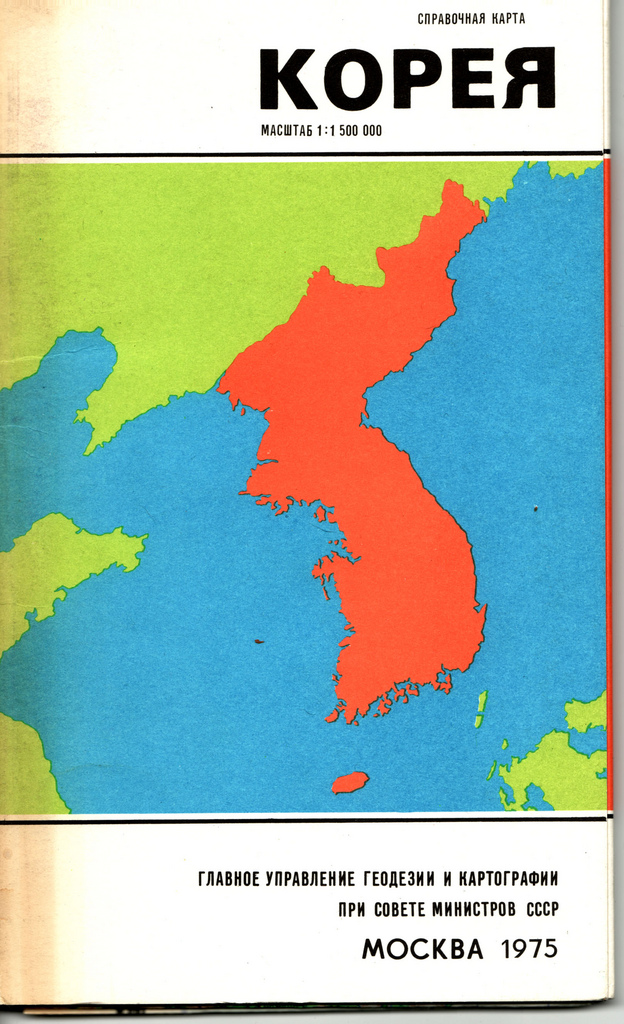
The Russian National Committee writes, “From the conceptual point of view, for Russia the most desired outcome is national reconciliation and the peaceful coexistence of the two Korean states on the path to an eventual unification of Korea over a long period of time. The appearance in the long-perspective of a unified Korea that seeks to maintain friendly, neighborly and cooperative relations with Russia does not contradict Russia’s core interests (in particular in comparison to other neighboring countries). At the same time, the prospects for a united Korea in the foreseeable future are quite low. However, it would be prudent to hedge our risks, as we cannot completely rule out the possibility of a sudden crisis that could lead to a rushed unification. The uncontrollable escalation of the Korean conflict remains a possibility, and the task of Russian policy is to not allow the “explosive” scenario to unfold and to explain that the most advantageous scenario is gradual convergence, which at the appropriate time would put voluntary rapprochement of state mechanisms on the agenda.”
Go to the articleImplementing a Japanese-Korean Nuclear Weapon Free Zone: Precedents, Legal Forms, Governance, Scope and Domain, Verification and Compliance, and Regional Benefits
Michael Hamel-Green, Dean of and Professor in the Faculty of Arts, Education and Human Development, Victoria University, writes, “The time is now ripe for the leaderships in Korea and Japan to show the same kind of vision that Brazilian and Argentina leaders showed in the early 1990s in averting a nuclear arms race that would have undermined their economic development at the same time as risking future nuclear conflict… we now have a new window of opportunity for denuclearization of Northeast Asia despite the current crisis in relations between the two Koreas.”
Go to the articlePolitical Prospects for a NWFZ in Northeast Asia
Leon V. Sigal, Director, Northeast Asia Cooperative Security Project at the Social Science Research Council, writes, “While broaching the subject of a NWFZ runs political risks, conventional deterrence continues to operate on the Korean Peninsula. The South has long had conventional forces capable of defeating the North, with or without U.S. troops, and the North has long held Seoul hostage to its forward-deployed artillery. The North’s nuclear weapons affect the balance of power on the Korean Peninsula insofar as they could put U.S. forces and bases in Japan at risk.”
Go to the articleKorea-Japan Nuclear Weapon Free Zone (KJNWFZ) Concept Paper
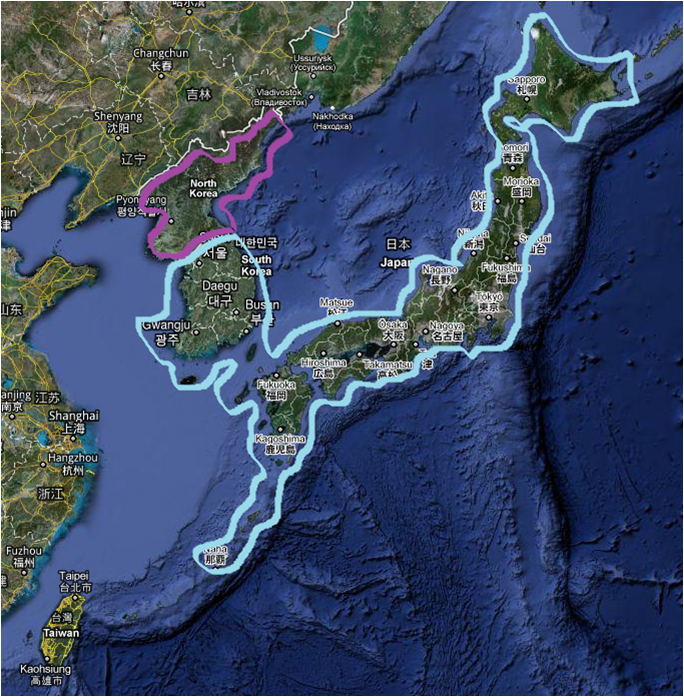
A Korea-Japan Nuclear Weapon Free Zone (hereafter KJNWFZ) is a new concept. Once realized, it could help resolve a number of linked and intractable security issues in Northeast Asia at the same time. This includes the need to respond to North Korea’s nuclear breakout without undermining the Global Abolition policy announced by President Obama; the need for Japan and Korea to deepen their non-nuclear commitments to more deeply ingrained “forever” status without hedging; and the need for Japan-Korean cooperation to lay the foundations for a comprehensive security mechanism and long-term regional security institution, including through cooperative nuclear fuel cycle and space development activities.
A version of this concept paper is also available in Korean and Japanese.
Go to the article