

Special Reports are longer, often more technical, documents consisting of entire articles, government statements, and other documents relevant to security and peace in Northeast Asia.
NAPSNet, Special Reports
ESTIMATE OF OIL STORAGE CAPACITY IN THE DEMOCRATIC PEOPLE’S REPUBLIC OF KOREA
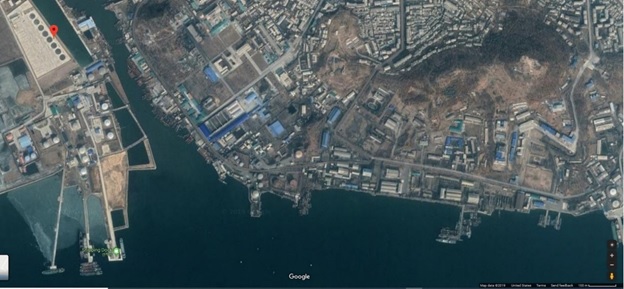
DAVID VON HIPPEL, PETER HAYES, AND LIAM TASA AUGUST 25, 2020 I. INTRODUCTION In this Special Report, David von Hippel, Peter Hayes, and Liam Tasa describe an estimate of oil storage volumes in the Democratic People’s Republic of Korea. DPRK oil storage volumes are of interest to the international community for a number of […]
Go to the articleSECURITY THROUGH SIMPLICITY PODCAST

ERIC GROSSE JULY 7 2020 I. INTRODUCTION In the podcast “Security Through Simplicity,” Eric Grosse, former Vice President of Security and Privacy Engineering at Google, explains the technical cryptographic choices for CATALINK “a system strong enough to resist well-resourced adversaries, yet simple enough to be reviewed and adopted by skeptical international competitors.” This podcast […]
Go to the articleTHE AES PROJECT: ANY LESSONS FOR NC3?

THOMAS A. BERSON JUNE 23, 2020 I. INTRODUCTION In this report, Tom Berson details how lessons from the Advanced Encryption Standard Competition can aid the development of international NC3 components and even be mirrored in the creation of a CATALINK community. Tom Berson is a cryptologist and founder of Anagram Laboratories. Contact: berson@anagram.com This paper […]
Go to the articleHARDWARE THAT IS LESS UNTRUSTED: OPEN-SOURCE DOWN TO THE SILICON

RON MINNICH JUNE 9, 2020 I. INTRODUCTION In this essay, Ron Minnich argues: “We cannot build on a foundation that is compromised at all levels. There is no visibility into the system’s behavior. The existing model assumes perfect software: ‘Trust, but don’t verify.’ We need to start anew, from the gates, and work our […]
Go to the articleCOMMUNICATION DISRUPTION ATTACKS ON NC3

PAUL BRACKEN MAY 28, 2020 I. INTRODUCTION In this essay, Paul Bracken argues “in a nuclear world we should be careful about attacking enemy communications because doing so leads to greater risks of uncontrolled escalation. The worst possible situation is the one the United States is now in, that is, to not be […]
Go to the articleLAST CHANCE: COMMUNICATING AT THE NUCLEAR BRINK, SCENARIOS AND SOLUTIONS WORKSHOP, SYNTHESIS REPORT
NAUTILUS INSTITUTE, STANLEY CENTER FOR PEACE AND SECURITY, AND TECHNOLOGY FOR GLOBAL SECURITY MAY 23 2020 I. INTRODUCTION In this study, the authors describe CATALINK, a novel “hotline” system, to enable secure and verifiable communications between leaders during nuclear crises and other high-stakes scenarios. This unique, resilient system is designed for “radical simplicity” from […]
Go to the articleSTATUS OF CHINA’S ENERGY SECTOR, RECENT TRENDS, AND CURRENT AND EVOLVING ENERGY POLICIES: REPORT OF THE CHINA WORKING GROUP TO THE REGIONAL ENERGY SECURITY PROJECT
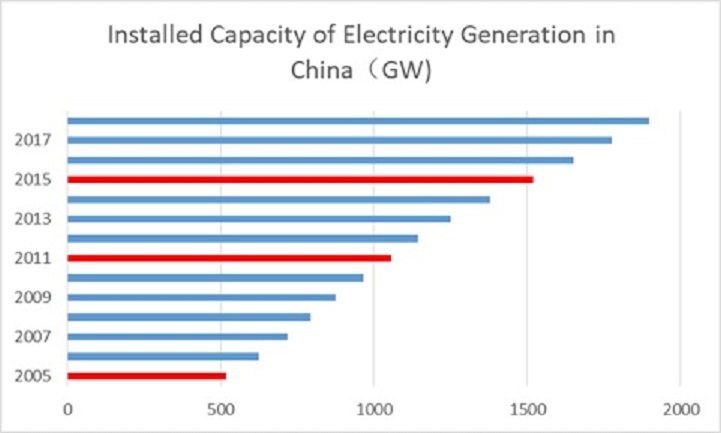
WANG YANJIA, GU ALUN NOVEMBER 24, 2019 I. INTRODUCTION In this Special Report, Wang Yanjia and Gu Alun summarize the status of China’s energy sector and recent trends, and describe projections of China’s energy future in the context of its energy policies. China’s energy imports have been rising in recent years, and environmental, energy […]
Go to the articleFOR BETTER OR FOR WORSE: THE FUTURE OF C3I ENTANGLEMENT
JAMES M. ACTON NOVEMBER 21, 2019 I. INTRODUCTION In this essay, James Acton evaluates the risk of inadvertent escalation arising from attacks on dual-use (nuclear and conventional warfare) command, control, communication, and intelligence (C3I) capabilities in a conventional war because such attacks would degrade the target’s nuclear command-and-control system. James Acton is co-director of […]
Go to the articleNC3 INSIDER THREATS

RON SCHOUTEN NOVEMBER 14, 2019 I. INTRODUCTION In this essay, Ron Schouten examines fundamental concepts of insider threats and provides an overview of the extent and significance of insider threats in US and other NC3 systems. A podcast with Ron Schouten, Peter Hayes, and Philip Reiner on China’s NC3 and emerging technologies is found here. Acknowledgments: […]
Go to the articleCOUNTER NUCLEAR COMMAND, CONTROL, AND COMMUNICATIONS

CAROL ANN JONES OCTOBER 31, 2019 I. INTRODUCTION In this essay, Carol Ann Jones concludes: “Denying a country use of their nuclear combat forces could be the key to avoiding or limiting damage from a pending strike, but it could trigger unexpected actions from that country’s nuclear forces (assuming the weapons and launch capability were […]
Go to the article