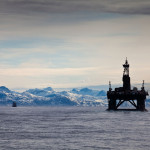
Against the background of a growing demand for energy worldwide, many claim that the hydrocarbon resources of the Arctic region have become an important variable for future energy security. Multiple factors seem to render Arctic energy resources attractive: the expected persistence of fossil fuels (especially oil and gas) in the global energy mix, instability in oil-supplying countries in the Middle East, and the unclear future of nuclear energy after the Fukushima disaster. Nonetheless, the complexity of resource exploitation in such a remote region as the Arctic, as well as the potential for environmental disasters, raises significant questions about such a proposition. Rather, how promising Arctic resources really are for future energy security concerns is an empirical question requiring careful evaluation. How many resources are actually in the Arctic relative to resources farther south? What are the conditions under which they could be viably and commercially exploited? What interest do the states possessing Arctic hydrocarbons, i.e. the five Arctic littoral states US, Canada, Russia, Norway and Denmark/Greenland, have in exploring and exploiting their Arctic resources? Only after answering these questions is it possible to come to tangible conclusions about the role of Arctic oil and gas for future energy security concerns.
Kathrin Keil is currently a PhD Candidate at the Berlin Graduate School for Transnational Studies(BTS) at the Freie Universität Berlin. She is writing her dissertation on the international politics of the Arctic, with a focus on international regimes and institutions in the areas of energy, shipping and fishing.