

Author Archives: Nautilus Institute
Assessment of Energy Policy Options for the DPRK Using a Comprehensive Energy Security Framework
The term “energy security” has typically meant little more than securing access to sufficient quantities of fossil fuels at reasonable prices. A broader concept of energy security is needed to adequately consider the full costs and benefits of potential energy policies designed to cope with not only fuel sufficiency and price, but also complex challenges ranging from climate change, to local energy-related pollution, to the social, political, and radiological fallout of the Fukushima nuclear power plant accident in 2011, to cite just a few examples. This paper updates the authors’ concept of a comprehensive energy security assessment framework that includes not only energy supply and economic considerations, but also technological, environmental, social/political/cultural, and international/military security dimensions of energy security. We apply this concept to an assessment of selected energy sector redevelopment “paths”—essentially, quantitative descriptions of energy futures—for North Korea, comparing the relative quantitative and qualitative costs and benefits from each of these energy security dimensions from both the perspective of the DPRK and from the perspective of the broader Northeast Asia (and interested parties) region. We conclude with an exploration of the energy policies that our energy security assessment identifies as “robust”, that is, useful across the full range of energy security dimensions.
David F. von Hippel is a Nautilus Institute Senior Associate. His work with Nautilus has centered on energy and environmental issues in Asia, with a particular emphasis on Northeast Asia and North Korea. Peter Hayes is Executive Director of the Nautilus Institute and a Professor of International Relations at RMIT University.
The North Korean nuclear issue and Chinese policy
Zhang Tuosheng, a Chinese strategist, argues that China’s policy toward North Korea must change with the times…
Nautilus Peace and Security Weekly – 23 January 2014
North Korea: Leadership Schisms and Consolidation During Kim Jong Un’s Second Year in Power, 38 North, Alexandre Mansourov
The year 2013 will be recorded in North Korea’s political history as the year of “anti-party and counter-revolutionary crimes and capital punishment,” most notably marked by Kim Jong Un’s acknowledgment that his own relatives refused to accept his absolute rule and his triumph over the family traitors, and the Icarus-like rise too close to the sun and the downfall of “grey cardinal” Jang Song Thaek.
ADIZ: a four letter word
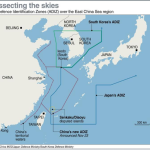
Roger Cavazos asserts that spring on the Korean peninsula is often associated with provocations. This spring …
North Korea: a breakout moment for Kim Jong-un?, The Christian Science Monitor, Robert Marquand
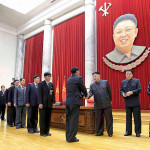
In the standard composite of Kim, he is said to like video games, has grown up shy and pampered, and went through a wild and impulsive period. “He’s a modern kid. He’s probably on Twitter. His dad stayed at home, but Kim Jong-un gets out,” says Peter Hayes, director of the Nautilus Institute in Berkeley, Calif.
Even military dictators dialogued with North Korea
In Paik Haksoon’s inaugural NAPSNet Special Report and Nautilus’ first Korean-language Special Report, Dr Paik…
Nautilus Peace and Security Weekly – 16 January 2014
Nautilus Peace and Security Weekly – 9 January 2014
- DETERRENCE: Report of investigation (S8011P)
- DPRK: Kim Jong-un’s “Fresh Leap Forward” 2014 New Year speech
- ENERGY SECURITY: Freeze drives up US gas and power prices
- GOVERNANCE AND CIVIL SOCIETY: Park advised to ease sanctions, engage North
- CLIMATE CHANGE ADAPTATION: Global risks 2013: insight report