Daily Report Archives
Established in December 1993, the Nautilus Institute’s *N*ortheast *A*sia *P*eace and *S*ecurity *N*etwork (NAPSNet) Daily Report served thousands of readers in more than forty countries, including policy makers, diplomats, aid organizations, scholars, donors, activists, students, and journalists.
The NAPSNet Daily Report aimed to serve a community of practitioners engaged in solving the complex security and sustainability issues in the region, especially those posed by the DPRK’s nuclear weapons program and the threat of nuclear war in the region. It was distributed by email rom 1993-1997, and went on-line in December 1997, which is when the archive on this site begins. The format at that time can be seen here.
However, for multiple reasons—the rise of instantaneous news services, the evolution of the North Korea and nuclear issues, the increasing demand for specialized and synthetic analysis of these and related issues, and the decline in donor support for NAPSNet—the Institute stopped producing the Daily Report news summary service as of December 17, 2010.
Saleem Janjua argues that despite the substantial indecisiveness over climatic projections and their impacts, we should start adapting to the present day on the basis of recent changes in the climate. By adapting to present conditions and understanding them we may be able to offset future climate change impacts. Various bottom-up approaches (vulnerability assessment, risk assessment, resilience) could be very helpful in understanding the vulnerability of a country to current climate change and the rationales of adaptation in the local context.
Saleem Janjua is the editor of AdaptNet and a Nautilus Institute Associate.
Go to the article

DETERRENCE: Extended Deterrence, Assurance, and Reassurance in the Pacific during the Second Nuclear Age DPRK: NDC of DPRK Clarifies Principled Stand on DPRK-U.S. Relations ENERGY SECURITY: Climate Science: Rising Tide GOVERNANCE AND CIVIL SOCIETY: Putting North Korea Aid Efforts On The Map CLIMATE CHANGE ADAPTATION: Loss And Damage: A Range Of Approaches To Address Loss And Damage From Climate Change […]
Go to the article
DETERRENCE: Scary Default Scenarios Based on Faulty Treasury Department Release DPRK: North Korea threatens preemptive attack on U.S., South Korea ENERGY SECURITY: IPCC Issues Stark Warning Over Global Warming: Call to ‘Stop Dithering About Fossil Fuel Cuts’ as Expert Panel Warns Entire Globe is Affected GOVERNANCE AND CIVIL SOCIETY: State Clumsy in Managing Conflicts CLIMATE CHANGE ADAPTATION: Understanding the Adaptive […]
Go to the article
In this essay, Nikhil Desai explains the fears of anti-nuclear activists in India regarding its government’s alleged violation or weakening of the Indian law on civil nuclear liability as part of the Prime Minister’s visit to Washington, DC the weekend of 27th September 2013. He argues that the government’s opponents refuse to accept the reality of nuclear trade and operations, and should be more concerned about the institutional competence of India to manage the nuclear enterprises, civil or otherwise.
Nikhil Desai is an energy and environmental economist now dividing his time between Washington, DC and Ahmedabad, India. He is a Nautilus Institute Associate and a contributor to Nautilus’ Weekly Report.
Go to the article
DETERRENCE: Park Pledges Strong Defense To Render N. Korean Nukes Useless DPRK: Intergovernmental Consultative Committee Meeting Between Mongolia And North Korea ENERGY SECURITY: UN Climate Panel Stresses Solidity of New Report on Global Warming GOVERNANCE AND CIVIL SOCIETY: Popular Ex-PM Koizumi Comes Out Against Nuclear Power CLIMATE CHANGE ADAPTATION: Climate Change Adaptation in the Boardroom AUSTRAL PEACE AND SECURITY: ALP Nuclear […]
Go to the article
Saleem Janjua stresses the need for creation of some innovative climate adaptation networks amongst South Asian countries working on climate adaptation. Practitioners, researchers, and policy-makers from across the South Asian region will be able to collaboratively use such networks to share evidence-based understandings from which they can design solutions to the many problems that will face people and places in coping with climate change.
Saleem Janjua is a Nautilus Institute Associate, the editor of the Climate Change Adaptation bi-weekly report (ADAPTNet) and a contributor to Nautilus’ Weekly Report.
Go to the article
DETERRENCE: Preparing for the Possibility of a North Korean Collapse DPRK: China Bans Certain North Korean Exports for Fear of Weapons Use ENERGY SECURITY: IPCC Head Warns on Himalayan Melting Glaciers GOVERNANCE AND CIVIL SOCIETY: With Reunion Cancellation, Seoul Rejects Tourism Talks CLIMATE CHANGE ADAPTATION: Public Risks and the Challenges to Climate-Change Adaptation: A Proposed Framework For Planning in the […]
Go to the article
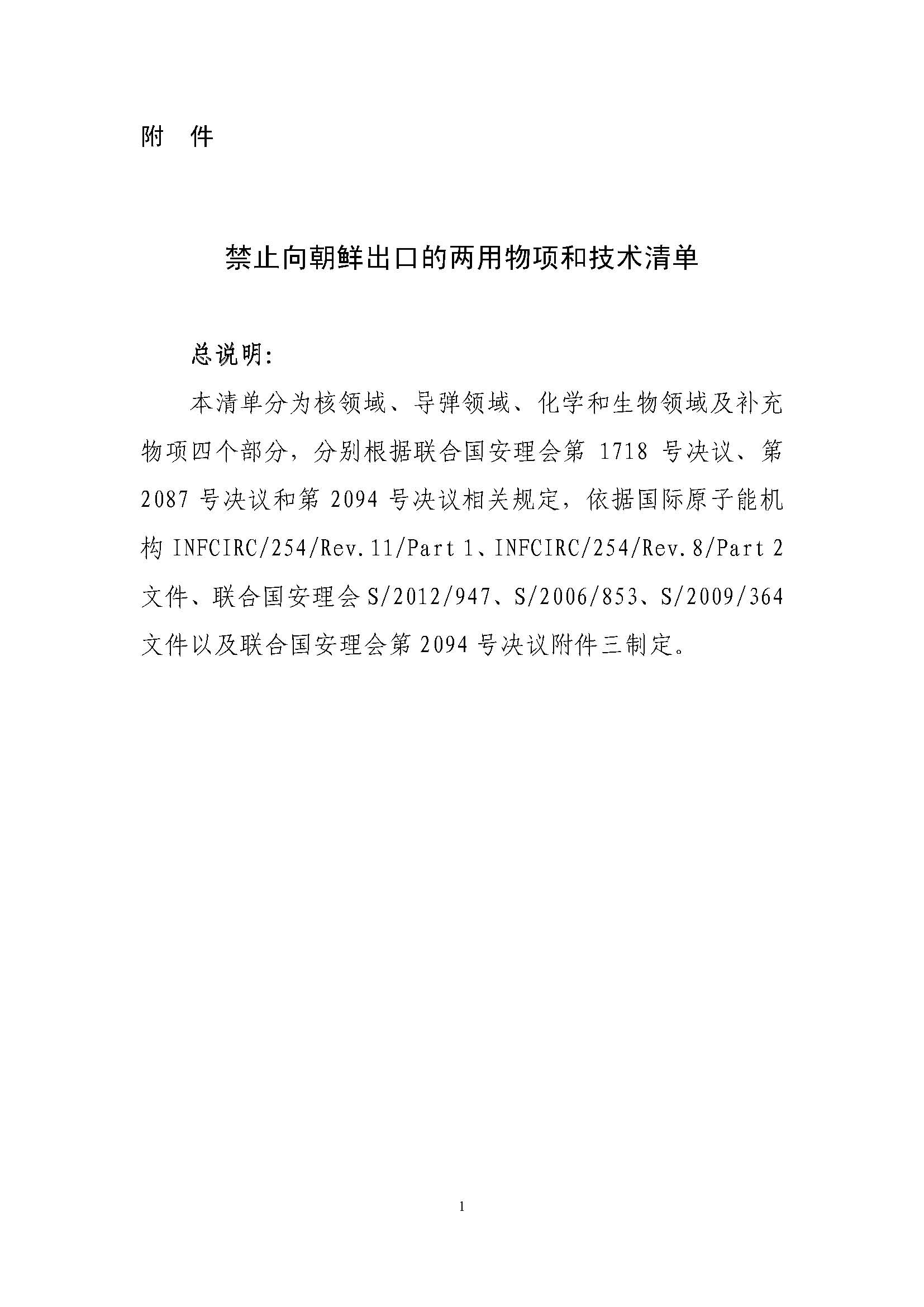
[IN CHINESE] This is a translatable version of the recently released 236 page list of items C…
Go to the article

This Special Report takes an incisive look into Technical Bulletin #59 on Prohibition of Dual Use Exports …
Go to the article