Daily Report Archives
Established in December 1993, the Nautilus Institute’s *N*ortheast *A*sia *P*eace and *S*ecurity *N*etwork (NAPSNet) Daily Report served thousands of readers in more than forty countries, including policy makers, diplomats, aid organizations, scholars, donors, activists, students, and journalists.
The NAPSNet Daily Report aimed to serve a community of practitioners engaged in solving the complex security and sustainability issues in the region, especially those posed by the DPRK’s nuclear weapons program and the threat of nuclear war in the region. It was distributed by email rom 1993-1997, and went on-line in December 1997, which is when the archive on this site begins. The format at that time can be seen here.
However, for multiple reasons—the rise of instantaneous news services, the evolution of the North Korea and nuclear issues, the increasing demand for specialized and synthetic analysis of these and related issues, and the decline in donor support for NAPSNet—the Institute stopped producing the Daily Report news summary service as of December 17, 2010.
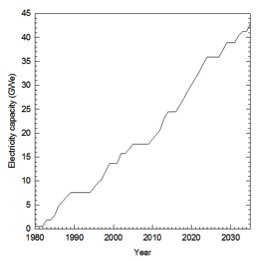
by Jungmin Kang 10 July 2014 Originally published 5 March 2014 for Korea Advanced Institute of Science and Technology, Daejeon, Republic of Korea. I. Status of and Prospects for Nuclear Power in the Republic of Korea One of the most rapidly growing developed countries in the world today, South Korea (the Republic of Korea, or ROK) has been increasingly relying on […]
Go to the article
“Six Party Talks and Multilateral Security Cooperation” Building a New Security Architecture in Northeast Asia May 29, 2014 Presented to 9th Jeju Forum Panel by Peter Hayes, Director at the Nautilus Institute for Security and Sustainability. 1. Six Party Talks and Multilateral Security Cooperation It is self-evident that the Six Party Talks (6PT) as we knew […]
Go to the article

As Commander of the US-ROK I Corps from 1976-78, Gen. John Cushman concluded that US-ROK artillery and rocket units could not gather intelligence, select targets, control nuclear fires, and coordinate nuclear strikes with maneuver units, and would not pass audit. His overriding aim was to defend his sector without being forced to consider nuclear war. (vol. V, 22-7) [PDF, 2.7MB]
Go to the article
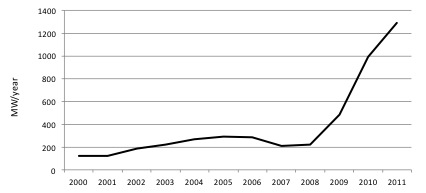
by Kae Takase 28 May 2014 (Originally published February 9, 2014 for Hanyang University Energy Governance and Security (EGS) Center.) I. INTRODUCTION In the tragic aftermath of the March 2011 earthquake (the Great East Japan Earthquake) and tsunami, and the resulting Fukushima nuclear plant disaster, as all of Japan’s fleet of nuclear reactors were shut down, apparently […]
Go to the article

by Lalloobhoy Battiwala 1 April 2014 I. INTRODUCTION Kirk R. Smith wrote in an e-mail on his trip in Odisha, ’Another unforeseen revelation occurred on the trip, however. On the 3-hour drive back to the airport in the evening, the car driver pointed out to us that all the “chaiwallahs” (tea sellers) along the highway now […]
Go to the article