Challenges Associated with Natural Gas Exports from the U.S. to Asia: the Oregon Example

In this Policy Forum David von Hippel writes “With an eye on the Asian market, developers have proposed two LNG export terminals for the state of Oregon. Terminal developers and gas producers argue that there are substantial environmental and employment benefits to exporting LNG to Asia. The challenges faced by these proposed projects in receiving the myriad necessary construction and operation permits from federal, state, and local authorities, however, as well as consideration of the arguments going on between Oregon stakeholders at the state and local level, suggest caution is in order for East Asian nations in depending on substantial future LNG exports from the US before these (and other) terminals are actually built.”


Cyber threats and the challenge of de-alerting US and Russian nuclear forces

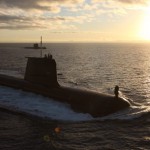
Andrew Futter writes ‘A quarter of a century after the end of the Cold War, both the United States and Russia retain a significant number of nuclear weapons … capable of inflicting almost unimaginable damage, death and devastation.’

Futter argues that ‘the logic of de-alerting these nuclear forces and enhancing the safety and security of nuclear systems is becoming increasingly persuasive and urgent….. [T]his appears to be becoming particularly pronounced as we move into a era increasingly dominated by the threat of “cyber attacks”.’

Opportunities beyond the Australian Energy White Paper

by Samantha Mella and Geoff James 8 June 2015 I. Introduction Samantha Mella and Geoff James write “The (Australian Energy) White Paper’s framework of competition, productivity and investment provides a good platform for discussion, but a number of important issues are not addressed. These include the development of Australia’s abundant renewable energy resources, the consideration […]

Nuclear Threat and Korean Reunification

by Peter Hayes 1 June 2015 I. Introduction In this Policy Forum Peter Hayes writes that “reunification will become harder and increase in social, economic, and security cost the longer and deeper the DPRK develops nuclear weapons. The faster nuclear weapons are removed from the scene, the sooner reunification can commence at a cheaper cost, with […]

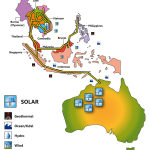
Does Australia Energy Export Future Lie with the Asian Supergrid?

By Samantha Mella 19 May 2015 I. Introduction Samantha Mella writes that, despite climate concerns, the current Australian government is fixated on supporting and expanding the Australian coal industry. Mella argues that ‘Australia may benefit from reconsidering what it means to be an energy superpower in 2015. In the era of an altered climate and carbon […]

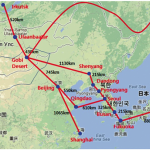
What Could an “Asian Super-grid” Mean for Northeast Asia?

by David von Hippel 13 April 2015 I. INTRODUCTION Proposals for Asian “Supergrids”—potential regional interconnections of electrical grids and related infrastructure to allow the trading of power, in particular (but not exclusively) electricity generated from renewable resources, across Northeast Asia and beyond—have been considered for many years. Such interconnections could help nations to address their […]

A comprehensive agreement for security in Northeast Asia

by Morton Halperin 16 March 2015 Introduction In this Policy Forum Morton H. Halperin writes ‘A new approach is clearly needed to prevent the DPRK from testing and deploying its operational nuclear weapons capability and to persuade it to de-nuclearize.’ Halperin lays out a plan for achieving a comprehensive security agreement in Northeast Asia, ‘one […]