SANCTIONING KEROSENE AND JET FUEL IN NORTH KOREA

NAPSNet Policy Forum Peter Hayes, David von Hippel, and Roger Cavazos March 10, 2016 I. Introduction Paragraph 31 of the UN Security Council’s sanction resolution 2270 passed on March 2, 2016 specifically takes aim at jet fuel and kerosene-type rocket fuel by the North Korean military. As the DPRK likely makes its own rocket fuel, […]

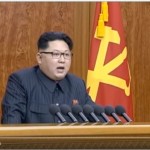
THE OFF-RAMP WITH NORTH KOREA

NAPSNet Policy Forum By Leon V. Sigal March 3, 2016 I. Introduction Leon Sigal analyzes the recent steps toward negotiations with North Korea. He quotes an interview with U.S. Ambassador Sung Kim, “when we conveyed to Pyongyang that we are open to dialogue to discuss how we can resume credible and meaningful negotiations, of course we meant […]

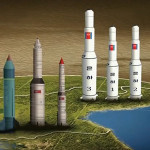
How Can We Solve the North Korean Long-Range Rocket Problem?

January 6, 2016 NAPSNet Policy Forum Written by Cheong, Wooksik and translated from Korean to English by Subin Yang. This piece was first published in Peace Network in December 2015. Cheong, Wooksik is the Director of Peace Network. Subin Yang recently received her B.A in International Studies with concentration in Asian Studies from Ewha Womans University, […]

Landmines: The Never-Ending War

by Olly Terry & Yang Subin of Seoul based NGO Peace Network November 10, 2015 This essay was first published by Peace Network on October 22, 2015.   I. Introduction The recent landmine explosion on August 4th, that maimed two young South Korean soldiers, served as a stark reminder that the Korean War hasn’t formally ended. […]

끝나지 않은 전쟁: 한반도의 대인 지뢰 문제와 대책

올리 테리, 양수빈 (평화네트워크) / 2015년 10월 Subin Yang recently received her B.A in International Studies with concentration in Asian Studies from Ewha Womans University, Seoul. She is currently an intern at Seoul based NGO Peace Network. Her interests are the interaction of women and militarism in East Asia. Olly Terry is a research associate at Peace […]

Mongolia’s Future Energy and Economic Development: Today’s Complex Choices Will Have Long-term Ramifications

“Perhaps no nation has at the same time both more diverse options for its energy and economic future and the potential to make those options reality than Mongolia.

“It will be up to Mongolian leaders, however, to make the difficult choice of a future direction for the Mongolian energy sector, a choice unique to Mongolia in the potential diversity of directions that are plausible for this sparsely-populated nation with a growing economy and many resources, but not, in general, dissimilar to the choices that many nations now face as they seek more climate-friendly energy paths.”

Nuclear threat and Korean reunification: Ultimately no avail

by Ke Chung Kim 12 October 2015 I. Introduction Recently, Peter Hayes presented an interesting paper “Nuclear Threat and Korean Reunification” in this Policy Forum.[1] His arguments prompted me to recall fundamental arguments on the centrality of Korea’s environmental future in the rebuilding of North Korea and the reunification of Korea. Ever since the Korean vision […]

On the Significance of China’s “Characteristics”

CCCP building. Cenotaph reads: "To seek truth from facts"

By Ron Huisken 24 September 2015 I. Introduction China is an ancient and accomplished nation with an essentially unbroken tradition of authoritarian governance. China’s contemporary  governance arrangements, which include a fondness for qualifying an objective or commitment  with the words ‘with Chinese characteristics’, have both deliberate and inadvertent consequences that should be an important consideration […]

The Tesla Battery—An Electricity Storage Technology with Potentially “Disruptive” Implications

The Tesla Powerwall battery has the potential to demand further change of the utility industry, perhaps in some places shifting electricity provision to an entirely different business model. How the impact of the Tesla battery and related energy storage developments play out for traditional sources of power—including coal-fired and nuclear plants—will be fascinating to observe, and may force some hard choices and harder changes on the part of electric utilities.