

- DETERRENCE: Work of the Advisory Board on Disarmament Matters
- DPRK: U.S. to hold more talks on North Korea with East Asian States
- ENERGY SECURITY: Slowdown in carbon emissions worldwide, but coal burning continues to grow
- GOVERNANCE AND CIVIL SOCIETY: With visits to all 10 ASEAN nations, Abe’s China containment strategy complete
- CLIMATE CHANGE ADAPTATION: Cameron links typhoon Haiyan to climate change
Author Archives: Nautilus Institute
Potential Regional Nuclear Energy Sector Cooperation on Enrichment and Reprocessing: Scenarios, Issues, and Energy Security Implications
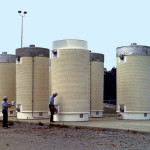
This Special Report by David von Hippel looks at the relative impacts of different fuel cycle options on other aspect of (broadly defined) energy security.
In this Special Report von Hippel presents a summary of the current status of and recent trends in electricity consumption in general, and nuclear generation capacity in particular, in the nations of East Asia and the Pacific, offer three future scenarios of nuclear power development in the region (section 2); notes some of the options for nuclear fuel cycle cooperation that have been previously offered for the region, and describe and evaluate four potential scenarios for nuclear fuel cycle cooperation (or non-cooperation) in the region (section 3); and describes some of the key conclusions of the analysis of fuel cycle options for energy security policies in the region (section 4).
David F. von Hippel is a Nautilus Institute Senior Associate. His work with Nautilus has centered on energy and environmental issues in Asia, with a particular emphasis on Northeast Asia and North Korea.
中美日三边关系与三边对话前景
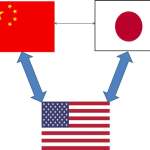
[Chinese Version] This is the second half of a two part Special Report from Professor Yang We…
Nautilus Peace and Security Weekly – 14 November 2013
- DETERRENCE: Extended deterrence and strategic stability in Northeast Asia
- DPRK: A revised assessment of the North Korean KN-08 ICBM
- ENERGY SECURITY: Concentrations of warming gases break record
- GOVERNANCE AND CIVIL SOCIETY: Opposition cries foul as South Korea moves to ban pro-North party
- CLIMATE CHANGE ADAPTATION: Background paper: issues of vulnerability with specific reference to gender in the Asia Pacific – post-2015 framework for disaster risk reduction consultations
- AUSTRAL PEACE AND SECURITY: Gateway to the Indo-Pacific: Australian defense strategy and the future of the Australia-U.S. alliance
AdaptNet for 12 November 2013
AdaptNet ngày 12 tháng 11 năm 2013
中美日三边关系与三边对话前景
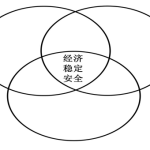
[Chinese Version] This is the first part of a two part Special Report from Professor Yang Wen…
Beijing Seeking a Break in the Impasse over North Korea, New York Times, Jane Perlez

Roger Cavazos, a former United States Army intelligence officer and North Korea watcher who is now with the Nautilus Institute, a group that studies international security issues, said, “The point is: Wu Dawei talks with North Korea in August, North Korea then talks with U.S. interlocutors” — Mr. Bosworth and Mr. Gallucci — “U.S. interlocutors back-brief the State Department, then State gives their answers to Wu, and Wu is now in North Korea relaying American answers/concerns.”
Nautilus Peace and Security Weekly – 7 November 2013
- DETERRENCE: Transcending mutual deterrence in the United States-Russian relationship
- DPRK: Iranian, N Korea officials to cooperate
- ENERGY SECURITY: ‘Permanent slowdown’ seen in carbon dioxide emissions
- GOVERNANCE AND CIVIL SOCIETY: South Korea President Park: “No purpose” to Japan talks
- CLIMATE CHANGE ADAPTATION: The new normal: A Hong Kong business primer on climate change adaptation
- CLIMATE CHANGE AND SECURITY: Rethinking geopolitics: climate security in the Anthropocene
A Red Hunt In October – For Pirates, Hooligans and Spies…
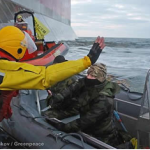
In this essay, Nikhil Desai criticizes the violent Russian attack on the Greenpeace ship and the subsequent pre-trial detention of 30 activists. He argues that if concerns of energy security are allowed to degenerate into hallucinations of dominating the Arctic and brutal treatment of non-violent civic action, Russia or other such countries cannot be held to be responsible members of the international community of law-abiding states. The most powerful man in the world may now also be the most dreadful.
Nikhil Desai is an energy and environmental economist now dividing his time between Washington, DC and Ahmedabad, India.