

Challenges Associated with Natural Gas Exports from the U.S. to Asia: the Oregon Example

In this Policy Forum David von Hippel writes “With an eye on the Asian market, developers have proposed two LNG export terminals for the state of Oregon. Terminal developers and gas producers argue that there are substantial environmental and employment benefits to exporting LNG to Asia. The challenges faced by these proposed projects in receiving the myriad necessary construction and operation permits from federal, state, and local authorities, however, as well as consideration of the arguments going on between Oregon stakeholders at the state and local level, suggest caution is in order for East Asian nations in depending on substantial future LNG exports from the US before these (and other) terminals are actually built.”
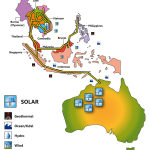
Does Australia Energy Export Future Lie with the Asian Supergrid?

By Samantha Mella 19 May 2015 I. Introduction Samantha Mella writes that, despite climate concerns, the current Australian government is fixated on supporting and expanding the Australian coal industry. Mella argues that ‘Australia may benefit from reconsidering what it means to be an energy superpower in 2015. In the era of an altered climate and carbon […]

Nautilus Peace and Security Weekly – 31 October 2013

DETERRENCE: General Herbert J. “Hawk” Carlisle Commander, Pacific Air Forces, transcript
DPRK: Agreements on Cooperation Between Governments of DPRK
ENERGY SECURITY: The Buck Stops Nowhere
GOVERNANCE AND CIVIL SOCIETY: Park proposes ‘Silk Road Express’ to Connect Eurasian Nations
CLIMATE CHANGE ADAPTATION: Climate Change and Health: A Tool to Estimate Health and Adaptation Costs
AUSTRAL PEACE AND SECURITY: The Nuclear War Scare of 1983: How Serious Was It?

Adapting to the Present Day – A Good Substitute for Future Climate Change?

Saleem Janjua argues that despite the substantial indecisiveness over climatic projections and their impacts, we should start adapting to the present day on the basis of recent changes in the climate. By adapting to present conditions and understanding them we may be able to offset future climate change impacts. Various bottom-up approaches (vulnerability assessment, risk assessment, resilience) could be very helpful in understanding the vulnerability of a country to current climate change and the rationales of adaptation in the local context.

Saleem Janjua is the editor of AdaptNet and a Nautilus Institute Associate.

Atomic Insurance for Atomic Insecurities

In this essay, Nikhil Desai explains the fears of anti-nuclear activists in India regarding its government’s alleged violation or weakening of the Indian law on civil nuclear liability as part of the Prime Minister’s visit to Washington, DC the weekend of 27th September 2013. He argues that the government’s opponents refuse to accept the reality of nuclear trade and operations, and should be more concerned about the institutional competence of India to manage the nuclear enterprises, civil or otherwise.

Nikhil Desai is an energy and environmental economist now dividing his time between Washington, DC and Ahmedabad, India. He is a Nautilus Institute Associate and a contributor to Nautilus’ Weekly Report.

Nautilus Peace and Security Weekly – 3 October 2013

DETERRENCE: Park Pledges Strong Defense To Render N. Korean Nukes Useless DPRK: Intergovernmental Consultative Committee Meeting Between Mongolia And North Korea ENERGY SECURITY: UN Climate Panel Stresses Solidity of New Report on Global Warming GOVERNANCE AND CIVIL SOCIETY: Popular Ex-PM Koizumi Comes Out Against Nuclear Power CLIMATE CHANGE ADAPTATION: Climate Change Adaptation in the Boardroom AUSTRAL PEACE AND SECURITY: ALP Nuclear […]

Networks for Climate Adaptation in South Asia

Saleem Janjua stresses the need for creation of some innovative climate adaptation networks amongst South Asian countries working on climate adaptation. Practitioners, researchers, and policy-makers from across the South Asian region will be able to collaboratively use such networks to share evidence-based understandings from which they can design solutions to the many problems that will face people and places in coping with climate change.

Saleem Janjua is a Nautilus Institute Associate, the editor of the Climate Change Adaptation bi-weekly report (ADAPTNet) and a contributor to Nautilus’ Weekly Report.

Nautilus Peace and Security Weekly – 26 September 2013

DETERRENCE: Preparing for the Possibility of a North Korean Collapse DPRK: China Bans Certain North Korean Exports for Fear of Weapons Use ENERGY SECURITY: IPCC Head Warns on Himalayan Melting Glaciers GOVERNANCE AND CIVIL SOCIETY: With Reunion Cancellation, Seoul Rejects Tourism Talks CLIMATE CHANGE ADAPTATION: Public Risks and the Challenges to Climate-Change Adaptation: A Proposed Framework For Planning in the […]

Learning as a Change Catalyst for Climate Adaptation

Saleem Janjua advocates an analysis of how organizations learn from their own experience, other organizations, and how they develop their own internal understanding and framework for action under climate change.

Saleem Janjua is the Climate Change Adpation contributor to the NAPSNet Weekly Report, and the Editor of AdaptNet.