Daily Report Archives
Established in December 1993, the Nautilus Institute’s *N*ortheast *A*sia *P*eace and *S*ecurity *N*etwork (NAPSNet) Daily Report served thousands of readers in more than forty countries, including policy makers, diplomats, aid organizations, scholars, donors, activists, students, and journalists.
The NAPSNet Daily Report aimed to serve a community of practitioners engaged in solving the complex security and sustainability issues in the region, especially those posed by the DPRK’s nuclear weapons program and the threat of nuclear war in the region. It was distributed by email rom 1993-1997, and went on-line in December 1997, which is when the archive on this site begins. The format at that time can be seen here.
However, for multiple reasons—the rise of instantaneous news services, the evolution of the North Korea and nuclear issues, the increasing demand for specialized and synthetic analysis of these and related issues, and the decline in donor support for NAPSNet—the Institute stopped producing the Daily Report news summary service as of December 17, 2010.
The Nautilus Institute released this
report as a rapid response evaluation of the implications of the March 11, 2011
earthquake and consequent tsunami off the northeast coast of Japan, focusing on
Japan’s electricity system, its energy security and the future of the nuclear
power plants located in the earthquake- and tsunami-affected regions.
Read the executive summary.
Go to the article
David von Hippel, Nautilus Institute Senior Associate, Scott Bruce, Nautilus Institute Director and Peter Hayes, Professor, RMIT University and Nautilus Institute Executive Director write, “Without convincing the DPRK that it can overcome its energy insecurity and achieve a sustainable energy economy, it is unlikely that Pyongyang will shift away from an economy that emphasizes exports of military hardware and illicit goods, cease its provocative behaviors, and take steps to assume productive relationships with the global community.”
Go to the article
Edward Yoon, an accountant and expert in the North Korean resource development sector, writes, “The mining subsector of the DPRK’s industry accounted 8.3% of the North Korean GDP and about 15.9% of total export revenues in 2005. The minerals production sector in North Korea has, however, been struggling because of poor central planning and a lack of modern technology and equipment, as well as a shortage of electricity … Based on a study conducted by Chung, Woo Jin, exploitation of the DPRK’s mineral resources through linkages with South Korean and overseas consumer markets is likely to be the most profitable way for the DPRK to develop its minerals sector. Strong markets for the DPRK’s gold, silver, lead, iron ore, zinc, Tungsten, copper, and other metallic minerals are likely. In additions, among the DPRK’s non-metallic minerals, magnetite, flaky graphite, and limestone are valuable products.”
Read a response from Aidan Foster-Carter here.
Go to the article
James E. Goodby, former US Ambassador and Special Representative for Nuclear Security and Dismantlement and Affiliate of the Center for Northeast Asian Policy Studies at the Brookings Institution, and Markku Heiskanen, former Finnish diplomat who is currently Senior Associate of the Asia Institute in Daejeon, South Korea, suggest a two-track approach for dealing with the North Korean nuclear program. First, a North-East Asia Energy Development Organization should be formed to provide multilateral “nuclear fuel services” if the DPRK “re-commits to the Non-Proliferation Treaty (NPT)” and confirms the “dismantling of its nuclear weapons program.” Second, the ROK and DPRK should “start negotiations… to define definitively the frontiers between the two states” and eventually establish a peace treaty between the two Korean states.
Go to the article
Tong Kim, visiting professor at the University of North Korean Studies and adjunct professor at SAIS Johns Hopkins University, writes, “The beginning of this year brings a new momentum for resuming talks with North Korea. Talks, if held, will be about avoiding provocations, keeping peace and stability, improving inter-Korean relations, and ultimately dismantling North Korea’s nuclear programs. We don’t know whether this rare momentum will be harnessed for a breakthrough, or if it will be left to wither away. However, this momentum did not come out of the blue.”
Go to the article
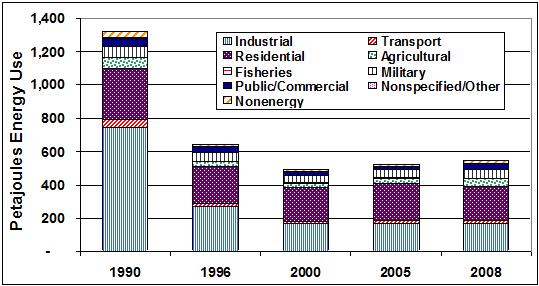
Peter Hayes, Executive Director of the Nautilus Institute, and David von Hippel, Nautilus Institute Senior Associate, write, “Whether precipitated by war, coup, or simply continuing slow economic decline, it is incumbent on the international community to help to provide services and support to stabilize North Korea in the unlikely event of outright collapse. Fortunately, many of the measures that would be needed are the same as should be undertaken in the non-collapse pathways. Among the many likely needs of the North Korean population following a collapse—food, clean water, heath care, and economic development among them—the need to promptly provide the population with reliable and demonstrably improving access to energy services (heat, light, mechanized transportation, and so on) will be a key to stabilizing the country, meeting other post-collapse needs, and readying the North for eventual smooth (one hopes) integration with South Korea.”
Read a response from Aidan Foster-Carter here.
Go to the article
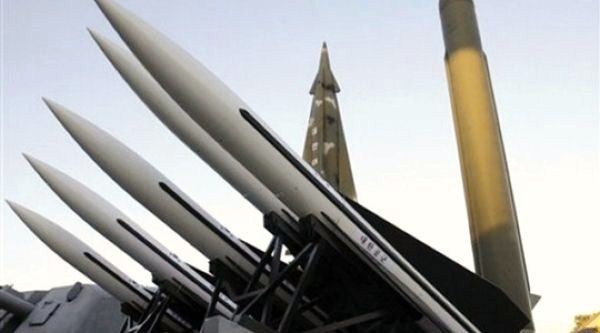
Jeffrey Lewis Director of the Nuclear Strategy and Nonproliferation Initiative at the New America Foundation, writes, “Why not put U.S. nuclear weapons back into South Korea? Well, there are lots of reasons. The first reason is that the United States Air Force has absolutely zero interest in forward deploying tactical nuclear weapons.”
Go to the article
Brent Choi and Mi Jeong Hibbitts, Washington-based specialists in North Korean issues, write, “It is possible that we will see the young Kim emerge as the next leader of North Korea. This possibility may drive Washington and Seoul to ponder new political options rather than continue current policy toward North Korea…The two allies should prepare for a scenario in which Kim Jong Un will indeed make it as regime leader, as much as for the contingencies in the case that he fails.”
Go to the article
Moon Chung-in, Professor of Political Science at Yonsei University, writes, “We have to have good relations with China. To do that we need to develop a more balanced practical diplomacy. A triangular alliance that is ‘Anti-China’ made up of South Korea, Japan and the U.S. cannot be an alternative. Relations between the U.S. and China as well as relations between Japan and China must be good to ensure the peace, stability and prosperity of the Korean peninsula. In particular, it also is necessary to put emphasis on the improvement of North-South relations.”
Go to the article

Peter Hayes, Executive Director of the Nautilus Institute, and David von Hippel, Nautilus Institute Senior Associate, write, “it may be possible to slow and even reverse the DPRK’s nuclear breakout by collaboration that assists it to develop small light water reactors (LWRs) that are safe, reliable, and above all, safeguarded, and integrates its enrichment capacity into a regional enrichment consortium, possibly as part of a Northeast Asian Nuclear Weapon Free Zone.”
Go to the article

