Daily Report Archives
Established in December 1993, the Nautilus Institute’s *N*ortheast *A*sia *P*eace and *S*ecurity *N*etwork (NAPSNet) Daily Report served thousands of readers in more than forty countries, including policy makers, diplomats, aid organizations, scholars, donors, activists, students, and journalists.
The NAPSNet Daily Report aimed to serve a community of practitioners engaged in solving the complex security and sustainability issues in the region, especially those posed by the DPRK’s nuclear weapons program and the threat of nuclear war in the region. It was distributed by email rom 1993-1997, and went on-line in December 1997, which is when the archive on this site begins. The format at that time can be seen here.
However, for multiple reasons—the rise of instantaneous news services, the evolution of the North Korea and nuclear issues, the increasing demand for specialized and synthetic analysis of these and related issues, and the decline in donor support for NAPSNet—the Institute stopped producing the Daily Report news summary service as of December 17, 2010.
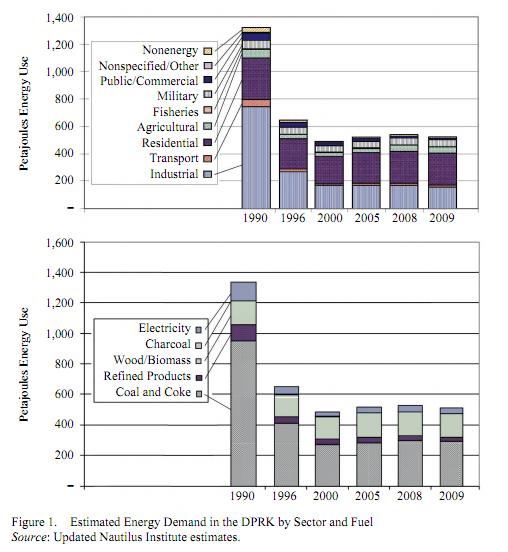
Peter Hayes, David von Hippel and Scott Bruce discuss changes in the DPRK energy sector (particularly since 1990) and look at the current supply and demand balance in North Korea, noting the vulnerabilities and critical needs of that sector. The authors also explore options for the rehabilitation of the DPRK energy grid that could be used in negotiations with North Korea as part of a “roadmap” to denuclearization. The report also considers the DPRK’s legitimate energy needs if negotiations are not successful and the DPRK either collapses (due to an internal coup, succession crisis, or war) or continues to stagnate. The report concludes by identifying the robust strategies that are important in both engagement and non-engagement scenarios.
Peter Hayes is a Professor of International Relations, RMIT University, Melbourne, and Executive Director of the Nautilus Institute. David von Hippel is a Nautilus Institute Senior Associate and Scott Bruce is the Director of the Nautilus Institute, San Francisco.
Go to the article
Joshua Pollack, a consultant to the US government, analyzes the discrepancies between news reports, which often claim Pyongyang sells large numbers of ballistic missiles abroad, and the actual contents of seized arms shipments. Pollack asserts that while there ahas recently been an unprecedented number of intercepted conventional arms shipments from North Korea, the number of complete missiles in such shipments has fallen dramatically since 1994 due to Western sanctions and an influx of missile suppliers on the global market.
Go to the article
Jae-Young Yoon, Director of the Power System Research Group, Smart Grid Division, Korea Electrotechnology Research Institute (KERI), Seoul, provides an overview of the present status of the DPRK power sector, including newly analyzed data and future prospects of electricity supply and demand in North Korea. This report also establishes several basic inter-Korean energy cooperation plans and considers possible changes in inter-Korean relations as a result of electric power system interactions. The proposed plans included in this report are intended to be a starting point for interconnecting the power systems of the two Koreas and the fulfillment of longstanding grand plans for a Unified Korean Power System (UKPS).
Go to the article

In this report Choi Kyung-soo, President of the North Korea Resources Institute in Seoul, evaluates the current status of North Korea’s substantial mineral resources. Some of these minerals, such as magnesite, zinc, iron, and tungsten, could create highly competitive markets. However, almost all North Korean mines suffer from a lack of electricity and equipment. To improve mine productivity, Choi recommends the construction of large-scale hydro plants, the remodeling of the overall power system and a cooperative policy with Russia and South Korea.
Go to the article
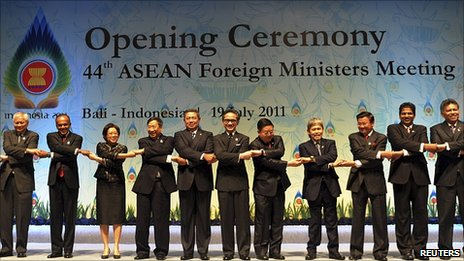
Mark J. Valencia, Nautilus Institute Associate and Senior Research Associate at the National Bureau of Asian Research, writes that given the rise in political tension, the positive outcome of the recent ASEAN meeting in Bali is uplifting. Even if forward movement on implementing the 2002 Declaration on Conduct of Parties in the South China Sea (DOC) is small and fragile, it is in the right direction. Of course, it is only one step of many necessary to truly put the ongoing disputes in the South China Sea to rest.
Go to the article
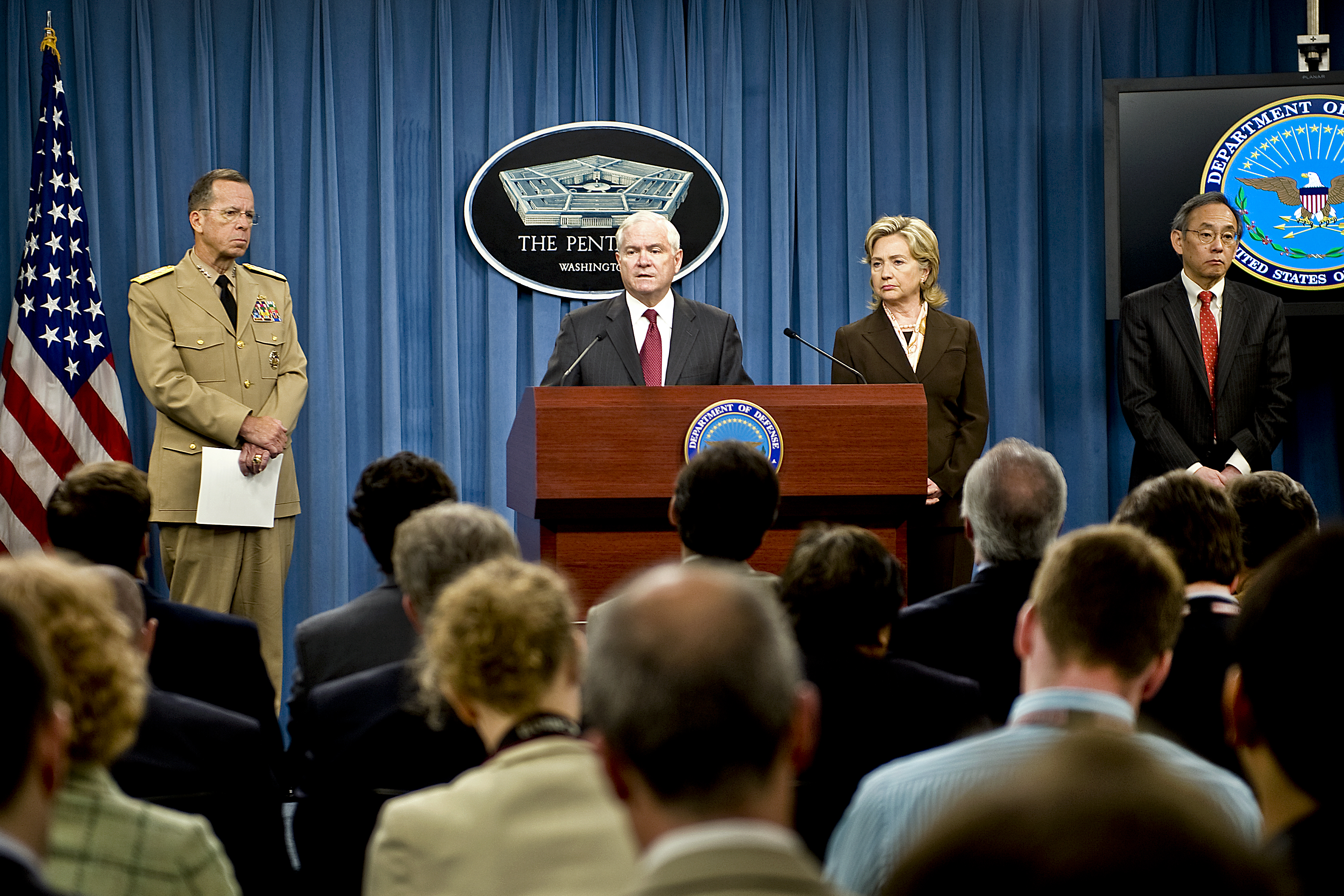
Jeffrey Lewis, Director of the Nuclear Strategy and Nonproliferation Initiative, New America Foundation, and Peter Hayes, Professor of International Relations, RMIT University, and Director of the Nautilus Institute state that until the Obama administration’s issuance of its Nuclear Posture Review in April 2010, any attempts North Korea would have made to achieve non-nuclear state compliance would have been hamstrung by what is known as the “Warsaw Pact Exclusion”. In effect, prior to this latest NPR, not only did North Korea have to abandon its nuclear weapons and open itself to inspection, it also had to rupture its primary security alliance with China in order to receive any assurances that the United States would not use nuclear weapons against it. The new NPR removes this loophole and guarantees that negative security assurances would apply to the DPRK in the event that it returned to the Non-Proliferation Treaty as a non-nuclear weapon state.
Go to the article
Haksoon Paik, senior fellow at The Sejong Institute, South Korea, argues that while current prospects for denuclearizing the Korean peninsula are slim, US and ROK policymakers still have several opportunities to facilitate the resumption of negotiations with the DPRK by “returning to the basics”.
Go to the article

