Daily Report Archives
Established in December 1993, the Nautilus Institute’s *N*ortheast *A*sia *P*eace and *S*ecurity *N*etwork (NAPSNet) Daily Report served thousands of readers in more than forty countries, including policy makers, diplomats, aid organizations, scholars, donors, activists, students, and journalists.
The NAPSNet Daily Report aimed to serve a community of practitioners engaged in solving the complex security and sustainability issues in the region, especially those posed by the DPRK’s nuclear weapons program and the threat of nuclear war in the region. It was distributed by email rom 1993-1997, and went on-line in December 1997, which is when the archive on this site begins. The format at that time can be seen here.
However, for multiple reasons—the rise of instantaneous news services, the evolution of the North Korea and nuclear issues, the increasing demand for specialized and synthetic analysis of these and related issues, and the decline in donor support for NAPSNet—the Institute stopped producing the Daily Report news summary service as of December 17, 2010.

ERIC GROSSE MAY 30, 2019 I. INTRODUCTION In this paper, Eric Grosse argues: “Much of the security progress over the past decade has been at large-scale, finding and patching vulnerabilities in widely used applications or defending networks of millions of machines containing high-value data. The lessons there may help military systems, but for the […]
Go to the article
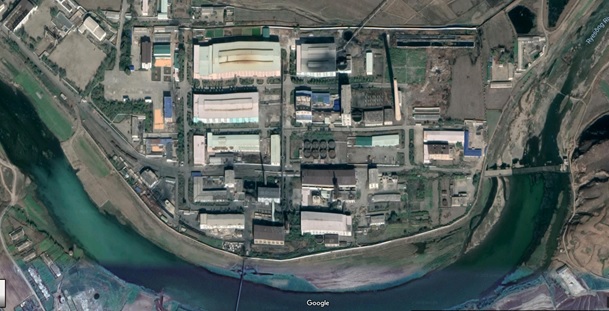
DAVID VON HIPPEL May 27, 2019 I. INTRODUCTION In this report, David von Hippel “provides a demonstration of the potential impact of remote sensing methods and testing in the DPRK in reducing uncertainties in cumulative historical uranium production, and thus in fissile materials inventories; and, offers conclusions, resulting from the potential impacts of uncertainty […]
Go to the article

JOHN R. HARVEY MAY 24, 2019 I. INTRODUCTION In this essay, John Harvey asserts that the US NC3 system “must seek vastly improved senior leader conferencing capabilities to support decisions that go beyond what some of us call the Cold War’s “multiple choice test”—that is, which major attack option to execute. To support consultations […]
Go to the article
JOHN CARLSON MAY 19 2019 I. INTRODUCTION In this essay, John Carlson argues how a non-nuclear weapons state like the ROK may be involved in verification of nuclear disarmament by the DPRK in a manner consistent with non-proliferation principles. John Carlson was director general of the Australian Safeguards and Nonproliferation Office. He was appointed […]
Go to the article

PAUL BRACKEN MAY 14, 2019 I. INTRODUCTION In this essay, Paul Bracken analyzes the big structures and large processes of nuclear multipolarity. The structures include the national command and control of at least eighteen countries, to include nine nuclear weapon states, “shared” weapons in NATO, missile defense, and key intelligence nodes in select […]
Go to the article
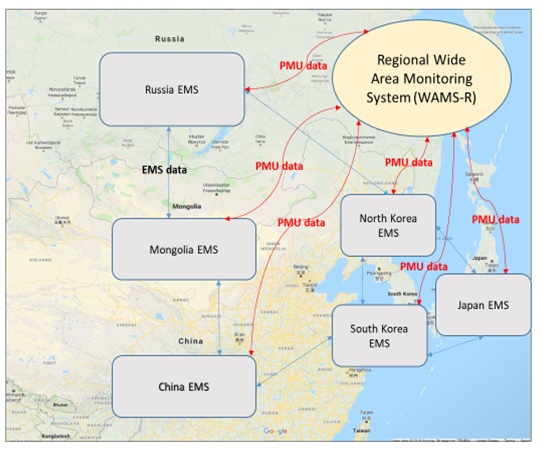
JAY GIRI MAY 9, 2019 I. INTRODUCTION In this essay, Jay Giri “describes real-time grid management, control center EMS functions and inter-utility data exchange. It also describes the benefits and challenges of inter-utility grid management and examples of international utilities working together. It specifically addresses modeling requirements for international inter-utility operation. Finally, it describes an innovative […]
Go to the article
PETER HAYES, BINOY KAMPMARK, PHILIP REINER, DEBORAH GORDON MAY 5 2019 I. INTRODUCTION This essay is the Synthesis Report of a workshop of fifty NC3 experts held at the Hoover Institution at Stanford University on January 22 to 23, 2019. Nine states have nuclear weapons and fourteen states have nuclear command, control, and communications […]
Go to the article

THOMAS GRAHAM APRIL 8 2019 I. INTRODUCTION In this essay, Thomas Graham concludes: “As the two Koreas and the great powers, especially the United States, consider their options of the best political and legal framework in which to realize a nuclear-free Korean peninsula, it is prudent to note the strengths and weaknesses of the […]
Go to the article
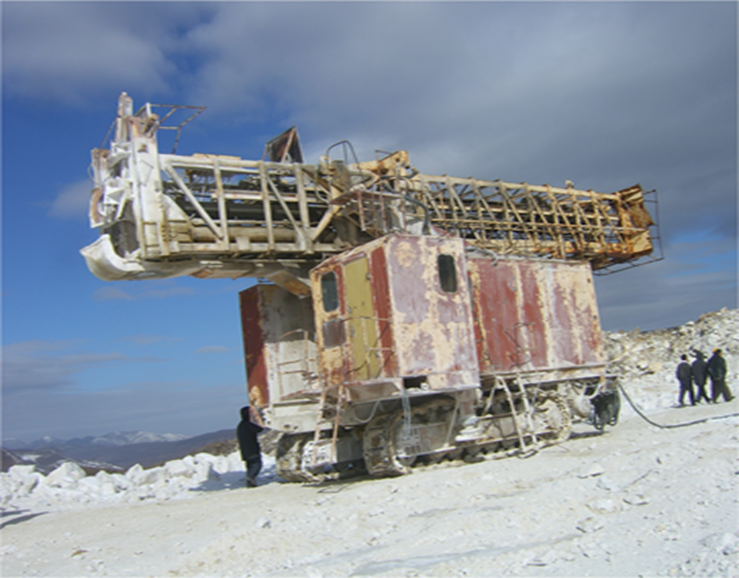
EDWARD YOON APRIL 3, 2019 I. INTRODUCTION In this essay, Edward Yoon describes DPRK’s mineral resources with a special focus on the coal mining and iron ore industries, and their exports to China, focusing on where minerals are found and how they might be developed with financial input by overseas investors, and addresses the […]
Go to the article

PETER HAYES MARCH 7 2019 I. INTRODUCTION In this essay, Peter Hayes “demonstrates reason for hope that civil society-based, non-state actors will continue to use ideational power to build pan-Pacific bridges leading to sustainability, security and peace in our time. They are not the only bridge builders and cannot achieve their goals alone. But […]
Go to the article

