

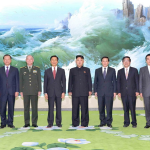
Zhang Tuosheng, a Chinese strategist, argues that China’s policy toward North Korea must change with the times…
Zhang Tuosheng, a Chinese strategist, argues that China’s policy toward North Korea must change with the times…
In Paik Haksoon’s inaugural NAPSNet Special Report and Nautilus’ first Korean-language Special Report, Dr Paik…

Against the background of a growing demand for energy worldwide, many claim that the hydrocarbon resources of the Arctic region have become an important variable for future energy security. Multiple factors seem to render Arctic energy resources attractive: the expected persistence of fossil fuels (especially oil and gas) in the global energy mix, instability in oil-supplying countries in the Middle East, and the unclear future of nuclear energy after the Fukushima disaster. Nonetheless, the complexity of resource exploitation in such a remote region as the Arctic, as well as the potential for environmental disasters, raises significant questions about such a proposition. Rather, how promising Arctic resources really are for future energy security concerns is an empirical question requiring careful evaluation. How many resources are actually in the Arctic relative to resources farther south? What are the conditions under which they could be viably and commercially exploited? What interest do the states possessing Arctic hydrocarbons, i.e. the five Arctic littoral states US, Canada, Russia, Norway and Denmark/Greenland, have in exploring and exploiting their Arctic resources? Only after answering these questions is it possible to come to tangible conclusions about the role of Arctic oil and gas for future energy security concerns.
Kathrin Keil is currently a PhD Candidate at the Berlin Graduate School for Transnational Studies(BTS) at the Freie Universität Berlin. She is writing her dissertation on the international politics of the Arctic, with a focus on international regimes and institutions in the areas of energy, shipping and fishing.

Peter Hayes and Roger Cavazos analyze Kim Jong-un’s 2014 New Year’s speech. They find that the speech provide…
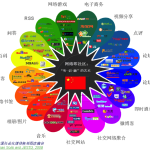
Peter Hayes and Roger Cavazos analyze information flows to and from China and analyze social media use (especi…
In this Special Report David von Hippel first provides a general description of the elements of the full energy cycle that should be included in any comparison of different options for supplying electricity, followed by a description of the potential categories of “costs”, broadly defined to include a wide range of costs and impacts, that may be incurred as a part of each element of the energy cycle. He then applies these fuel cycle elements and costs to qualitatively examine some of the key potential relative costs and impacts of three potential options for providing electricity in Northeast Asia—coal-fired, gas-fired, and nuclear power. Following this qualitative treatment, von Hippel presents the assumptions and results of an initial quantitative analysis at two specific categories of costs/impacts for these generation options: direct costs and greenhouse gas emissions, focusing on coal- and gas-fired options in NEA fired with fuels imported from the United States (or North America more generally). A concluding section summarizes the findings of this Working Paper.
David F. von Hippel is a Nautilus Institute Senior Associate. His work with Nautilus has centered on energy and environmental issues in Asia, with a particular emphasis on Northeast Asia and North Korea.
In this Special Report, Chen Jimin makes three observations and three suggestions while discussing the U.S. al…
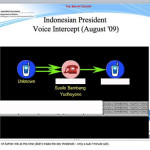
Richard Tanter writes “Courtesy of Edward Snowden, the Australian government is discovering that an asymmetry in electronic surveillance capacity does not trump the fundamental asymmetry of power between Australia and Indonesia. NSA documents that the premier Australian intelligence agency monitored and intercepted phone calls by the Indonesian president, his wife, and inner circle of advisors has generated an extraordinarily rapid collapse in relations between the two governments, possibly with longterm effects. The Indonesian government has called for a new intelligence accord, which will prove difficult for the Abbott government, not least because of the role of the NSA in Australian signals intelligence. A review of supervision and oversight of Australian intelligence agencies is urgently required.”
Richard Tanter is Senior Research Associate at the Nautilus Institute and teaches in the School of Poiltics and Social Science at the University of Melbourne.
This is the second half of a two part article from Professor Yang Wenjing of the China Institute for Contempor…

This is the first half of a two part article from Professor Yang Wenjing of the China Institute for Contempora…