

Author Archives: Nautilus Institute
Nautilus Peace & Security Weekly – 27 February 2014
- DETERRENCE: Navy in 2014: Undersea Drones, Arctic, Marines on New Ships, Chief of Naval Operations Discusses his To-Do List
- DPRK: Report of the Commission of Inquiry on Human Rights in the Republic of Korea
- ENERGY SECURITY: Climate Change is Here Now and it Could Lead to Global Conflict
- GOVERNANCE AND CIVIL SOCIETY: Umbrella Union Holds Protest Rally in Downtown Seoul
- CLIMATE CHANGE ADAPTATION: Moving Stories: the Voices of People who Move in the Context of Environmental Change
- CLIMATE CHANGE AND SECURITY: High Seas Need International Police Force, says Former UK Foreign Secretary
LNG Import Diversification in Asia
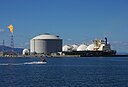
Asia’s share of global demand for natural gas has increased from 13 to 18 per cent over the past decade, and t…
Nautilus Peace and Security Weekly – 20 February 2014
- DETERRENCE: China’s Deceptively Weak (and Dangerous) Military
- DPRK: Report of the Commission of Inquiry on Human Rights in the Republic of Korea
- ENERGY SECURITY: Science Linking Drought to Global Warming Remains Matter of Dispute
- GOVERNANCE AND CIVIL SOCIETY: 21 Envoys Form Peninsula Club
- CLIMATE CHANGE ADAPTATION: A Qualitative Examination of the Health Workforce Needs during Climate Change Disaster Response in Pacific Island Countries
- AUSTRAL PEACE AND SECURITY: Jakarta Sees Chilly Ties with Australia until October
AdaptNet for 18 February 2014
1. Climate Change and Health Sector – Pacific Region
2. Environmental Change and the Voices of People
3. Annual Global Climate and Catastrophe Report
4. Children’s Perceptions and Adaptive Behaviours
5. Twelve Reasons Why CCA M&E is Challenging
6. International Conference – Deltas in Times of Climate Change
The Impact of the “Shale Gas Revolution” on Russian Energy Strategy
The successful development of shale gas extraction and production in North America has spread a positive outlook within the international energy community, which envisages that a great availability of gas in the next years will contribute to diversifying the energy mix, reducing emissions, and enhancing energy security. However, the emergence of the “shale revolution” is perceived as a serious energy threat by Russia, because it could severely affect its role as a major gas supplier. Thanks to the combination of LNG developments and shale gas production, a growing gas availability in global markets poses questions about the ability of Russia to keep gas exports to Europe at current levels and to develop the Eastern vector through growing gas exports to Asian markets.
Fabio Indeo holds a Ph.D in Geopolitics, Geostrategy and Geoeconomy at the University of Trieste (Italy). Currently he is EGS researcher and lecturer on “Conflicts and energy resources” at the Master in Peacekeeping and Security Studies (University of Roma Tre, Italy). His research fields are energy security, and geopolitics of pipelines and energy transport routes.
Nautilus Peace and Security Weekly – 13 February 2014
- DETERRENCE: The economic geography of North Korean drug trafficking networks
- DPRK: Rival Koreas to resume high-level talks
- ENERGY SECURITY: Killer Typhoon: What made Haiyan so destructive, and how can we prepare for the next monster storm?
- GOVERNANCE AND CIVIL SOCIETY: Virginia vote on Sea of Japan hands victory to Koreans
- CLIMATE CHANGE ADAPTATION: Living with environmental change: waterworlds
- CLIMATE CHANGE AND SECURITY: Migration and Environmental Change in Asia
China’s Shale Gas: Current Perspectives
by Chen Weidong, Jiang Xi-Min and Zhou Xiaolai 11 February 2014 This Special Report was originally published as a Working Paper 2013-6 by the Center for Energy, Governance and Security at Hanyang university, Seoul. I. Introduction The energy sector of China is facing three challenges. This includes ensuring energy supply, reducing carbon emission, and furthering international cooperation. Advancing the E&P of natural […]
Nautilus Peace and Security Weekly – 6 February 2014
Rethinking Energy Security in Northeast Asia
In this Special Report, Younkyoo Kim writes that despite both governments’ endless profession of an identity of interests between Russia and China, the truth is quite different. On global issues like intervention in third countries, non-proliferation, democracy promotion and Central Asia, Russia and China jointly act to resist US notions of a liberal world order dominated by its power. However, in regard to the regional security agenda in Asia we find only barely concealed and even potentially serious, if unadvertised, rivalries, e.g. in regard to Japan and Southeast Asia. Thus Russia is trying to do two contradictory things at the same time, namely bandwagon with China on the global and anti-American agenda, while attempting to carve out an independent balancing act directed to constrain China at the regional level. Kim contests that the deep-seated regional divergences between Moscow and Beijing throughout Asia have not been resolved and may not be capable of resolution given the dynamic forces at play throughout these areas.
Younkyoo Kim is Director of the Center for Energy Governance & Security and Associate Professor in the Division of International Studies, Hanyang University, Seoul, Korea.