North Korea’s nuclear force roadmap: hard choices

by Peter Hayes and Roger Cavazos NAPSNet Special Report 2 March 2015 I. SUMMARY In this report Peter Hayes and Roger Cavazos lay out a possible roadmap for North Korea’s nuclear operational force. The authors state: “The laws of physics that determine how nuclear weapons and delivery systems perform are the same in North Korea […]

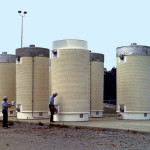
Deep Borehole Disposal of Spent Fuel: International Developments and Implications for NE Asia

by Neil A. Chapman 25 March 2014 This Special Report was originally published as a Working Paper 2013-12 by the Center for Energy, Governance and Security at Hanyang University, Seoul. I. INTRODUCTION Deep borehole disposal (DBD) has been discussed as a possible means of disposing of spent fuel (SF) from nuclear power reactors in some East Asian countries, to support […]

Potential Regional Nuclear Energy Sector Cooperation on Enrichment and Reprocessing: Scenarios, Issues, and Energy Security Implications

This Special Report by David von Hippel looks at the relative impacts of different fuel cycle options on other aspect of (broadly defined) energy security.

In this Special Report von Hippel presents a summary of the current status of and recent trends in electricity consumption in general, and nuclear generation capacity in particular, in the nations of East Asia and the Pacific, offer three future scenarios of nuclear power development in the region (section 2); notes some of the options for nuclear fuel cycle cooperation that have been previously offered for the region, and describe and evaluate four potential scenarios for nuclear fuel cycle cooperation (or non-cooperation) in the region (section 3); and describes some of the key conclusions of the analysis of fuel cycle options for energy security policies in the region (section 4).

David F. von Hippel is a Nautilus Institute Senior Associate. His work with Nautilus has centered on energy and environmental issues in Asia, with a particular emphasis on Northeast Asia and North Korea.


Nautilus Peace and Security Weekly – 31 October 2013

DETERRENCE: General Herbert J. “Hawk” Carlisle Commander, Pacific Air Forces, transcript
DPRK: Agreements on Cooperation Between Governments of DPRK
ENERGY SECURITY: The Buck Stops Nowhere
GOVERNANCE AND CIVIL SOCIETY: Park proposes ‘Silk Road Express’ to Connect Eurasian Nations
CLIMATE CHANGE ADAPTATION: Climate Change and Health: A Tool to Estimate Health and Adaptation Costs
AUSTRAL PEACE AND SECURITY: The Nuclear War Scare of 1983: How Serious Was It?

Nautilus Peace and Security Weekly – 10 October 2013

DETERRENCE: Scary Default Scenarios Based on Faulty Treasury Department Release DPRK: North Korea threatens preemptive attack on U.S., South Korea ENERGY SECURITY: IPCC Issues Stark Warning Over Global Warming: Call to ‘Stop Dithering About Fossil Fuel Cuts’ as Expert Panel Warns Entire Globe is Affected GOVERNANCE AND CIVIL SOCIETY: State Clumsy in Managing Conflicts CLIMATE CHANGE ADAPTATION: Understanding the Adaptive […]

Non-State Nuclear Attack Urban Target Arrays—Pathways and Risk Reduction Strategies

In this policy forum essay, Peter Hayes argues that a determined non-state nuclear terrorist can choose to threaten any one of hundreds of cities, with a nuclear weapon, with a radiological weapon, or by attacking nuclear facilities.  The key risk reduction measures are to reduce numbers and increase security of nuclear weapons; favor urban form that increases urban resilience; and ensure spent fuel and reactors are extremely difficult to attack.

Peter Hayes is Professor of International Relations, School of Global, Urban and Social Studies, Royal Melbourne Institute of Technology University, Australia and Director, Nautilus Institute.