

Nautilus Institute’s Policy Forum‘s focus is on the timely publication of expert analysis and op-ed style pieces on the foremost of security-related issues to Northeast Asia. Its mission is to facilitate a multilateral flow of information among an international network of policy-makers, analysts, scholars, media, and readers. Policy Forum essays are typically from a wide range of expertise, political orientations, as well as geographic regions and seeks to present readers with opinions and analysis by experts on the issues as well as alternative voices not typically presented or heard. Feedback, comments, responses from Policy Forum readers are highly encouraged.
NAPSNet, Policy Forum
Policy Forum 10-041: Will North Korea Be Able to Overcome the Third Wave of Its Collapse?
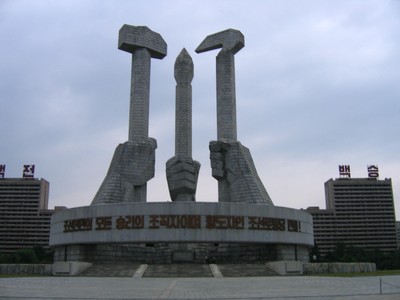
Suk Hi Kim, Professor of Finance and Editor of North Korean Review at the University of Detroit Mercy, addresses the problem of the third wave of the North Korean collapse in the first decade of the 2000s and asks if North Korea will overcome it. The author explains that a combination of unique cultural and historical factors, including the part played by Neo-Confucianism, the principle of self-reliance (Juche), and the military-first policy (Songun), have contributed to the survival of the crisis-ridden and impoverished North Korean state in the post-Soviet era. Examining these factors in conjunction with established prediction scenarios, the paper argues that the collapse of North Korea in the near future is an unlikely event. Because North Korea will be around for sometime to come, confidence-building initiatives are needed to resolve longstanding security, energy, and economic issues between the country, the major powers, and other regional actors.
Go to the articlePolicy Forum 10-040: Inspector O and the SPA Music Hall
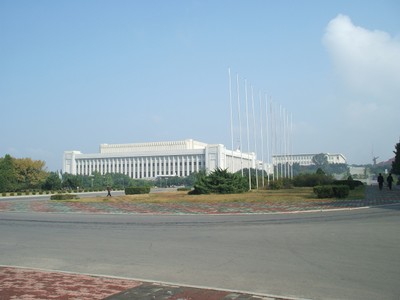
James Church is the pseudonym of is a former Western intelligence officer with decades of experience in Asia. This article is a fictional conversation between himself and Inspector O, the protagonist of his novels, on the recent Supreme People’s Assembly meeting in the DPRK.
Go to the articlePolicy Forum 10-039: Rush to Judgment: Inconsistencies in South Korea’s Cheonan Report
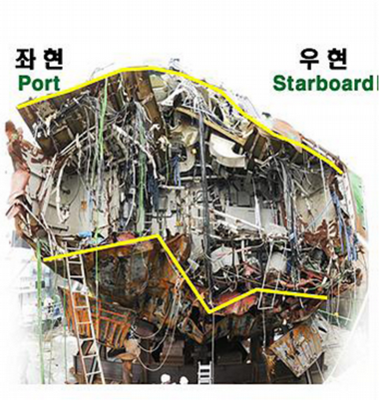
Seunghun Lee, Professor of Physics at the University of Virginia, and J.J. Suh, Director of Korea Studies at Johns Hopkins University, write, “An investigation that is as thorough, objective, and scientific as humanly possible is needed to get to the bottom of the Cheonan incident to discover the cause and perpetrator. After all, forty six lives have been lost, and peace and security of Korea and Northeast Asia is at stake. The dead sailors deserve such a report. So does the international community.”
Policy Forum 10-038: North Korea’s Choice: Bombs over Electricity
Siegfried S. Hecker is professor (research), Department of Management Science and Engineering, co-director of the Center for International Security and Cooperation (CISAC), Stanford University, and an NAE member. Sean C. Lee is a research assistant, and Chaim Braun is a consulting professor at CISAC. They write, “the next Six-Party negotiations must balance the disincentives the parties can bring to bear on North Korea if it chooses to keep the bomb—namely further international sanctions and isolation—with incentives for greater security and economic development… Instead of remaining fixated on denuclearization, Washington should realize that, in spite of its inconsistent and often contradictory policies during the past 20 years, diplomacy has left Pyongyang with only a handful of bombs, instead of the 100 or more it might have had by now, and essentially no significant nuclear-generated electricity.”
Go to the articlePolicy Forum 10-037: The North Korean Worker’s Party Meeting of September 2010: Perpetuation of the Living Leader System or Transformation to the Enshrined Leader System?
Ruediger Frank, Professor of East Asian Economy and Society art the University of Vienna, writes, “the wording of the announcement, formal issues, the short-term problem of creating legitimacy for a yet widely unknown grandson of Kim Il-sung, and a more systematic long-term analytical perspective suggest that the Party meeting in September will likely not announce a successor for Kim Jong-il, but rather create or upgrade a collective. This might or might not include Kim Jong-un; but it is hard to imagine that such a collective will not be headed by Kim Jong-il.”
Go to the articlePolicy Forum 10-036: North Korea: Unhappy Anniversaries
Aidan Foster-Carter, Honorary Senior Research Fellow in Sociology & Modern Korea at Leeds University, writes, “Hence while the precise nature of September’s [WPK] meeting remains vague, like its exact date, it looks like a long overdue effort to restore a measure of due process to the Party. If this is in fact a full formal WPK congress, it would be the first since the Sixth Congress thirty years ago in October 1980. It was then that Kim Jong-il, hitherto veiled behind coded references to a mysterious ‘Party Centre’, was finally revealed in the flesh. The speculation is that this new meeting similarly will finally give the world a glimpse of the enigmatic Kim Jong-eun.”
Go to the articlePolicy Forum 10-035: How Can an Inter-Korean Summit Contribute to the Denuclearization of North Korea?
Sung Bae Kim, Senior Research Fellow for the Institute for National Security Strategy in Seoul, writes, “It has been all too evident in the past that the inter-Korean summits held at the end of a presidency have provoked political controversy. But an inter-Korean summit held at any time would still be desirable as long as it is based on appropriate measures related to the Cheonan incident and can contribute to the denuclearization of North Korea.”
Go to the articlePolicy Forum 10-034: The Cheonan Sinking and a New Cold War in Asia
Wooksik Cheong, the Representative of Peace Network, writes, “The Cheonan sinking demonstrates the necessity of building a peace regime and resuming the Six Party Talks to denuclearize the Korean peninsula. Now is the time to find the way to prevent a conflict on Korean peninsula and a new Cold War in Northeast Asia.”
Go to the articlePolicy Forum 10-033: Politics in Command: The ‘International’ Investigation into the Sinking of the Cheonan and the Risk of a New Korean War
John McGlynn, a Tokyo-based independent foreign policy and financial analyst, writes, “In short, presidential intuition found North Korea guilty of the Cheonan sinking. From there it was the job of the JIG team, perhaps under the full control of the South Korean military, to produce a finding that buttressed that intuition. And to make sure the finding could be characterized as “international” and supposedly free of South Korean bias, the U.S., U.K., Canada and Australia, all Korean War belligerents of North Korea and all participants in joint military conferences on future war-fighting scenarios, were brought in to endorse that part of the JIG statement (in the process pushing Sweden aside) that asserted North Korean culpability.”
Go to the articlePolicy Forum 10-032: U.S. Must Respond Firmly to North Korean Naval Attack
Bruce Klingner, Senior Research Fellow for Northeast Asia at the Heritage Foundation, writes, “It is likely that the Cheonan sinking is not a singular event but rather the beginning of a North Korean campaign to raise tensions on the Korean Peninsula. A greater willingness to engage in high-risk behavior could be the result either of North Korea’s growing confidence due to its nuclear weapons status or, conversely, its growing desperation resulting from the increasing impact of international sanctions on its economy.”
Go to the article