

Nautilus Institute’s Policy Forum‘s focus is on the timely publication of expert analysis and op-ed style pieces on the foremost of security-related issues to Northeast Asia. Its mission is to facilitate a multilateral flow of information among an international network of policy-makers, analysts, scholars, media, and readers. Policy Forum essays are typically from a wide range of expertise, political orientations, as well as geographic regions and seeks to present readers with opinions and analysis by experts on the issues as well as alternative voices not typically presented or heard. Feedback, comments, responses from Policy Forum readers are highly encouraged.
NAPSNet, Policy Forum
Policy Forum 11-10: Fukushima’s Implications for Korea’s Nuclear Dilemmas
Peter Hayes, Professor, RMIT University and Executive Director of the Nautilus Institute, writes “Here, the point I want to make is that after Fukushima, Seoul must make a choice. It could engage the North to ensure that the small light water reactor project becomes an authentically inter-Korean project, and is implemented to international standards for design, engineering, and construction…Alternately, it could treat the North’s small light water reactor as a rapidly emerging environmental security threat to South Korea’s population and land, and decide whether it will act militarily to halt the reactor’s operation once it is turned on.”
Go to the articlePolicy Forum 11-09: North Korean Nuclear Nationalism and the Threat of Nuclear War in Korea
Peter Hayes, Professor, RMIT University and Nautilus Institute Executive Director, and Scott Bruce, Nautilus Institute Director, write, “We suggest that as of 2009, the DPRK made the ROK the main target of its nuclear strategy rather than the United States as was the case from 1991-2009. The sinking of the ROK corvette Cheonan in 2010 provides a mini-case study of the collision of ROK and DPRK historical trajectories, and portends continuing clashes involving nuclear threat that need to be managed to avoid escalation to nuclear next-use. The artillery attack on Yeonpyeong island in November 2010 may be the second in what proves to be a series of such risky provocations. We conclude the paper by outlining the advantages of a ROK-Japan only nuclear weapon free zone relative to alternative ROK responses to the threat posed by the DPRK nuclear breakout.”
Go to the articlePolicy Forum 11-08: Analytical Failure and the North Korean Quagmire
John Delury and Chung-in Moon write, “U.S. diplomats, lacking direct contact with North Korean counterparts, are in the dark about North Korea’s strategic intentions and negotiating positions. Even North Korea’s public statements are summarily dismissed as “empty words” or “blackmail”—even though North Korean behavior over the long term tends to conform to its high-level pronouncements. Instead of an engaged, empirical approach, policy decisions are being made on the basis of defector reports and disinformation, of preconceived ideas and wishful thinking. The response to the unsettling revelations at Yongbyon and tragic shelling of Yeonpyeong are case in point.”
Go to the articlePolicy Forum 11-07: The Russian Perspective on the Korean Peninsula in 2010 and Implications for the Future
Alexander Vorontsov, Director of the Department for Korean and Mongolian Studies at the Russian Academy of Sciences, writes, “We have concluded that the only real, workable method to first halt, then try gradually to limit, and, in the long run, eliminate North Korea’s nuclear programs and capability is for the main players to enter substantive negotiations on the issues as soon as possible. And while we closely monitor Pyongyang’s fulfillment of its obligations, we should not fail to meet our own.”
Go to the articlePolicy Forum 11-06: Transforming the DPRK through Energy Sector Development
David von Hippel, Nautilus Institute Senior Associate, Scott Bruce, Nautilus Institute Director and Peter Hayes, Professor, RMIT University and Nautilus Institute Executive Director write, “Without convincing the DPRK that it can overcome its energy insecurity and achieve a sustainable energy economy, it is unlikely that Pyongyang will shift away from an economy that emphasizes exports of military hardware and illicit goods, cease its provocative behaviors, and take steps to assume productive relationships with the global community.”
Go to the articlePolicy Forum 11-005: Two Tracks to Peace and Security in Northeast Asia
James E. Goodby, former US Ambassador and Special Representative for Nuclear Security and Dismantlement and Affiliate of the Center for Northeast Asian Policy Studies at the Brookings Institution, and Markku Heiskanen, former Finnish diplomat who is currently Senior Associate of the Asia Institute in Daejeon, South Korea, suggest a two-track approach for dealing with the North Korean nuclear program. First, a North-East Asia Energy Development Organization should be formed to provide multilateral “nuclear fuel services” if the DPRK “re-commits to the Non-Proliferation Treaty (NPT)” and confirms the “dismantling of its nuclear weapons program.” Second, the ROK and DPRK should “start negotiations… to define definitively the frontiers between the two states” and eventually establish a peace treaty between the two Korean states.
Go to the articlePolicy Forum 11-004: Time to Shift from Tension to Talks
Tong Kim, visiting professor at the University of North Korean Studies and adjunct professor at SAIS Johns Hopkins University, writes, “The beginning of this year brings a new momentum for resuming talks with North Korea. Talks, if held, will be about avoiding provocations, keeping peace and stability, improving inter-Korean relations, and ultimately dismantling North Korea’s nuclear programs. We don’t know whether this rare momentum will be harnessed for a breakthrough, or if it will be left to wither away. However, this momentum did not come out of the blue.”
Go to the articlePolicy Forum 11-003: Should the US Put Nuclear Weapons Back in Korea?
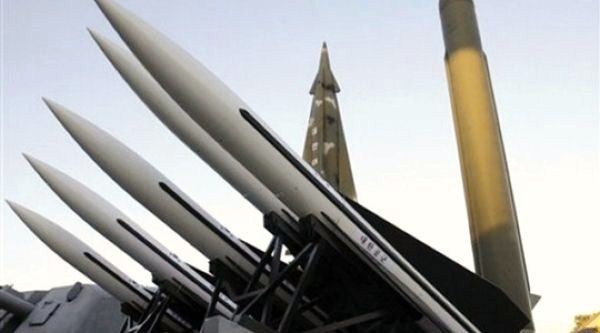
Jeffrey Lewis Director of the Nuclear Strategy and Nonproliferation Initiative at the New America Foundation, writes, “Why not put U.S. nuclear weapons back into South Korea? Well, there are lots of reasons. The first reason is that the United States Air Force has absolutely zero interest in forward deploying tactical nuclear weapons.”
Go to the articlePolicy Forum 11-002: North Korea’s Succession May Go Smoothly After All
Brent Choi and Mi Jeong Hibbitts, Washington-based specialists in North Korean issues, write, “It is possible that we will see the young Kim emerge as the next leader of North Korea. This possibility may drive Washington and Seoul to ponder new political options rather than continue current policy toward North Korea…The two allies should prepare for a scenario in which Kim Jong Un will indeed make it as regime leader, as much as for the contingencies in the case that he fails.”
Go to the articlePolicy Forum 11-001: It is Time for a ‘Change of Thinking’ in Our Rough-And-Ready China Policy
Moon Chung-in, Professor of Political Science at Yonsei University, writes, “We have to have good relations with China. To do that we need to develop a more balanced practical diplomacy. A triangular alliance that is ‘Anti-China’ made up of South Korea, Japan and the U.S. cannot be an alternative. Relations between the U.S. and China as well as relations between Japan and China must be good to ensure the peace, stability and prosperity of the Korean peninsula. In particular, it also is necessary to put emphasis on the improvement of North-South relations.”
Go to the article