Daily Report Archives
Established in December 1993, the Nautilus Institute’s *N*ortheast *A*sia *P*eace and *S*ecurity *N*etwork (NAPSNet) Daily Report served thousands of readers in more than forty countries, including policy makers, diplomats, aid organizations, scholars, donors, activists, students, and journalists.
The NAPSNet Daily Report aimed to serve a community of practitioners engaged in solving the complex security and sustainability issues in the region, especially those posed by the DPRK’s nuclear weapons program and the threat of nuclear war in the region. It was distributed by email rom 1993-1997, and went on-line in December 1997, which is when the archive on this site begins. The format at that time can be seen here.
However, for multiple reasons—the rise of instantaneous news services, the evolution of the North Korea and nuclear issues, the increasing demand for specialized and synthetic analysis of these and related issues, and the decline in donor support for NAPSNet—the Institute stopped producing the Daily Report news summary service as of December 17, 2010.
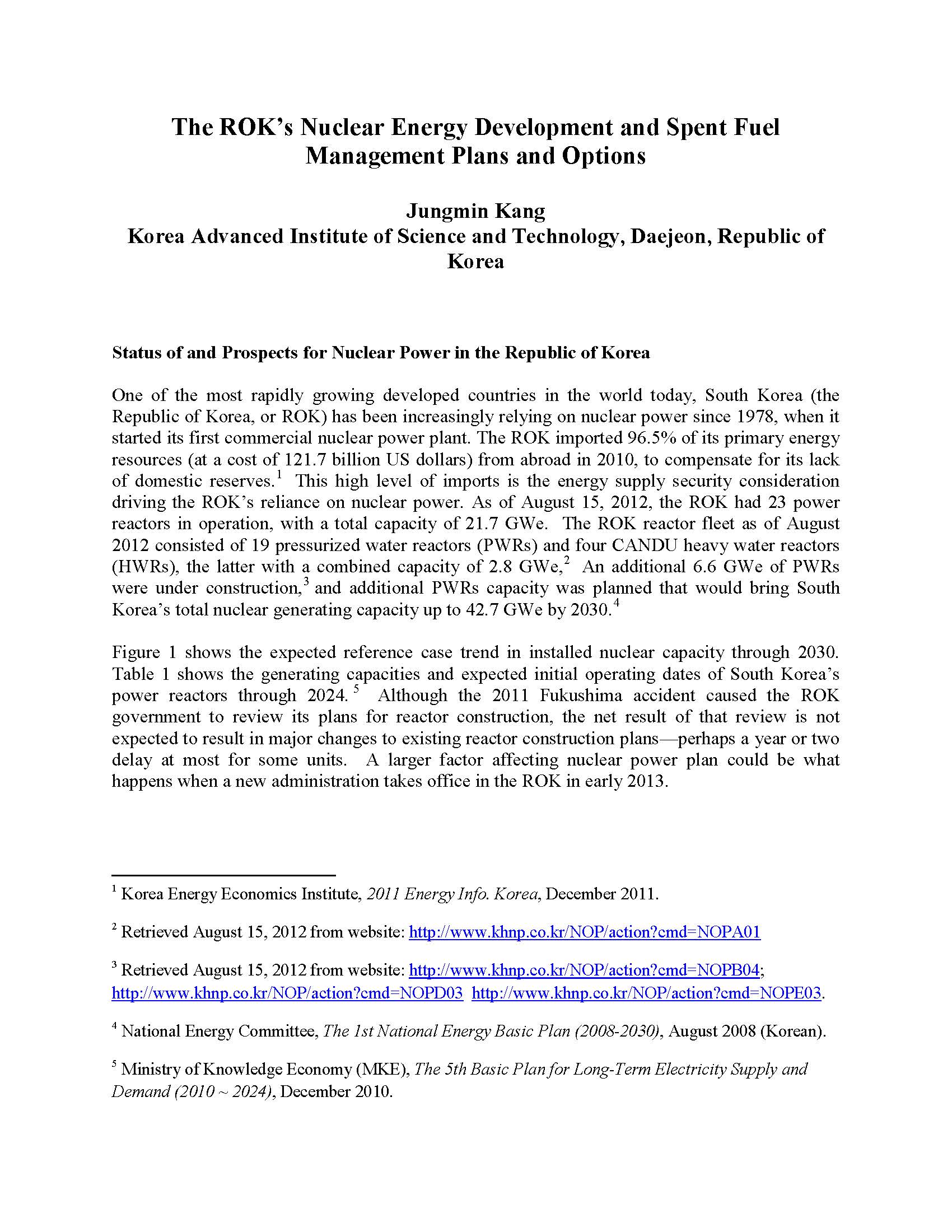
In this report Jungmin Kang reviews the current status of and future prospects for nuclear power in the Republic of Korea. The ROK’s current nuclear capacity of 21.7 GWe will, under current plans, be approximately doubled by 2030. Given the current lack of pool storage capacity, Kang asserts that spent fuel storage in the ROK will become worse in the near future and that decisions regarding the interim storage of spent fuel will play key roles in shaping nuclear fuel cycle activities and development in South Korea.
Dr. Jungmin Kang is currently a visiting professor at Lee Byong Whi Nuclear Energy Policy Center, Department of Nuclear and Quantum Engineering, Korea Advanced Institute of Science and Technology (KAIST).
Go to the article
Dancing with Google DPRK-Style
by Peter Hayes – Deterrence Contributor
A recently completed private mission to North Korea has been described as “useful idiots”…
Go to the article
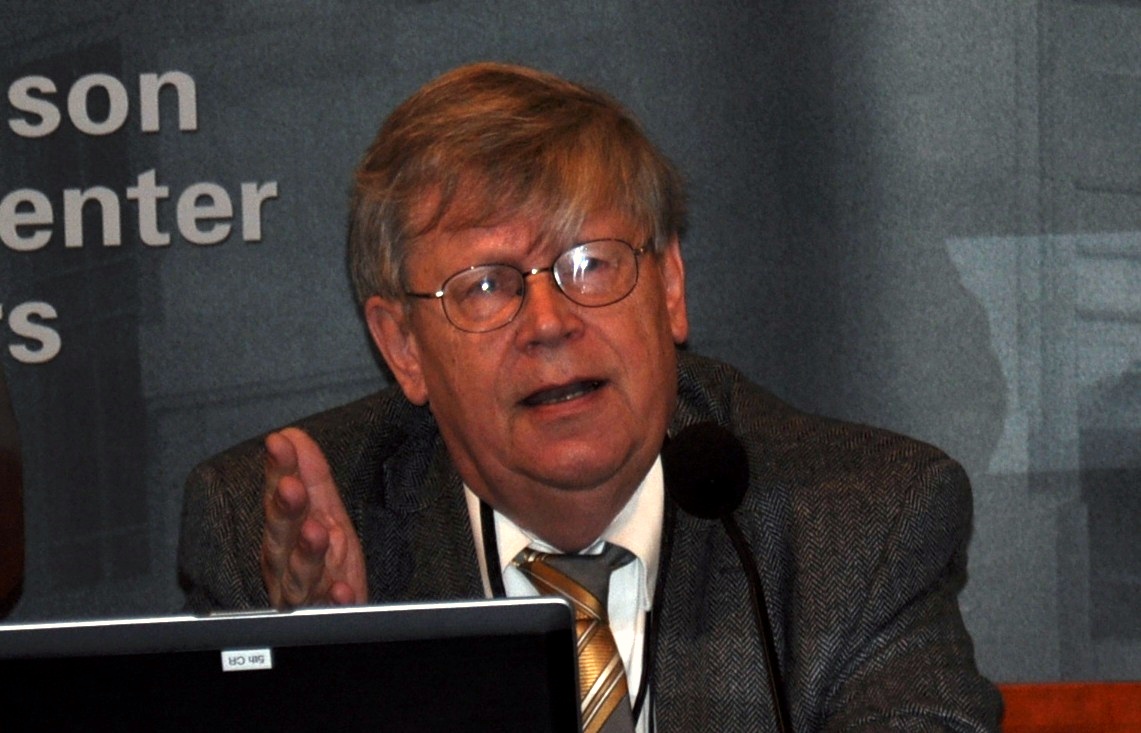
In this short report Olli Heinonen addresses critical monitoring and verification issues arising from Morton Halperin’s proposal for a nuclear weapons free zone as a new approach for the security in Northeast Asia.
Olli Heinonen is a Senior Fellow at the Belfer Center for Science and International Affairs at Harvard University.
This report was originally presented at the New Approach to Security in Northeast Asia: Breaking the Gridlock workshop held on October 9th and 10th, 2012 in Washington, DC. All of the papers and presentations given at the workshop are available here, along with the full agenda, participant list and a workshop photo gallery.
Go to the article

Richard Tanter explains why the new Japanese government led by Prime Minster Abe Shinzo renders Japan incapable of serving as the northern anchor of the US pivot strategy—not for military reasons, but due to the inability of Japanese restorationist nationalists to come to terms with the pain inflicted by sexual slavery conducted by its military forces during its colonial and imperial occupation of Asia during World War II.
Richard Tanter is Senior Research Associate at the Nautilus Institute, and professor in the School of Social and Political Studies at the University of Melbourne.
Email: rtanter@nautilus.org
Go to the article

Comfort women and the costs of denial
by Richard Tanter – Austral Peace and Security Contributor
I want to explain why Japan as the northern hinge of the United States’ pivot strategy …
Go to the article

In this report Eric Heginbotham addresses the potential impact of a Northeast Asian Nuclea Weapons Free Zone on U.S. and allied deterrence capabilities in potential Korean Peninsula and Taiwan Strait scenarios. The report focuses primarily on technical military questions related to the balance and nature of military capabilities in those areas.
Eric Heginbotham is a senior political scientist at the RAND Corporation specializing in East Asian security issues. He has recently led RAND projects assessing U.S. engagement opportunities and challenges in Southeast Asia and on U.S. and Chinese relative military capabilities.
This report was originally presented at the New Approach to Security in Northeast Asia: Breaking the Gridlock workshop held on October 9th and 10th, 2012 in Washington, DC.
Go to the article
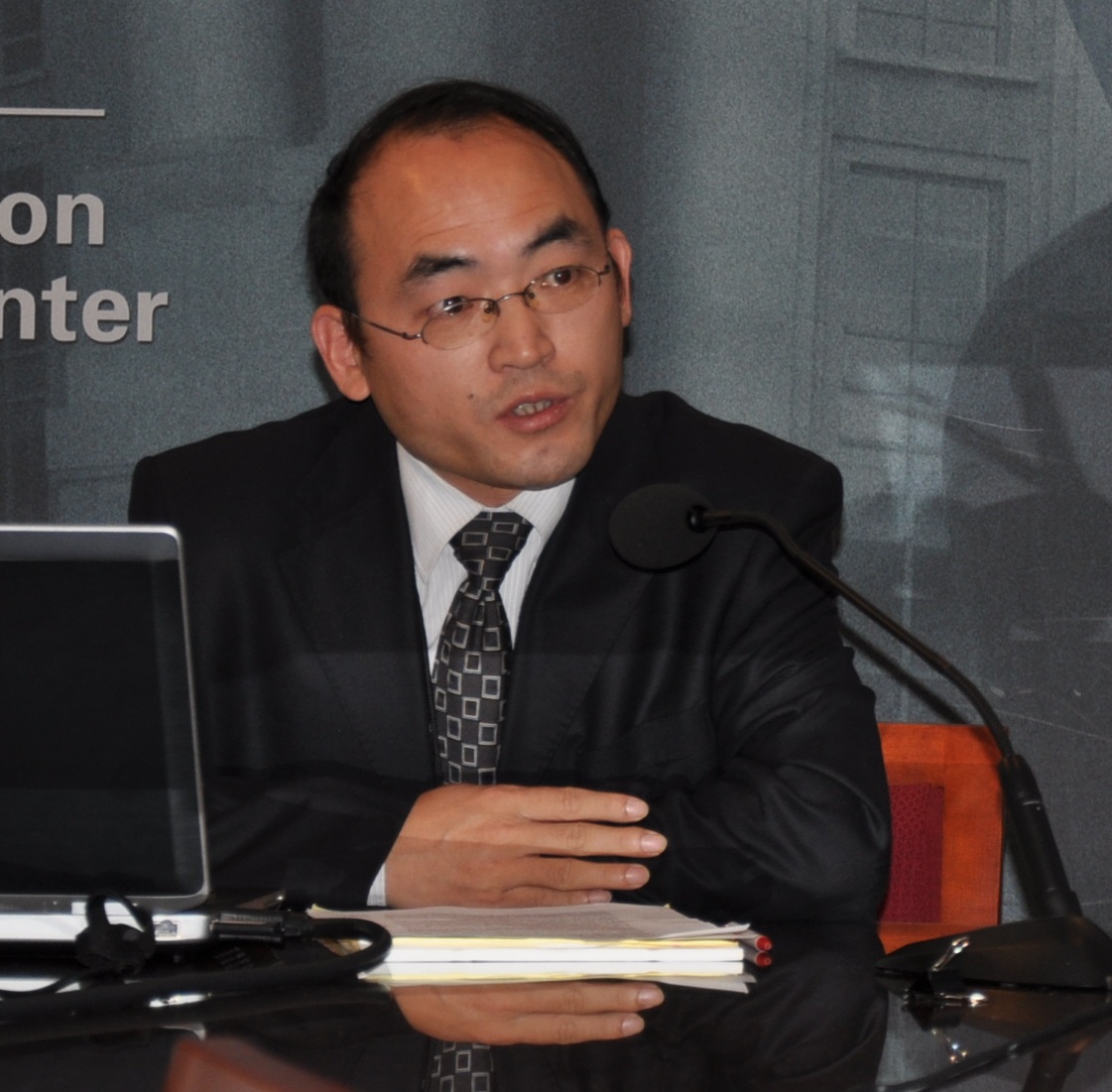
In this short report Fan Jishe updates China’s official position on Nuclear Weapon Free Zones (NWFZ) in general, and analyzes China’s interests in a Northeast Asia NWFZ (NEA-NWFZ) in particular.
Fan Jishe is an associate research fellow at the Institute for American Studies at the Chinese Academy of Social Science and a visiting scholar at the Center for International Security and Cooperation at Stanford University.
This report was originally presented at the New Approach to Security in Northeast Asia: Breaking the Gridlock workshop held on October 9th and 10th, 2012 in Washington, DC.
Go to the article
David von Hippel Energy security in general, nuclear energy in particular, and nuclear weapons proliferation are issues that are never far from the news in Northeast Asia (NEA), and recent months have been no exception. Negotiations continue on a new version of the existing US-ROK nuclear energy cooperation, which is set to expire in […]
Go to the article