

VINCE SCAPPATURA AND RICHARD TANTER
APRIL 19, 2026
I. INTRODUCTION
Vince Scappatura and Richard Tanter examine the relationship between Australia’s deepening position in relation to United States nuclear weapons and strains in government legitimation practices.
Australia’s involvement in U.S. nuclear weapons operations has deepened from longstanding reliance on extended deterrence and the hosting of major U.S. nuclear-related communications and intelligence facilities dating to the 1960s, including North West Cape and Pine Gap.
This nuclear posture is now expanding with planned forward deployments of U.S. nuclear-capable B-52 bombers and Virginia-class submarines, extending Australia’s role beyond hosting command and control functions to participation in operational nuclear activities. These developments are generating strain in domestic legitimation.
Recent political and parliamentary exchanges highlight the Australian government’s attempt to reconcile national sovereignty and democratic transparency with alliance commitments through the policy of ‘Full Knowledge and Concurrence’, coupled with repeated assertions of ‘understanding and respecting’ the U.S. policy of ‘neither confirm nor deny’. This tension between performing fealty to a nuclear ally and maintaining the appearance of sovereignty and public transparency is what drives the Australian government to obfuscate and dissemble when faced with scrutiny over the presence of U.S. nuclear-capable platforms in Australia.
This Special Report is a publication in the Nuclear-capable B-52H Stratofortress bombers project, here
Vince Scappatura is Sessional Academic in the Macquarie School of Social Sciences at Macquarie University. Richard Tanter is Senior Research Associate at the Nautilus Institute.
Acknowledgements: Thanks to Peter Hayes for his reading of earlier drafts, to Brian Martin for his helpful suggestions, and Allan Behm for the analysis that stimulated our thinking in the beginning. Our thanks also to TF23 for their kind permission to use the image at ‘419th FLTS B-52H 60-0031’, Flickr, photo taken 20 March 2026, here
It is posted under Creative Commons license 4.0 the terms of which are found here
The views expressed in this report do not necessarily reflect the official policy or position of the Nautilus Institute. Readers should note that Nautilus seeks a diversity of views and opinions on significant topics in order to identify common ground.
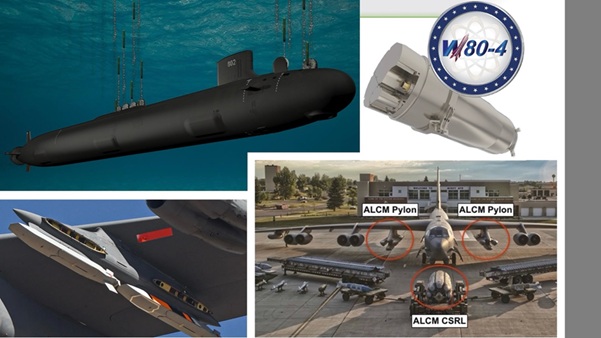
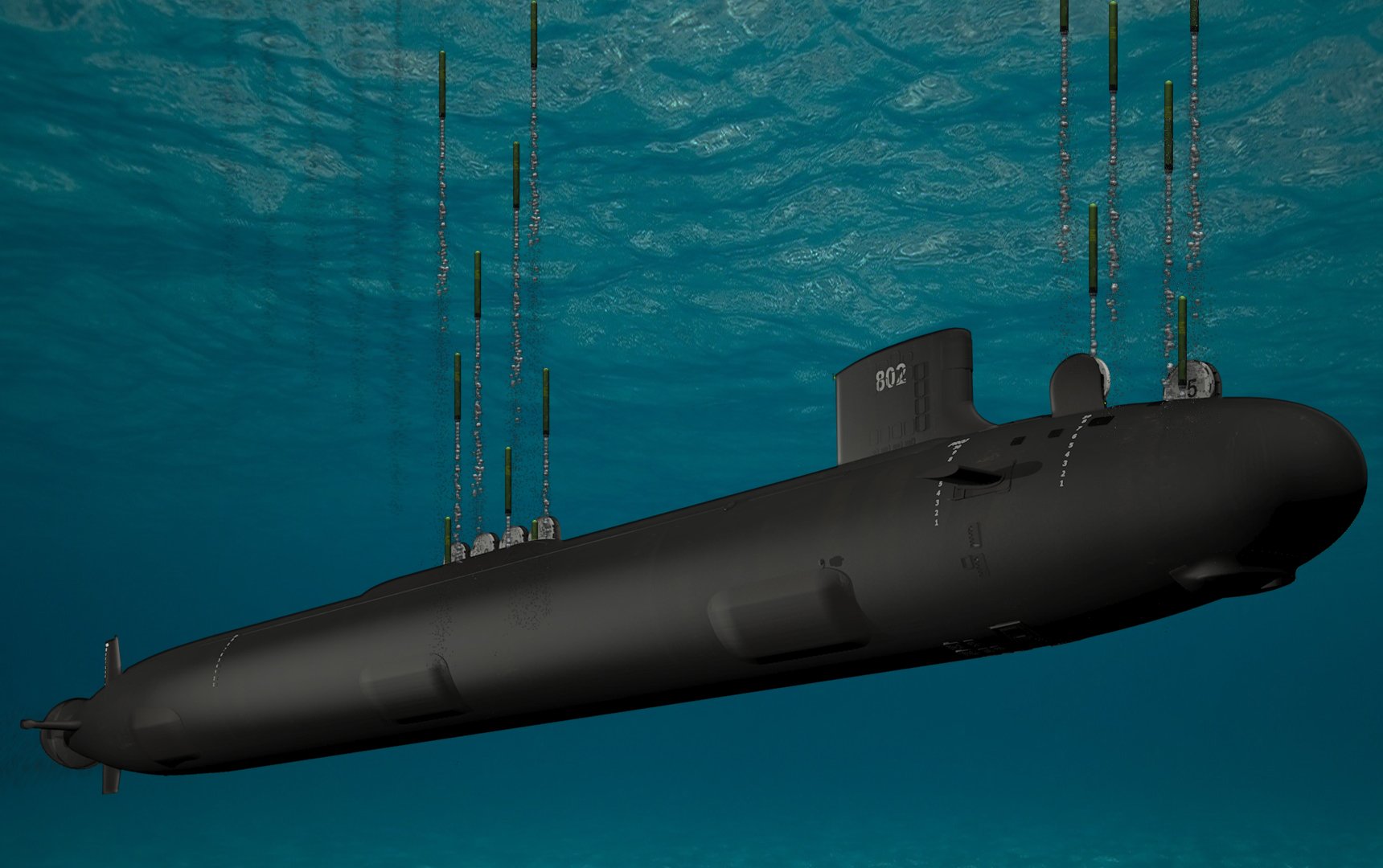
Banner images: clockwise from top left: ‘Rendering of Block V Virginia-class submarine’ with Virginia Payload Modules (four) and Virginia Payload Tubes (two), enabling launch of up to forty cruise missiles; source image: General Dynamics Electric Boat Image, in Sam Lagrone, ‘Virginia Attack Boat Program Stalled Over Tomahawk, Hypersonic Missile Insurance Rift’, USNI News, 16 December 2022, here W80 Mod 4 nuclear warhead for the AGM-181 Long Range Stand-off air-launched missile, reportedly with variable yield similar to that of the W80-1 warhead; from ‘W80-4 Life Extension Program’, National Nuclear Security Administration, November 2023, here B-52H Stratofortress armament display, with nuclear AGM-86B air-launched cruise missiles (circled), launched from wing pylons, and from rotary launcher in weapons bay, with W80-1 variable yield (5 – 150 kt) warhead; from Hans Kristensen, ‘B-52 Bomber No Longer Delivers Nuclear Gravity Bombs’, Federation of American Scientists, 25 May 2017, here Two wing pylon-mounted AGM-181 Long Range Stand-Off air-launched missiles on board B-52H Stratofortress 60-0031 from USAF 419th Flight Test Squadron, Edwards AFB, 20 March 2026; with kind permission from TF23 Photo, ‘419th FLTS B-52H 60-0031’, Flickr, photo taken 20 March 2026, [accessed 8 April 2026], here
NAPSNET SPECIAL REPORT BY VINCE SCAPPATURA AND RICHARD TANTER
PERFORMING FEALTY IN A NUCLEAR ALLIANCE: ‘UNDERSTANDING AND RESPECTING’ AND ‘NEITHER CONFIRM NOR DENY’
APRIL 19, 2026
Like theology, deterrence theory takes on the guise of a faith-based discipline masquerading as an evidence-based science… Extended nuclear deterrence theory has gradually morphed into a kind of deterrence theology – a belief system founded on a codified set of indemonstrable doctrines. — Allan Behm[1]
1. Performance legitimation of nuclear defence policies
As Australia is becoming more deeply and closely involved with United States nuclear weapons operations, the Australian government’s efforts to legitimate this new and evolving nuclear posture are beginning to show strains. Since the 1960s Australia’s nuclear posture has had two main features: reliance on what it takes to be U.S. conditional assurances of defence with nuclear weapons, and the hosting of major U.S. nuclear-related communications and intelligence facilities.[2]
From this period onward, Australia has hosted facilities that are critical elements in the U.S. nuclear command, control, communications, and intelligence system – in particular, this includes the establishment in 1963 of the nuclear submarine communications station at North West Cape in Western Australia, and the establishment in 1966 of the Pine Gap intelligence facility outside Alice Springs.[3]
The imminent deployment of U.S. Air Force nuclear-capable B-52 strategic bombers at RAAF Base Tindal near Katherine in the Northern Territory, together with the deployment of nuclear-capable Virginia-class attack submarines at HMAS Stirling outside Perth, will expand Australia’s nuclear posture beyond command and control functions to include both the hosting of, and active contribution to, U.S. strategic nuclear operations.
Amongst allies of the United States that overtly rely on extended nuclear deterrence, nuclear defence is typically legitimated through reference to doctrines of nuclear deterrence, which seek to balance assurances of the credibility of nuclear threat as a form of defence with claims that the use of nuclear weapons is so unlikely as to nullify the inherent terror they generate in the countries involved.
A primary requirement of successful legitimation of nuclear deterrence as a defence policy is to suppress awareness of the obvious disjuncture between these two claims and the reality that all nuclear-weapons states couple their professed nuclear deterrence policy with plans for nuclear war-fighting in the event of a failure of deterrence.
Like other theologies, nuclear deterrence theory, and in particular, its inherently least credible variant, extended nuclear deterrence, requires performance to be embodied in what we proffer to be ‘reality’ – literally, to be fleshed out. Performance might be verbal, writerly, visual or in the body – political discourse often melds all these modes.
Successful maintenance of nuclear deterrence – and the concomitant, if publicly veiled, plans for nuclear war-fighting – require, first of all, convincing the adversary of the credibility and reliability of the coercive capability underpinning the deterrent threat.
But equally important is to convince a domestic audience of the necessity, viability and manageability, if not actual safety, of the nuclear posture and its accompanying organisation of forces and weapons.
This second requirement is best achieved by public performance by political leaders, and often involves obfuscation, rhetorical dissimulation, and especially the displacement of logic and claims of reality by psychological mechanisms of denial and phantasy.
Moreover, in the case of countries hosting the nuclear weapons of an ally, such public performance aimed at a host country domestic audience must at the same time satisfy the nuclear ally’s expectations of alliance fealty.
Balancing these sometimes conflicting policy and performance objectives for both external and domestic audiences at the same time is a standard skill set required by senior alliance managers in countries that host nuclear-capable allied weapons platforms, such as Australia.
But on occasion, the strains become apparent, either under the pressures of public performance in a competitive political environment, or as a result of the slow drip of political and strategic reality seeping in over time.
Two recent incidents in Australia illustrate these countervailing dynamics generated by nuclear weapons. These incidents show Australian political leaders grappling with the difficulties of legitimating the presence in Australia of nuclear-capable U.S. Air Force bombers, and, in the foreseeable near future, nuclear-capable U.S. attack submarines. Both cases involve two key motifs of strategic discourse invoked by the Australian government to generate democratic legitimacy for activities of the U.S. military on Australian territory: on the one hand, the policy of ‘Full Knowledge and Concurrence, and on the other, that of ‘understanding and respecting’ the U.S. policy of neither confirming nor denying the presence or absence of nuclear weapons on its ships and aircraft.
2. Questioning US nuclear-capable strategic bomber operations in Australia
In a fiery exchange during a Senate Estimates hearing on 15 February 2023, the highly capable and admirably articulate Minister for Foreign Affairs in the Albanese Labor government, Penny Wong, lost her cool.[4] Wong is justifiably renowned for her calm, respectful, and impressive demeanour, diplomatic and respectful in language, even in tough negotiations. On this occasion, however, that composure was noticeably strained as she and the Defence Secretary, Greg Moriarty, were questioned robustly by two Australian Greens senators, Jordan Steele-John and David Shoebridge.
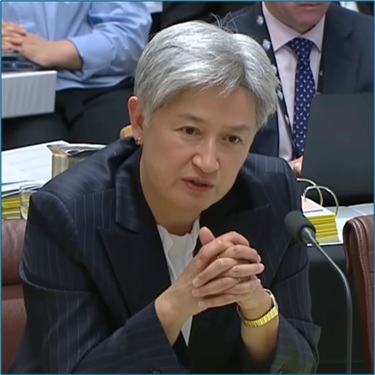
Figure 1. Senator Penny Wong, Minister for Foreign Affairs
Source: Australian Parliament House Streaming Portal,
‘Senate Finance and Public Administration Legislation Committee [Part 1] 07/10/2025’,
YouTube, at https://www.youtube.com/watch?v=6e8VzswARSE
The discussion concerned plans for the large-scale upgrade to Australia’s most important northern airbase, RAAF Base Tindal. Previously revealed in an October 2022 investigation by ABC’s Four Corners, the infrastructure project included constructing dedicated U.S. Air Force facilities to support the rotational deployment of up to six B-52 Stratofortress strategic bombers, anticipated to be completed by the end of 2026.[5]
Although the B-52 was originally designed for a nuclear mission, 30 B-52s in the active U.S. Air Force fleet were converted to conventional-only capability in accordance with the numerical limits of the New START Treaty, which came into force in 2018.[6] As of early 2026, 46 nuclear-capable B-52s remain in active service. Steele-John was pressing for clarity on which B-52 variant would be deployed to Australia, and seeking a commitment that only the conventional variant would be deployed.
During the 15 February hearing, Steele-John put the issue directly to the Foreign Minister and senior Defence officials:
Senator STEELE-JOHN: I’m seeking on behalf of the community to get a firm commitment from the government that the B-52s cycling through Australia will be solely conventionally capable, not nuclear capable.
This was not, of course, a politically innocent question. The Australian Labor Party, led by Prime Minister Anthony Albanese, has long been locked in electoral competition for ‘the progressive vote’ with the Australian Greens. Scrutiny by Greens senators of senior Labor ministers in Senate Estimates hearings is always an occasion for point scoring, in both directions.
Nor was this the first time the Greens had raised the issue of nuclear-capable U.S. weapons platforms during Senate Estimates with both Labor and Coalition governments. On several occasions going as far back as 2013 (at a time when all B-52s were nuclear-capable), and as recently as 2020, Australian Greens senators had questioned the possibility of U.S. nuclear-capable strategic bomber operations in Australia.
This was a line of inquiry that itself traced back to the announcement on 16 November 2011 by Prime Minister Julia Gillard and President Barack Obama of the planned deployment of a U.S. Marine Air-Ground Task Force and increased rotations of U.S. Air Force aircraft through northern Australia, formalised under the United States-Australia Force Posture Agreement.[7]
In the 15 February 2023 Senate Estimates exchange, when Moriarty began a reply to Steele-John’s question that gave signs of being circumlocutious and possibly non-responsive, Steele-John broke in:
Senator STEELE-JOHN: I’m conscious of time, so I’ll ask you again. Is your government able to provide us, and the community more broadly, with a clear answer: Will the B-52s be conventionally capable? Or will they be nuclear capable?
To her credit, Wong intervened as minister to answer on a matter of policy, rather than leaving a civil servant, albeit one of the most senior, to face a potentially tough question. For some minutes, Steele-John and Wong fenced, with Wong alternatively politely regretting being interrupted – ‘I’m trying to be polite … please don’t interrupt me when I’m trying to be helpful’ – or resorting to political abuse in the context of ongoing Greens-Labor electoral competition – ‘I know you want a social media grab’.
This exchange went on unproductively for some time until Wong asked for the matter to be left momentarily:
Senator WONG: Notwithstanding that outburst, I’d like to provide the senator with an answer. We’re talking about rotational forces under an agreement with another government, so I would like to provide an answer after I’ve had an opportunity to consult.
After a short break during which Steele-John had been replaced by his colleague David Shoebridge, Wong introduced Moriarty to present a prepared answer to Steele-John’s question ‘to get that on the record’. The prepared answer, reproduced in full below, is the most sustained government explanation offered to date, elements of which will reappear in other contexts:
Mr MORIARTY: You’ll recall Senator Steele-John asked a question about the B-52s visiting Australia and he asked about the presence of nuclear weapons I think more generally. It’s clear that stationing of nuclear weapons in Australia is prohibited by the South Pacific Nuclear Free Zone Treaty, to which Australia is fully committed. There is no impediment under this treaty or the nuclear non-proliferation treaty to the visit of foreign aircraft to Australian airfields or transit of Australia’s airspace, including in the context of our training and exercise programs and the Australian force posture cooperation with the United States. Australia’s longstanding arrangements to support visits by US strategic assets are consistent with our obligations under the South Pacific Nuclear Free Zone Treaty. US bomber aircraft have been visiting Australia since the early 1980s and have conducted training in Australia since 2005. Successive Australian governments have understood and respected the longstanding US policy of neither confirming nor denying the presence of nuclear weapons on particular platforms. Australia will continue to fully comply with our international obligations, and the United States understands and respects Australia’s international obligations with respect to nuclear weapons.
Despite Wong’s indication that time had been needed to consult before providing an answer, the response was not at all tailored to Steele-John’s specific question, but instead amounted to a standardised, boilerplate formulation. Nearly identical language had been used during Senate Estimates in March 2020 and would be repeated in November 2024.[8] In the earlier instance in 2020, Defence Secretary Greg Moriarty made the additional point of clarifying to the committee ‘that a military platform that is nuclear capable, such as the B-2 and B-52 bombers, is not necessarily armed with nuclear weapons on deployment.’
Taken together, the government’s position rested on three claims: that dual-capable platforms are not necessarily nuclear-armed; that even if they were, Australia would not be in contravention of the South Pacific Nuclear Free Zone Treaty; and that Australia respects the U.S. neither confirm nor deny doctrine.
All three claims were formally correct, except for their salient omissions and evasions.
3. The broad reach of neither confirm nor deny
Building on this longer pattern of Greens questioning on this issue, what distinguished the 15 February 2023 Estimates episode was something more subtle. Steele-John was seeking an explicit commitment regarding whether B-52 deployments to Australia would involve nuclear-capable aircraft, rather than the more politically charged question of whether they would be nuclear-armed. One possible answer – consistent with the historical facts of landings in Australia of U.S. Air Force B-52s, beginning in 1980 under the Fraser government and resuming in 2005 under the Howard government – would have been to say ‘Yes, some aircraft may be nuclear-capable’.
The government’s response, however, interpreted the question through the lens of understanding and respecting the U.S. policy of neither confirming nor denying the presence of nuclear weapons. As a result, the question of nuclear-capable B-52s in Australia remained unaddressed.
That even the question of nuclear capability – not just the presence of nuclear weapons – was treated as sensitive underscores the extraordinary caution taken to avoid causing even minimal discomfort to the U.S. government.
If there is any security logic to this refusal, it might be argued that identifying which B-52 aircraft are configured for conventional-only missions would indirectly disclose the nuclear-capable status of the remainder. Yet this argument does not withstand scrutiny.
Under the inspection and data-exchange provisions of the New START Treaty then still in effect, the United States has already provided the Russian Federation with detailed information regarding the configuration of its B-52 fleet. That information could, in principle, be shared with other states, including those aligned with Moscow. Moreover, the distinguishing features of conventional-only B-52 aircraft are publicly documented and readily accessible.[9]
Figure 2: Senator David Shoebridge, Australian Greens

Source: Australian Parliament House Streaming Portal, ‘Senate Foreign Affairs, Defence and Trade Legislation Committee [Part 1] | 03/12/2025’, YouTube, at https://www.youtube.com/live/k7s_aJcbCeg
4. ‘The responsible way’: dissembling to maintain alliance trust
The 15 February 2023 Estimates episode continued to unfold after Moriarty’s prepared statement. The focus shifted to a pointed line of questioning from Shoebridge regarding Australia’s treaty obligations and the presence of foreign aircraft that are nuclear-capable or armed with nuclear weapons. The essence of this part of the episode is summarised by this exchange immediately following Moriarty’s prepared statement quoted above:
Senator SHOEBRIDGE: Mr Moriarty, do I understand from that answer that Defence doesn’t believe that there is a restraint under Australia’s current treaty obligations to Australia permitting nuclear armed B-52 bombers to be present in Australia provided it’s not a permanent presence? Is that—
Wong immediately stepped in:
Senator WONG: No. You’re reading more into it. The statement says, “There is no impediment under this treaty [the South Pacific Nuclear Free Zone Treaty] or the nuclear non-proliferation treaty to the visit of foreign aircraft to Australian airfields or transit of Australia’s airspace.”
The key point here – other than normal sparring between politicians in competition in parliament, and the carefully articulated prepared position statement laying out the Albanese government’s phrasing of the neither confirm nor deny doctrine – was not the discourtesies, the sharpness of questioning, or the aggressiveness. The truly remarkable element was what Wong did not say, and the lengths to which she went to avoid doing so.
In fact, Wong’s response was logically incomplete. If, as she stated, ‘there is no impediment under this treaty … to the visit of foreign aircraft to Australian airfields’, then this must logically extend to nuclear-armed aircraft – so long as their presence does not constitute ‘stationing’ nuclear weapons, defined in the South Pacific Nuclear Free Zone Treaty as ‘emplantation, emplacement, transportation on land or inland waters, stockpiling, storage, installation and deployment.’[10]
Understanding Wong’s obfuscation requires familiarity with an element of the drafting history of the South Pacific Nuclear Free Zone Treaty. While the treaty does not infringe on the right of state parties to allow ‘visits’ and ‘transits’ of foreign ships and aircraft, their duration and character were deliberately left undefined – including in the enabling Australian legislation – at Australia’s instigation, to safeguard existing and prospective ANZUS nuclear activities.[11] It was this carefully crafted ambiguity that Wong relied on to avoid directly addressing the possibility of the presence of nuclear-armed aircraft, allowing Australia to reconcile its formal treaty commitments with its U.S. nuclear alliance obligations.
As the 15 February exchange continued to sharpen, the most important statement by Wong was virtually a plea to the Greens senators to stop asking questions about nuclear-capable aircraft in public. When Shoebridge pressed again on ‘whether or not they carry nuclear weapons’, Wong replied:
Senator WONG: And the responsible way of handling this is to recognise the US has a “neither confirm nor deny” position, which we understand and respect. I know you want to make a political point—
Senator SHOEBRIDGE: I don’t want to make that. I just want an answer.
Senator WONG: Yes, you do. We are—
Senator SHOEBRIDGE: I really just want [an] answer.
Senator WONG: Let me finish, please.
Chair: Please let the minister finish.
Senator WONG: We are not in a position to go further than what Mr Moriarty has just gone. That puts us at a disadvantage because then you can get into a whole range of hypotheticals, which you are doing.
Wong’s commendation of ‘the responsible way of handling’ the issue might be dismissed as just a rhetorical put down, but Wong was not simply being dismissive.
‘Be serious about my responsibilities’, she was saying to her opponents. When she remarked, ‘We are not in a position to go further…’, Wong might have been saying, ‘understand our position and what we might know but cannot be expected to say. The obligations of alliance outweigh the desirable charms of democratic accountability.’
Wong continued further along the same track of trying to persuade the Greens to stop asking for an answer on the possibility of nuclear-capable aircraft entering Australia. The Foreign Minister made an argument based on a posited shared responsibility of parliamentarians ‘to understand what Mr Moriarty is saying’:
Senator WONG: I don’t think it’s particularly responsible or fair to the Australian community, because you would be sensible enough to understand what Mr Moriarty is saying.
All of Wong’s uncharacteristically discourteous, occasionally abusive, and logically challenged endeavours were to avoid a statement on the parliamentary record by either the Minister for Foreign Affairs or the Secretary of the Department of Foreign Affairs and Trade that would be true but embarrassing to Australia’s nuclear ally or disconcerting to the Australian public.
Given the three conditions recognised in Moriarty’s prepared statement – ‘understanding of and respect for’ the United States’ neither confirm nor deny doctrine; the planned rotational deployment of B-52 aircraft to Australian airbases; and the permissive ‘visit’ and ‘transit’ articles of the South Pacific Nuclear Free Zone Treaty – there can be no logical denial of the possibility of nuclear-armed B-52 aircraft entering Australian territory, unless the U.S. had given Australia an explicit private guarantee to the contrary.
As former U.S. Under Secretary of Defence, Morton Halperin, put it to Congress half a century ago, the intended purpose of the policy of neither confirm nor deny is to
…enable the American government to consort with foreign governments to fool their own people… Many governments are prepared to let the United States store nuclear weapons on their soil or to have ships with nuclear weapons call at their ports provided their people do not find out about it.[12]
To be clear, there is no suggestion that the U.S. was, or at present is, storing nuclear weapons on Australian territory or operating nuclear-armed aircraft in Australia. But Halperin’s statement quite accurately describes the alliance requirements that led a well-informed and articulate minister of a country hosting nuclear-capable bombers to dissemble at such length and shallowness. Nuclear deterrence, and its alliance partner’s political buttress, neither confirm nor deny, requires spokespersons for allied host governments to dissemble, dissimulate, obfuscate, or lie by omission or commission.
Performing fealty to the nuclear ally is a necessity for complaisant allies and may require all these acts of knowing denial to the point of humiliation.
5. Willed ignorance
How much senior Australian officials actually know about U.S. nuclear operations and planning in Australia remains unclear. The typical operation of the policy of neither confirm nor deny rests upon a tacit mutual understanding – effectively a ‘don’t ask, don’t tell’ arrangement. Host governments refrain from asking whether visiting American vessels or aircraft are armed with nuclear weapons, and the United States is thereby relieved of any obligation to disclose such information.
This has long been Australia’s practice, at least in relation to regular joint military exercises with the United States conducted on Australian territory. The arrangement was stated with notable clarity during a Senate Estimates exchange on 25 February 2009.[13] Australian Greens Senator Scott Ludlam questioned the Chief of Air Force, Air Chief Marshal Angus Houston, about the participation of U.S. Navy vessels in the very large-scale biennial Talisman Sabre exercises in northern Australia:
Senator LUDLAM: Will these vessels be carrying nuclear weapons?
Air Chief Marshal HOUSTON: The American policy is to neither confirm nor deny, so we would not know.
Senator LUDLAM: We do not ask?
Air Chief Marshal HOUSTON — We do not ask.
The exchange distilled the practice to its essence: willed ignorance as an accepted quality of both performing deterrence and alliance management.[14]
B-52 bomber operations at RAAF Base Tindal may, however, fall under a different arrangement. Under the policy of Full Knowledge and Concurrence, the Australian government maintains that it possesses, first, ‘a full and detailed understanding of any capability or activity with a presence on Australian territory or making use of Australian assets,’ and second, that it ‘approves the presence of a capability or function in Australia in support of its mutually agreed goals’. This, the Albanese Labor government maintains, is an ‘expression of sovereignty.’[15]
Originally articulated in relation to U.S. communications and intelligence facilities in Australia, the extension of the Full Knowledge and Concurrence policy beyond these nuclear command, control and intelligence facilities was, for some time, ambiguous.
6. ‘We will know’
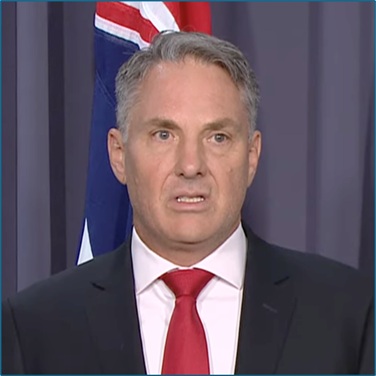
A few days before the 15 February 2023 exchange, that ambiguity narrowed. In a 9 February 2023 ministerial statement titled ‘Securing Australia’s Sovereignty’, Defence Minister Richard Marles publicly invoked Full Knowledge and Concurrence in relation to ‘joint’ and ‘collaborative’ defence facilities, to the U.S. Force Posture Initiatives – including the rotational presence of U.S. bombers – and to the AUKUS strategic partnership for acquisition of nuclear-powered attack submarines.[16]
Figure 3: Richard Marles, Minister for Defence
 Source: Australian Parliament House Streaming Portal, ‘Hon. Richard Marles MP | Press Conference | 04/02/2026’, YouTube, at https://www.youtube.com/watch?v=kDlrcgL_tp0
Yet the Australian government has not issued an explicit public statement clarifying how Full Knowledge and Concurrence applies to the announced forward deployment of B-52 aircraft to RAAF Base Tindal, particularly with respect to their nuclear armament status.
The closest approximation to such clarification emerged during a 15 February 2023 exchange between Defence Minister Marles and ABC journalist Greg Jennett, who explicitly pursued the line of questioning opened by Australian Greens senators during Senate Estimates the same day.[17] Jennett asked whether increased bomber rotations altered Australians’ entitlement to know what those aircraft carried, particularly in light of the government’s emphasis on sovereignty and Full Knowledge and Concurrence.
Marles responded that nothing had changed relative to previous governments: the United States maintains strategic ambiguity regarding the armament of its platforms and Australia has accepted visits under those terms for decades. When Jennett pressed the apparent inconsistency – ‘it can’t be called full knowledge and concurrence if it’s don’t ask, don’t tell’ – Marles attempted to reconcile the two positions. Full knowledge concerns understanding the objectives sought by capabilities operating from Australian soil, Marles replied, not ‘the specifics of any given task.’
This reframing, however, did little to resolve the ambiguity.
The following year Marles was pressed again, this time on ABC Radio’s National Breakfast on 9 August 2024, where host David Lipson put the question directly:
But would we know, I mean, under that ambiguity, would Australia know if they [U.S. long-range bombers] were armed with nuclear ordnance or not?[18]
On this occasion, Marles did not retreat into the familiar language of strategic ambiguity. Instead, he appeared to make a striking admission:
Well, Australia has full knowledge and concurrence in terms of the way in which America engages in all of its force posture activities in Australia and out of Australia… But as we have seen an expansion of American force posture, we have in turn expanded those arrangements to cover all of that, to ensure that Australian sovereignty is respected and maintained in this process. And so the short answer to the question is we will know.
Those three words – ‘we will know’ – taken at face value, imply one of two possibilities. One is that the Australian government is certain that the United States would, in fact, inform the Australian government, privately or publicly, if nuclear weapons were introduced into Australia on U.S. aircraft.
Another possibility is that ‘we will know’ because the Australian government independently determines the status of visiting platforms though indigenous technical means – for example, by visual inspection or remote sensing capabilities. However, there is no public evidence that Australia possesses either the legal authority or technical capacity to independently verify the presence or absence of nuclear weapons on U.S. aircraft.
The first possible interpretation of ‘we will know’ would not be without global precedent. There is evidence that, in certain circumstances, Washington has privately informed trusted allies about the nuclear status of U.S. platforms, even while maintaining public ambiguity. In a 1990 discussion of U.S. naval nuclear weapons in Scandinavian states contrary to those countries stated prohibitionist policies, Kristensen, Arkin and Handler stated that:
According to State department sources, the “highest officials” of NATO countries can find out whether ships are carrying nuclear weapons or not, but this is considered privileged information that cannot be acted upon.19]
Similarly, following the 1968 ‘Broken Arrow’ incident at Thule Air Base in Greenland, during which a USAF nuclear-armed bomber crashed, with conventional explosives on board detonating and causing the nuclear weapons to rupture, the United States provided private assurances to the Danish government, with caveats, that it would respect Denmark’s prohibition on the storage and overflight of nuclear weapons, although it flatly refused to declare so publicly.[20]
The question, then, is whether Marles’ August 2024 formulation now signals a comparable arrangement in Australia’s case, or whether ‘we will know’ represents something narrower, and more carefully circumscribed, than it first appears. Evidence that the minister may have gone further than intended can be found in the subsequent reluctance of senior Defence officials to repeat, or even clearly endorse, the formulation ‘we will know.’
7. Sovereignty in the shadow of nuclear ambiguity
During a later Senate Estimates hearing on 3 December 2025, Senator David Shoebridge sought to pin down the implications of the minister’s 2024 radio remarks, asking Defence Secretary Greg Moriarty:
Senator SHOEBRIDGE: When it comes to knowing whether or not US platforms are going to have nuclear weapons on them – whether Australia would know if long-range US bombers deployed to Australia, largely at RAAF Tindal, would be nuclear armed – was the defence minister, Minister Marles, right when he said, unequivocally, in an interview on ABC Radio on 9 August 2024: “… the short answer to the question is we will know.” Is Defence Minister Marles right when he says, “We will know”?’[21]
Rather than affirm the statement, Labor minister Jenny McAllister representing the Defence Minister, deflected:
Senator MCALLISTER: I think it’s difficult for officials to comment on your characterisation of a radio interview done, by the sounds of it, more than a year ago. I don’t have that transcript in front of me, and neither do the officials at the table.
Shoebridge then reframed the question in the most direct terms possible:
Senator SHOEBRIDGE: Will Australia know if US weapons platforms have nuclear weapons on them when they visit Australia? Does Australia know? Do we get told?
Moriarty declined to provide a substantive answer:
MR. MORIARTY: I have nothing to add to what the Deputy Prime Minister said.
Pressed again – ‘Does Australia get told when the U.S. brings nuclear weapons into the country?’ – Moriarty maintained his refusal to engage the proposition directly:
MR. MORIARTY: I’m not prepared to go into the details, but we understand, when we’re doing exercises and other activities with the United States, that there is a proper exchange of information about the objectives and purposes of the activity.
Notably absent was any repetition of the phrase ‘we will know.’ Instead, Moriarty reverted to the now-familiar formulation of knowledge of ‘objectives and purposes,’ but not confirmation regarding nuclear armament – or even nuclear capability. There was certainly no elucidation of what may amount to ‘a proper exchange of information’. Moriarty’s retreat to non-responsive generality suggests that the minister’s radio remark overstated the position.
On this reading, Marles’ assurance that ‘we will know’ does not signify advance notification of the specific nuclear status of particular aircraft, but rather denotes the government forming an independent assessment based on its understanding of the broader mission framework and capabilities governing bomber rotations under the U.S. Force Posture Initiatives. Accordingly, Marles’ remark shifts from being a novel stance suggesting the appearance of concrete knowledge to the more conventional, abstract awareness derived from broad operational intent. In doing so, it reflects a materially thinner conception of transparency than the plain meaning of ‘we will know’ or ‘full knowledge’ would ordinarily imply.
8. Trust without verification
Crucially, the government has not explained how ‘full knowledge’ is obtained in practice. In relation to the joint facilities, Marles has described the mechanisms of full knowledge as ‘pragmatic – such as data sharing, and joint operations and activities.’ [22] Similarly, in 2013 then Defence Minister Stephen Smith referred to ‘Australian involvement in operations’, ‘access to product’, and the regular ‘provision of briefs or reviews of activities’ as the basis for maintaining a ‘full and detailed understanding.’[23] In both accounts, knowledge is portrayed as emerging from embedded cooperation and routine information flows rather than from explicit disclosure of sensitive operational details.
A historical parallel illustrates how this reasoning has functioned in practice, although in a very different context. In the 1980s, the Fraser Government insisted that U.S. B-52 bombers operating from and through northern Australia be unarmed. The United States, in a globally unique exception to its policy of neither confirm nor deny, provided private assurance of this and, at the request of the Australian government, admitted so publicly.
This mode of assurance did not end with the Fraser Government but carried over into the subsequent Labor government. In February 1986, Foreign Minister Gareth Evans explained that Australia’s confidence rested not only on trust in American assurances, but also on the operational characteristics of the missions themselves:
The Australian Government is confident that all USAF aircraft staged through Australia have in fact been unarmed. This confidence is derived not only from our firm belief in the good faith of our ally, but also from the particular operational characteristics of the agreed B52 activities. For safety reasons, it is not practice to carry weapons of any sort in aircraft undertaking low level navigation flights. Moreover, the stringent security measures which the US Air Force always takes to protect its nuclear weapons while on the ground are not applied when B52s stage through Darwin. In light of this the Australian Government sees no requirement for verification arrangements.[24]
In other words, the 1986 assurance was derived indirectly – from trust, from knowledge of standard operating procedures, and from the absence of observable security indicators – rather than from direct inspection or formal verification.
While this historical example is instructive, today’s context is materially different. The Australian government no longer insists that visiting bombers be unarmed, and the U.S. government does not provide explicit affirmation, meaning the epistemic basis for claiming ‘we will know’ is correspondingly thinner.
The introduction of nuclear weapons from a foreign state into another state’s national territory is a matter of profound strategic significance for the government and the people of that country, for that country’s neighbours, and for possible adversary states. If Australia does not know when foreign aircraft introduce nuclear weapons into its territory, the claim that sovereignty is being fully exercised becomes difficult to sustain.
9. Compromising democratic transparency and accountability
In attempting to reconcile the U.S. policy of neither confirm nor deny with Australia’s policy of Full Knowledge and Concurrence, Marles may have inadvertently exposed a tension that goes beyond questions of sovereignty alone. To the extent that the government does possess awareness of nuclear operations, however limited, a separate problem emerges: democratic transparency and accountability are compromised.
As noted above, Marles’ admittedly fragile claim that ‘we will know’ the nuclear status of visiting U.S. aircraft likely derives indirectly from an awareness of operational intent and pragmatic cooperation, rather than from formal disclosure or verification. Nevertheless, if such awareness were to extend to the possibility of nuclear-armed strategic bomber rotations – a scenario made more plausible by the planned forward-basing of nuclear-capable B-52 bombers at RAAF Base Tindal – adherence to the ‘neither confirm nor deny’ doctrine would require that it remain undisclosed publicly.
The result is not simply constrained sovereignty, but the deliberate insulation of decisions of profound strategic consequence from democratic scrutiny. This democratic constraint is not incidental to U.S. global nuclear arrangements; it has often been intrinsic to them. For example, the United States maintains a limited number of B-61 nuclear weapons in Europe under nuclear-sharing arrangements, and yet NATO neither confirms nor denies the number or precise locations of these weapons.[25]
In other cases, the tension between public prohibition of nuclear presence and private accommodation has been sharper still. During the Cold War, the U.S. and its nominally nuclear-free allies, such as Norway, Denmark and Japan, developed what U.S. Secretary of Defence, Robert McNamara, described as ‘tacit understandings’ to allow the entry of visiting nuclear-armed ships and aircraft while publicly maintaining a nuclear ban. In Japan’s case, these understandings were formalised in secret documents. The result was a polite fiction: the host nation publicly assumed compliance, while privately accepting that non-compliance was all but assured. For the United States, such ‘tacit understandings’ were and remain essential to maintaining control over the propensity of host countries to raise public questions about the global mobility of U.S. nuclear weapons platforms.[26]
These precedents suggest that arrangements intended to preserve external strategic ambiguity can evolve into structures of internal political silence. It is therefore not implausible that a similar dynamic could emerge in Australia: public adherence to ambiguous non-nuclear assurances coexisting with private knowledge of nuclear operations, shielded from public scrutiny through the deployment of carefully calibrated, but ultimately evasive, language by Australia’s most senior ministers.
10. The ‘very hypothetical’ near future possibilities of nuclear-armed US submarines in Australia
When questioned in more recent Senate Estimates hearings, senior Australian military and government representatives have, with some fumbling, applied elements of the responses cited above regarding nuclear-capable aircraft to questions about nuclear-capable submarines, but with some variation.
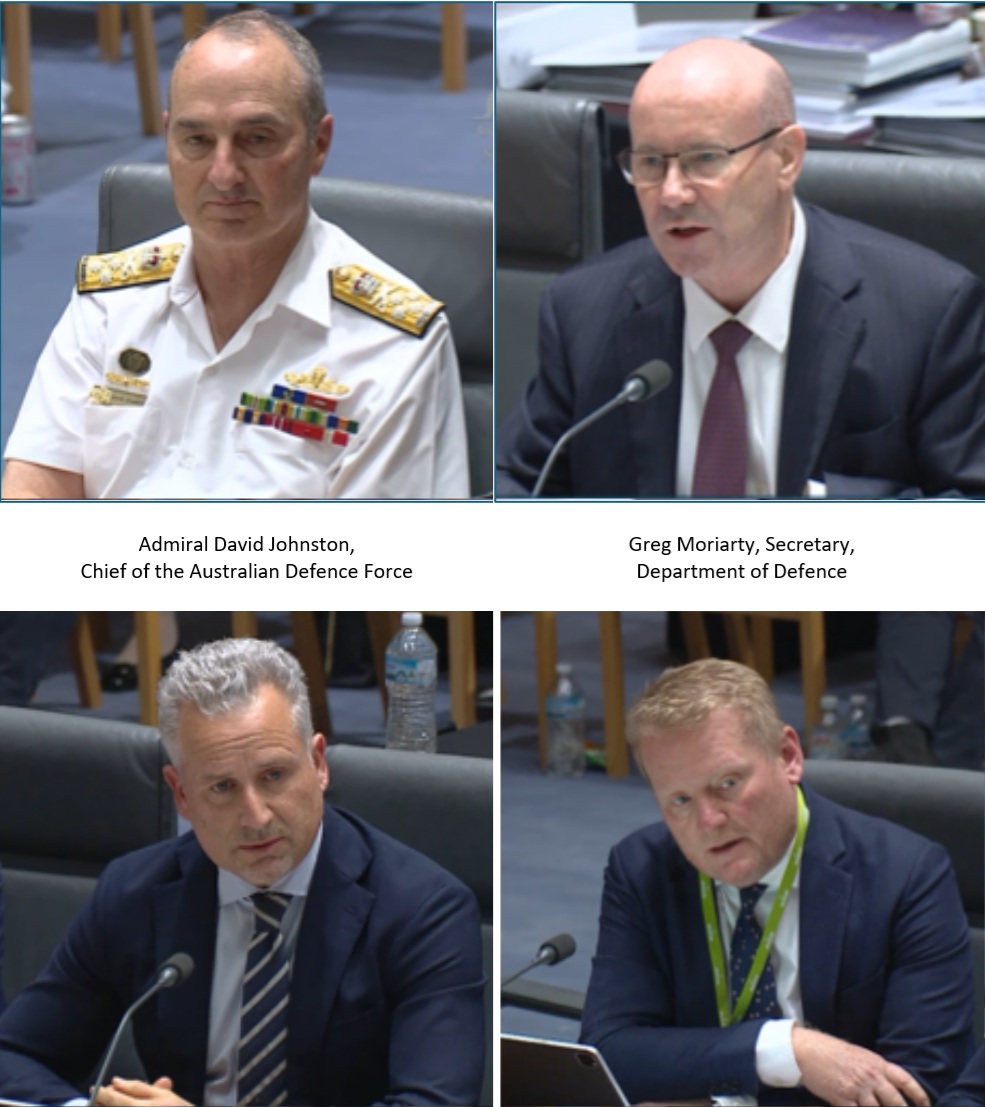
Figure 4. Australian Defence Department officials, testifying to the Senate Foreign Affairs, Defence and Trade Legislation Committee, 3 December 2025
Source: Australian Parliament House Streaming Portal, ‘Senate Foreign Affairs, Defence and Trade Legislation Committee [Part 1] | 03/12/2025’, YouTube, at https://www.youtube.com/live/k7s_aJcbCeg
On 3 December 2025, the Chief of the Australian Defence Force, the Secretary of Defence, a Deputy Secretary, and a First Assistant Secretary, serially fumbled responses to a readily anticipated straightforward question from Australian Greens Senator David Shoebridge:
Senator SHOEBRIDGE: Have you had any communications with the United States government about whether or not their sea-launched cruise missiles—which are nuclear capable, are greenlighted and are proposed to be deployable in the next 12 months—will be on those nuclear submarines that are visiting or rotating through HMAS Stirling?[27]
Shoebridge’s question slightly misstated the matter of tenses in two respects. In 1991, President George H. W. Bush withdrew tactical nuclear weapons from U.S. Navy surface vessels, attack submarines, and naval aviation.[28] Moreover, the Sea-Launched Cruise Missile – Nuclear (SLCM-N) is not yet in production and therefore no U.S. attack submarine can currently be considered nuclear-capable. Yet Shoebridge was in general correct in his claim that nuclear-capable Virginia-class submarines could deploy to Australia within little more than two normal electoral cycles.
The production of the new nuclear missile is a firm matter of Trump Administration policy, for deployment planned in Virginia-class submarines. Administration policy urgency is supported by expanded Congressional funding and a mandated accelerated delivery schedule. The Department of War is responsible for the missile development and production by 2032, and the National Nuclear Security Administration’s Sandia National Laboratory – the innovative heart of the United States’ nuclear weapons production complex – has the same Congressionally-mandated target date for the missile’s warhead.[29]
A U.S. defence trade report summarised the situation as of September 2025:
The US Navy has emphasized that the Sea-Launched Cruise Missile–Nuclear (SLCM-N) will build on existing technologies and adapt proven design concepts, an approach expected to shorten development cycles compared to creating a new system from scratch…The US Navy has set a goal of achieving initial operational capability by fiscal year 2034, with deployment planned for Virginia-class attack submarines. The missile is being designed to provide a survivable and flexible option to respond to regional nuclear threats, with planning focused on adapting a variant of the W80-4 warhead currently in development for the Long-Range Standoff Weapon (LRSO)…Officials have stated that the warhead, a modernized derivative of the W80 series with selectable low-yield settings estimated between 5 and 150 kilotons, remains on schedule.[30]
Following Shoebridge’s question, the Chief of the Defence Force, Admiral David Johnston, picked up the ambiguity, replying somewhat cautiously:
Adm. JOHNSTON: I think we are talking about a weapon that doesn’t exist, and you’re inviting a comment about a weapon that may come into the United States’s inventory at some time.
Senator SHOEBRIDGE: The United States have funded them, are producing them and are going to be deploying them next year; you do know that?
Adm. JOHNSTON: I think that’s the statement you have said, with their intent to develop them over the course of the year.
As the chief of the armed forces began to backtrack in the face of Shoebridge’s reference to known facts (though again, overstating the timing of production and deployment) Defence Secretary Greg Moriarty sought to return to the safer ground of evasive generalities:
Mr MORIARTY: The Australian government’s got a longstanding bipartisan policy on how to handle requests for nuclear-capable platforms that may visit Australia from time to time…
When Shoebridge pressed for clarification on the particular ‘bipartisan policy’ to which Moriarty was referring, Moriarty’s deputy, Hugh Jeffrey, stepped in to dismiss Shoebridge’s question about nuclear-armed cruise missiles on Virginia-class submarines as ‘still a very hypothetical one’:
Mr JEFFREY: On that program you’re referring to … My understanding is that it’s still an experimental program. I am aware of the program, that they are looking to develop this capability. On the platform they will use for this capability, my understanding is that this is still very much a broader question and that there is, at this stage, no confirmation that the Virginia class submarine is the platform the US Navy would intend to use for this capability. The question is, at this stage, still a very hypothetical one, as we understand it…
Shoebridge then clarified the ambiguities in his original question, setting out the matters noted above about the authorisation and funding of the SLCM-N and its warhead in the U.S. 2024 National Defense Authorization Act (and though he did not mention it, the 2025 NDAA as well) and asked the critical policy question:
Senator SHOEBRIDGE: … will Australia permit nuclear armed Virginia class submarines into our waters and will they be moored just a few kilometres off Fremantle? Who’s going to answer it?
A fourth government spokesperson, Assistant Secretary of Defence Bernard Philip, then stepped in to reiterate the three essential, but evasive, general claims noted above in Moriarty’s 15 February 2023 statement:
Mr PHILIP: Visits by United States strategic assets are consistent with our treaty obligations. Australia will continue to comply with our international obligations. The United States understands and respects our obligations regarding nuclear weapons. The United States does not station nuclear weapons in Australia. Stationing nuclear weapons in Australia is prohibited by the South Pacific Nuclear Free Zone Treaty, to which Australia remains committed. There is no impediment under the treaty of Rarotonga and the Treaty on the Non-Proliferation of Nuclear Weapons to the visit of dual-capable foreign platforms to Australia’s territory or them transiting Australia’s airspace or waters.
Shoebridge then noted what had not been said on either occasion:
Senator SHOEBRIDGE: So we’re going to permit them to be floating off Fremantle in US Virginia class submarines. Is it still the position that the Australian government won’t ask the US whether or not they’re nuclear armed submarines, just like we don’t ask about the nuclear armed B52s? Is that still the position—don’t ask, don’t tell?
To which Moriarty responded, as if the matter had been clarified:
Mr. MORIARTY: We respect the United States position of neither confirming nor denying.
Quoting such exchanges at length risks tedium, but they do make clear – Marles’ ‘we will know’ slip notwithstanding – the Australian government’s preference for equivocation, dissembling and denial whenever questions about the entry into Australia of U.S. nuclear-capable weapons platforms are raised.
In the case of the Submarine Rotational Force – West (SRF-W) in Western Australia, scheduled to commence in 2027, and the planned deployment in the near future of SLCM-N missiles on Virginia-class submarines in 2032, government dismissal of the salience of the matter to the Australian public as ‘very hypothetical’ – since the missile is still in a development stage – avoids two critical issues.
First, refusing to engage with the implications of U.S. weapons systems commitments that are firmly mandated by policy and Congress and salient to Australia is inherently tendentious and evasive. Funding, timelines, and performance targets for the production of the SLCM-N for deployment on Virginia-class SSNs are explicit, meaning near-term deployment is a real and foreseeable issue.
There may be small uncertainties about exact timelines as with any major weapons program, but deadlines in the very near future have been explicitly mandated by Congressional legislation and thus cannot be simply ignored or denied. It is illogical and evasive to take any element of uncertainty about a government program to be grounds for dismissing consideration of the policy implications of those asseverated government objectives as ‘hypothetical’.
Second, and perhaps more serious, is that treating such questions as merely ‘hypothetical’ – and therefore a reason to defer discussion – effectively precludes any ‘responsible’ policy debate until after the first U.S. Navy nuclear-capable, and quite possibly nuclear-armed, Virginia-class submarine arrives in an Australian port. At which point, the practical point of policy debate is nugatory.
If not now, when?
Government claims that plans for nuclear-armed U.S. submarines in Australia cannot be responsibly discussed in a non-hypothetical manner must be rejected, and must instead be addressed in advance to enable informed strategic and public deliberation.
11. Performing nuclear fealty
The 3 December 2025 Senate Estimates exchange over nuclear-capable submarines illustrates how the same rhetorical and procedural mechanisms observed with B-52 deployments continue unabated. In both cases, senior Australian officials relied on carefully calibrated rhetorical manoeuvres – selectively invoking claims of treaty compliance, strategic ambiguity, and respect for the U.S. policy of neither confirm nor deny – to avoid providing any concrete public statement about the presence or potential deployment of nuclear weapons. The repeated categorisation of near-future capabilities as ‘very hypothetical’ served to defer public reckoning with the strategic implications of allied nuclear platforms on Australian soil until the country is confronted with their physical presence.
As the record above shows, when questioned about the possible introduction of nuclear weapons by U.S. dual-capable platforms into Australia, the government has consistently relied on three claims: that dual-capable platforms are not necessarily nuclear-armed; that even if they were, Australia would not be in violation of the South Pacific Nuclear Free Zone Treaty; and that Australia respects the U.S. policy of neither confirm nor deny.
While technically correct, these claims mask critical omissions. By foregrounding the claim that the United States does not ‘station’ nuclear weapons in Australia while simultaneously framing the forward-basing of B-52 aircraft and Virginia-class submarines as mere ‘visits’ or ‘transits’ consistent with the South Pacific Nuclear Free Zone Treaty, the government presents a legally precise but strategically misleading picture – one that obscures the potential presence and significance of nuclear-armed platforms on Australian soil.
The practical effect is compounded by a thin conception of transparency embedded in the policy of Full Knowledge and Concurrence, where knowledge appears to derive from operational intent, routine cooperation, and indirect awareness rather than explicit disclosure or formal verification. Coupled with the public performance of alliance fealty, this obfuscation functions simultaneously as a tool of domestic political management and alliance maintenance, insulating decisions of profound strategic consequence from democratic scrutiny.
This tension between performing alliance fealty and maintaining democratic transparency is not new. Beyond explicitly defence-related agreements with the United States, Australian governments have long applied the policy of Full Knowledge and Concurrence in agreements to host ground facilities for the U.S. National Aeronautics and Space Administration (NASA), some of which were understood to have significant U.S. defence activities – a situation which remains today.[31] In a recent study of the interpenetration of U.S. alliance policy and the locations at which NASA ground stations have been established outside the United States, the historian Aaron Bateman remarked that Australia, which ‘hosted far more U.S. space infrastructure than any other U.S. ally or partner during the Cold War’, took care not to apply Full Knowledge and Concurrence too firmly in negotiations with the Reagan Administration:
For Australia, the principle of full knowledge and concurrence was malleable and heavily shaped by alliance politics.[32]
Bateman’s remark remains apposite today.
Ultimately, the Australian government cannot have it both ways. Either it lacks full knowledge of the nuclear status of visiting platforms, in which case claims of sovereignty are undermined, or it possesses such knowledge but is unable or unwilling to disclose it, in which case democratic accountability is compromised. The enduring tension between performing fealty to a nuclear ally and maintaining the appearance of upholding sovereignty and public transparency is precisely what compels the government to obfuscate and dissemble whenever it is questioned about the presence of U.S. nuclear-capable platforms in Australia.
III. ENDNOTES
[1] Allan Behm, ‘Extended Deterrence and Extended Nuclear Deterrence in a Pandemic World’, Journal for Peace and Nuclear Disarmament, Volume 4, 2021 – Issue sup1, pp. 140, 147, at https://www.tandfonline.com/doi/full/10.1080/25751654.2021.1880770
[2] Stephan Frühling, ‘The fuzzy limits of self-reliance: US extended deterrence and Australian strategic policy’, Australian Journal of International Affairs, Vol. 67, No. 1, pp. 18-34, at https://doi.org/10.1080/10357718.2013.748273
[3] On North West Cape and its recent expansion see Richard Tanter, ‘Naval Communication Station Harold E. Holt (North West Cape)’, Australia Defence Facilities, Nautilus Institute Briefing Book, updated 2 April 2026, at https://nautilus.org/publications/books/australian-forces-abroad/defence-facilities/naval-communication-station-harold-e.-holt-north-west-cape/ On Pine Gap see the publications by Desmond Ball, Bill Robinson and Richard Tanter collated as ‘The Pine Gap Project’, Australian Defence Facilities, Nautilus Institute Briefing Books, at https://nautilus.org/briefing-books/australian-defence-facilities/pine-gap/the-pine-gap-project/. An important recent historical study that bears on both facilities and the Australian government’s approach to its policy of full knowledge and concurrence is Aaron Bateman, ‘U.S. Space Power and Alliance Dynamics in the Cold War’, International Security, Vol. 50, No. 2 (Fall 2025), pp. 55–94 at https://direct.mit.edu/isec/article/50/2/55/133731/U-S-Space-Power-and-Alliance-Dynamics-in-the-Cold
[4] Parliament of Australia 2023, Budget Supplementary Estimates 2022–23, Foreign Affairs, Defence and Trade Legislation Committee, Wednesday, 15 February 2023: Official Hansard, pp. 24-25, and 34-35, at https://parlinfo.aph.gov.au/parlInfo/download/committees/estimate/26530/toc_pdf/Foreign%20Affairs,%20Defence%20and%20Trade%20Legislation%20Committee_2023_02_15.pdf
[5] Angus Grigg, Lesley Robinson and Meghna Bali, ‘US Air Force to deploy nuclear-capable B-52 bombers to Australia as tensions with China grow’, ABC News, 31 October 2022, at https://www.abc.net.au/news/2022-10-31/china-tensions-taiwan-us-military-deploy-bombers-to-australia/101585380
[6] The New START Treaty, the last remaining major bilateral arms control agreement between the United States and Russia, expired on 5 February 2026 without a successor arrangement in place. For an analysis of the implications for Australia, particularly regarding the potential reconversion of the conventionally configured B-52 fleet, see Vince Scappatura and Richard Tanter, ‘After New START: The B-52 Strategic Bomber and the Collapse of Treaty Constraints’, NAPSNet Policy Forum, 30 January 2026, at https://nautilus.org/napsnet/napsnet-policy-forum/after-new-start-the-b-52-strategic-bomber-and-the-collapse-of-treaty-constraints/
[7] ‘Gillard, Obama detail US troop deployment’, ABC News, 16 November 2011, at https://www.abc.net.au/news/2011-11-16/gillard2c-obama-announce-darwin-troop-deployment/3675596; ‘The Force Posture Agreement between the Government of Australia and the Government of the United States of America’, Department of Foreign Affairs and Trade, 12 August 2014, p. 5, at the Australasian Legal Information Institute (AustLII), http://www.austlii.edu.au/au/other/dfat/treaties/ATS/2015/1.pdf and Richard Tanter, ‘Cover up: The Australian Governments secret list of US bases’, Pearls and Irritations, 24 July 2023, at https://johnmenadue.com/post/2023/07/cover-up-the-australian-governments-secret-list-of-us-bases/
[8] Parliament of Australia 2020, Budget Additional Estimates 2019–20, Foreign Affairs, Defence and Trade Legislation Committee, Wednesday, 4 March 2020: Official Hansard, p. 99 at https://parlinfo.aph.gov.au/parlInfo/download/committees/estimate/0f0b5852-52eb-4512-a770-74925492ef67/toc_pdf/Foreign%20Affairs,%20Defence%20and%20Trade%20Legislation%20Committee_2020_03_04_7607_Official.pdf; Parliament of Australia 2024, Budget Supplementary Estimates 2024–25, Foreign Affairs, Defence and Trade Legislation Committee, Thursday, 7 November 2024: Official Hansard, p. 57 at https://parlinfo.aph.gov.au/parlInfo/download/committees/estimate/28533/toc_pdf/Foreign%20Affairs,%20Defence%20and%20Trade%20Legislation%20Committee_2024_11_07_Official.pdf
[9] Vince Scappatura and Richard Tanter, ‘Nuclear-capable B-52H Stratofortress Bombers: A Visual Guide to Identification’, NAPSNet Special Reports, 26 August 2024, at https://nautilus.org/napsnet/napsnet-special-reports/nuclear-capable-b-52h-stratofortress-bombers-a-visual-guide-to-identification/
[10] South Pacific Nuclear Free Zone Treaty (with annexes); Concluded at Rarotonga on 6 August 1985, Articles 1(d) and 5, at https://treaties.un.org/doc/Publication/UNTS/Volume%201445/volume-1445-I-24592-English.pdf The Australian enabling act is the South Pacific Nuclear Free Zone Treaty Act 1986, Part II, Section 15, at http://classic.austlii.edu.au/au/legis/cth/consol_act/spnfzta1986375/
[11] Michael Hamel-Green, The South Pacific Nuclear Free Zone Treaty : a critical assessment, Peace Research Centre, The Australian National University, 1990, at https://openresearch-repository.anu.edu.au/items/723483b1-a63d-41fb-8bd0-541bbebc2e9d
[12] Morton H. Halperin, Testimony, United States Congress, 93(2), Senate Foreign Relations Committee, Hearings on Nuclear Weapons in Europe, 7 March 1974, pp. 41, 236, [including appended text of Morton H. Halperin , ‘Why Not Tell Where The Weapons Are?’, Washington Post, 15 July 1971], at https://babel.hathitrust.org/cgi/pt?id=uc1.b5148883&seq=89
[13] Parliament of Australia, Testimony of Air Vice Marshal Angus Houston, Chief of Defence Force, Hansard (Senate), Standing Committee on Foreign Affairs, Defence and Trade, Estimates, 25 February 2009, pp. 94-95, at https://www.aph.gov.au/~/media/Estimates/Live/commttee/S11649.ashx
[14] In fact, as discussed below, in 1991 President George H. W. Bush withdrew tactical nuclear weapons from U.S. Navy surface vessels, attack submarines, and naval aviation. In this case, Houston could have responded by stating this fact, but instead defaulted to the ritualised practice of adhering to the U.S. policy of neither confirm nor deny.
[15] Richard Marles, ‘Securing Australia’s Sovereignty’, Australian Government Defence, 9 February 2023, at https://www.minister.defence.gov.au/statements/2023-02-09/securing-australias-sovereignty
[16] Marles, ‘Securing Australia’s Sovereignty’.
[17] ‘Greg Jennett, ABC News24, Afternoon Briefing’, Australian Government Defence, 15 February 2023, at https://www.minister.defence.gov.au/transcripts/2023-02-15/greg-jennett-abc-news24-afternoon-briefing
[18] ‘Radio Interview, ABC RN Breakfast’, Australian Government Defence, 9 August 2024, at https://www.minister.defence.gov.au/transcripts/2024-08-09/radio-interview-abc-rn-breakfast
[19] Hans M. Kristensen, William Arkin, and Joshua Handler, ‘U.S. Naval Nuclear Weapons in Sweden’, Greenpeace Nuclear Seas Campaign, Neptune Papers, No. 6, September 1990, p. 4, at https://web.archive.org/web/20230124180357/http://www.nukestrat.com/pubs/nep6.pdf
[20] Thorsten Borring Olesen, ‘Tango for Thule’, Journal for Cold War Studies, Spring 2011, vol 13, no 2, 131-139 at https://direct.mit.edu/jcws/article-abstract/13/2/116/14026/Tango-for-Thule-The-Dilemmas-and-Limits-of-the?redirectedFrom=fulltext
[21] Parliament of Australia, Hansard (Senate), Standing Committee on Foreign Affairs, Defence and Trade, Estimates, 3 December 2025, pp. 92-95, at https://parlinfo.aph.gov.au/parlInfo/download/committees/estimate/29014/toc_pdf/Foreign%20Affairs,%20Defence%20and%20Trade%20Legislation%20Committee_2025_12_03.pdf
[22] Marles, ‘Securing Australia’s Sovereignty’.
[23] Parliament of Australia, Ministerial Statements: Full Knowledge and Concurrence, Hansard (House of Representatives), No. 9, 2013, Parliamentary Debates, Wednesday, 26 June 2013, pp. 7701-7077, at https://parlinfo.aph.gov.au/parlInfo/download/chamber/hansardr/4d60a662-a538-4e48-b2d8-9a97b8276c77/toc_pdf/House%20of%20Representatives_2013_06_26_2048_Official.pdf
[24] CPD, Senate, Answers to Questions, No. 322: Operations of B52 Bombers’, 20 February 1986, 741. For a more detailed discussion see Vince Scappatura and Richard Tanter, B-52 strategic bombers in Australia, 1979 – 1991 and the nuclear heterodoxy of Malcolm Fraser, Nautilus Institute Special Report, 4 August 2025.
[25] Despite this secrecy, it is widely understood that these nuclear weapons have long been stored in five NATO countries: Italy, Türkiye, Belgium, the Netherlands and Germany. Hans Kristensen, Matt Korda, Eliana Johns & Mackenzie Knight-Boyle, ‘The changing nuclear landscape in Europe’, Bulletin of Atomic Scientists, Volume 81, Issue 6, 2025, at https://www.tandfonline.com/doi/full/10.1080/00963402.2025.2586980
[26] See Vince Scappatura and Richard Tanter, B-52 strategic bombers in Australia, 1979 – 1991 and the nuclear heterodoxy of Malcolm Fraser, pp. 115-125 for further discussion..
[27] Parliament of Australia, Hansard (Senate), Standing Committee on Foreign Affairs, Defence and Trade, Estimates, 3 December 2025, pp. 92-95, at https://parlinfo.aph.gov.au/parlInfo/download/committees/estimate/29014/toc_pdf/Foreign%20Affairs,%20Defence%20and%20Trade%20Legislation%20Committee_2025_12_03.pdf
[28] For a brief summary (as of 2017), see Fact Sheet: The Presidential Nuclear Initiatives (PNIs) on Tactical Nuclear Weapons at a Glance, Arms Control Association, July 2017, at https://www.armscontrol.org/factsheets/presidential-nuclear-initiatives-pnis-tactical-nuclear-weapons-glance The standard study is Susan J. Koch, The Presidential Nuclear Initiatives of 1991–1992, Center for the Study of Weapons of Mass Destruction, Case Study 5, National Defense University, September 2012, at https://ndupress.ndu.edu/portals/68/documents/casestudies/cswmd_casestudy-5.pdf
[29] Mackenzie Knight-Boyle, ‘What’s New For Nukes In The New NDAA?’, Federation of American Scientists, Global Risk Blog, 18 December 2025, at https://fas.org/publication/whats-new-for-nukes-in-the-new-ndaa/; United States Congress, S. 1071, National Defense Authorization Act for Fiscal Year 2026, 119th Congress (2025-2026), ‘Sec. 1633. Matters relating to the nuclear-armed, sea-launched cruise missile’, at https://www.congress.gov/bill/119th-congress/senate-bill/1071/text; and United States, National Nuclear Security Administration, ‘Weapons activities’, Department of Energy, FY 2026 Congressional Justification, Office of the Chief Financial Officer, Volume 1, May 2025, https://www.energy.gov/sites/default/files/2025-06/doe-fy-2026-vol-1-wa.pdf
[30] Jérôme Brahy, ‘US Navy selects five companies to develop first prototype of future SLCM-N sea-launched nuclear cruise missile’, Army Recognition, 10 September 2025, at https://www.armyrecognition.com/news/navy-news/2025/us-navy-selects-five-companies-to-develop-first-prototype-of-future-slcm-n-sea-launched-nuclear-cruise-missile
[31] Aaron Bateman, ‘U.S. Space Power and Alliance Dynamics in the Cold War’ lists a large number of U.S. space-related facilities in Australia in the 1970s that were nominally civilian but with defence applications, in addition to well-known U.S. overtly military intelligence and communications facilities, including the Joint Defence Space Research Facility, Pine Gap and the Joint Defence Space Communications Facility, Nurrungar. Today, Australia hosts a range of U.S. space-related facilities that are nominally civilian but with some defence functions, all of which are at least nominally collaborative (including with NASA, the U.S. Air Force and the U.S. Space Force). These include the Canberra Deep Space Communication Complex; the Tracking and Data Relay Satellite Facility at Dongara, Western Australia; the Tracking and Data Relay Satellite Ranging System Facility at Alice Springs, Northern Territory; the Learmonth Solar Observatory, Western Australia; and the Joint Geological and Geophysical Research Station, Alice Springs.
[32] Aaron Bateman, ‘U.S. Space Power and Alliance Dynamics in the Cold War’, pp. 59 and 92.
IV. NAUTILUS INVITES YOUR RESPONSE
The Nautilus Asia Peace and Security Network invites your responses to this report. Please send responses to: nautilus@nautilus.org. Responses will be considered for redistribution to the network only if they include the author’s name, affiliation, and explicit consent.