A STRATEGY FOR DEALING WITH NORTH KOREA

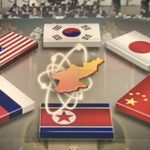
Leon V. Sigal July 28, 2017   I. INTRODUCTION In this essay, Leon V. Sigal argues that North Korea’s unbounded weapons program “poses a clear and present danger to U.S. and allied security. That makes it a matter of great urgency to negotiate a suspension of its nuclear and missile testing and fissile material production […]
STRENGTHENING NUCLEAR SECURITY SYSTEM AGAINST INSIDER THEFT OF NUCLEAR MATERIAL

Masahiro Kikuchi July 14, 2017   I.  INTRODUCTION In this essay, Mahiro Kikuchi concludes that: “Quantitative and timely evaluation system for detection of protracted theft by insider should be built in the NMAC as an essential part of its function. All people including not only the national competent authority but also top management and staffs […]

METAL CASK STORAGE AS COMPARED WITH POOL STORAGE OF SPENT NUCLEAR FUEL IN JAPAN

Toshiari Saegusa July 7, 2017 I.  INTRODUCTION   In this essay, Toshiari Saegusa reviews the evolution of nuclear spent fuel (SF) storage technology and in particular, the safety, economic, and security issues associated with use of dry cask storage for nuclear spent fuel.  He concludes: “From technical and economic points of view, SF needs to be […]

JAPANESE ENERGY POLICIES AFTER FUKUSHIMA

Kae Takase June 23 2017   I.  INTRODUCTION In this essay, after tracing the evolution of Japan’s energy policy and economy in the years after Fukushima, Kae Takase concludes: “The Japanese electricity sector will undergo dramatic and disruptive changes in the coming years.  The future of nuclear reactor restarts, retail market deregulation, unbundling of transmission […]

NUCLEAR SECURITY DEFICIENCY: HISTORICAL PERSPECTIVES ON JAPAN’S FUEL-CYCLE POLICY

Masakatsu Ota June 15, 2017   I. INTRODUCTION In this essay Masakatsu Ota argues that driven by “other agendas,” the Abe government will continue to support nuclear power, including MOx fuel recycling in spite of the Fukushima disaster, albeit with important modifications.  He concludes that “little attention has been paid to nuclear security concern about […]

NUCLEAR TERRORISM: HOW BIG IS THE RISK TO JAPAN

Matthew Bunn June 8, 2017   I. INTRODUCTION This essay by Matthew Bunn argues that nine straightforward steps are available for Japan to greatly reduce the risks of nuclear terrorism at reasonable cost.  “These include minimizing the use of materials that could be used in nuclear weapons, and providing highly effective security and accounting wherever […]

THE DPRK’S INTENDED NATIONALLY DETERMINED CONTRIBUTION TO COMMITMENTS UNDER THE UNFCCC: A CLIMATE CHANGE WINDOW INTO THE DPRK ENERGY SECTOR

David von Hippel and Peter Hayes June 7, 2017    I.  INTRODUCTION In this essay, David von Hippel and Peter Hayes suggest that the emissions data reported in the DPRK’s Intended Nationally Determined Contribution of Democratic People’s Republic of Korea submitted to the UN are broadly consistent with previously compiled energy supply-demand balances prepared for the […]