JAPAN’S NEW REGULATORY STANDARDS FOR NUCLEAR POWER AND REPROCESSING PLANTS: TECHNICAL, SOCIAL AND POLITICAL ASPECTS

Tadahiro Katsuta June 1 2017    I.  INTRODUCTION In this essay, Tadahiro Katsuta concludes that: “Security measures have been strengthened following the Fukushima accident. More detailed discussions on security at nuclear facilities that include addressing issues specific to Japan, however, are needed.” Tadahiro Katsuta is Associate Professor at Meiji University in Japan. This Special Report was […]
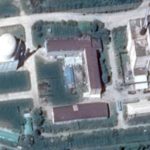
POTENTIAL IMPACTS OF ACCIDENT AT OR ATTACK ON THE DPRK’S YONGBYON NUCLEAR REACTORS

David von Hippel and Peter Hayes May 22, 2017   I. INTRODUCTION This essay by David von Hippel and Peter Hayes argues that neither attack nor accident at the DPRK’s two reactors at Yongbyon would result in significant transborder radiological damage. They conclude that “the United States and its allies control most of the variables that […]

IS THE UNITED NATIONS AIMING TO DESTROY NORTH KOREA?

Alexander Vorontsov May 19, 2017 I. INTRODUCTION In this essay, Alexander Vorontsov shares his concerns about the United Nations imposing an economic embargo on the DPRK and the possible implications for the United Nations. Alexander Vorontsov is Head of Korea and Mongolia Department,  Institute of Oriental studies of the Russian Academy of Sciences, and Associated Professor Oriental Studies […]

RISKS OF DENSELY PACKED SPENT FUEL POOLS

by Allison Macfarlane May 19, 2017 I. INTRODUCTION This essay by Allison Macfarlane argues that “the back end of the fuel cycle, especially at reactors, has not received the attention to safety and management it needs.  Management of spent fuel after discharge from the reactor requires careful thought and safety analysis.  Surprisingly, regulators in some […]

JAPAN’S NUCLEAR SECURITY AFTER THE FUKUSHIMA NUCLEAR ACCIDENT

Nobumasa Akiyama May 19, 2017 I.  INTRODUCTION   In this essay, Nobumasa Akiyama outlines lessons learned after the Fukushima catastrophe and Japan’s subsequent steps to address nuclear security concerns, describes Japan’s plutonium “trilemma,” and the weak links in the international nuclear security management framework.  He concludes that “reducing the risk of nuclear terrorism remains an […]

CHALLENGES IN RISK GOVERNANCE FOR SAFETY AND SECURITY IN JAPANESE NUCLEAR POWER SECTOR

Taketoshi Taniguchi May 18, 2017 I. INTRODUCTION   This essay by Taketoshi Taniguchi gives an overview of the risk environment surrounding critical infrastructures including nuclear power, and discusses challenges in nuclear power sector in order to avoid slow-developing catastrophic risk and to mitigate malicious threats. “Ultimately, a well-informed public, on top of adequate emergency preparedness […]

ANTICIPATING AND ADAPTING TO COMPLEX TERRORIST THREATS TO SPENT FUEL

Peter Hayes, May 17, 2017  I. INTRODUCTION This essay by Peter Hayes suggests that global urbanization and insecurity will generate new types of networked, long-range terrorism, especially from coastal megacities as they coalesce into gigantic urban corridors. Peter Hayes is Director of the Nautilus Institute and Honorary Professor at the Centre for International Security Studies at […]

PROSPECTS AND CHALLENGES OF NUCLEAR POWER AND SMALL MODULAR REACTORS IN INDONESIA

by Bernadette K. Cogswell, Nataliawati Siahaan, Friga Siera R, M. V. Ramana, and Richard Tanter April 27, 2017 The full report in PDF format is found here [3 MB] I. INTRODUCTION This essay, and the accompanying research study co-published by the Nautilus Institute and the Indonesian Institute for Energy Economics titled Nuclear Power and Small Modular […]

PRESIDENTIAL CALLS AND THE KOREAN PENINSULA

By Peter Hayes April 26, 2017 I. INTRODUCTION This essay by Peter Hayes suggests that after three US-China presidential phone calls, President Trump appears to be the supplicant in the relationship; and increasingly so as the risk of war increases in Korea. Peter Hayes is Director of the Nautilus Institute and Honorary Professor at the […]