

[IN CHINESE] Zhang Tuosheng discusses China’s national interests, especially China’s core interests as articul…
[IN CHINESE] Zhang Tuosheng discusses China’s national interests, especially China’s core interests as articul…
This article describes the impressive, resilience-targeted greening of Japan, evident in nationwide deployments of renewable energy, radical efficiency, and other core aspects of sustainability. These developments are already underway, and include public- and private-sector actors as well as community groups. The greening also has promising stamina due to being increasingly deeply inscribed in the fiscal, regulatory and other mechanisms of a rapidly emergent industrial policy.
Andrew DeWit is Professor in the School of Policy Studies at Rikkyo University and an Asia-Pacific Journal coordinator. With Iida Tetsunari and Kaneko Masaru, he is coauthor of “Fukushima and the Political Economy of Power Policy in Japan,” in Jeff Kingston (ed.) Natural Disaster and Nuclear Crisis in Japan.
[Chinese Version] In this Special Report Senior Colonel (Retired) Fan Gaoyue argues that the …
[English Version] In this Special Report Senior Colonel (Retired) Fan Gaoyue argues that the …
Recent probes have unveiled irregularities involving a parts supplier to Korea Hydro and Nuclear Power Co., the state-run operator of the nation’s nuclear plants. Products were certified for use despite failing to meet quality standards and the revelation led to four nuclear reactors being shut down.
Concerns about the safety of South Korea’s nuclear plants have been long-standing, as the following report, prepared for the World Bank and UNDP in April of 1982, outlines. The findings of the 1982 review of the ROK’s regulatory aspects and operational safety of nuclear power plants were concerning, with the principal conclusions stating that it is “essential and urgent that there exist in the Republic of Korea a strong, independent and competent nuclear regulatory function as well as associated Korean safety laws, regulation, criteria, codes and standards.” It further state that “it is important to recognize that, by contrast to oil and coal power plants, operating nuclear power plants require continued upgrading in personnel training, equipment, and operational safety bases…”
This report was obtained by the Nautilus Institute under the Freedom of Information Act. Please click here to view other documents obtained through FOIA.
Andrew Dewit discusses Japan’s plans to build the world’s largest offshore wind farm near Fukushima as part of plans to reconstruct the area stricken by nuclear disaster in 2011. He writes “that if one looks closely at Fukushima, as well as Japan’s subnational governments in general, one finds plenty of political will and concrete action. This comes as something of a surprise, to be frank, as the general narrative on Japan and its power holders has been that the dominance of the nuclear-favouring Abe regime means the decline of the pro-renewable and anti-nuclear movement spawned by Fukushima. The evidence suggests, however, that Japanese power policy and politics is becoming decentralized and distributed.”
Andrew Dewit is Professor in the School of Policy Studies at Rikkyo University and an Asia-Pacific Journal coordinator.
Commercial nuclear power plants around the world harness nuclear fission to produce electricity. At each plant, a fission reactor receives fresh nuclear fuel and discharges spent nuclear fuel (SNF). Although the SNF is “spent”, it contains a large amount of radioactive material. Some of that material could be released to the environment by an accident or an attack, causing harm to humans by exposing them to ionizing radiation. The potential for such harm is the “radiological risk” associated with SNF. Independent assessment of this risk could help societies to manage the risk. This report is designed as a handbook that could be used to support such independent assessment. The report has two main parts. The first part provides introductory material, and the second part sets forth a seven-step approach to assessing SNF radiological risk.
Gordon D. Thompson, Phil., is currently the executive director of Institute for Resource and Security Studies in Cambridge, MA. In addition, he serves as Research Professor, George Perkins Marsh Institute, Clark University, Worcester, Massachussetts.
This handbook was produced for of the Institute’s Resilience and Security of Spent Fuel in East Asia project with the support of the John T. and Catherine D. MacArthur Foundation.
In this report, Peter Hayes and Roger Cavazos “examine one North Korean account of the limited war it might fight to occupy Seoul, including the use of nuclear weapons or other unspecified WMD to neutralize American forces. We find that while this account makes for fine propaganda, when viewed through the lens of conventional capabilities, the plan is mainly smoke and mirrors. Nonetheless, if this account is indicative of the belief system of North Korea’s leadership, then it is truly alarming. It suggests that North Korea still adheres to military strategies and tactics that failed in the Korean War, and would fail again, only faster, should war break out in Korea. Moreover, it suggests a fantastic belief that somehow early escalation to nuclear war could make possible a conventional pre-emptive attack on Seoul.”
Peter Hayes is director of Nautilus Institute and Professor of International Relations at RMIT University in Melbourne. Roger Cavazos is an Associate of Nautilus Institute and retired US military intelligence officer.
David F. von Hippel and Peter Hayes 1 April 2013 Nautilus Institute This paper was prepared with support from the Hanyang University Energy, Governance and Security (EGS) Center as EGS Working Paper Number 2014-04, available as http://www.egskorea.org/common/download.asp?downfile=2014-04_Working_Paper.pdf&path=board Abstract The term “energy security” has typically meant little more than securing access to sufficient quantities of fossil fuels […]
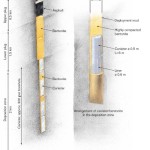
In the following report, Tomochika Tokunaga provides an overview of the applicability of deep borehole disposal for radioactive waste in Japan. Tokunaga summarizes the history of deep drilling activities in Japan, the present high-level radioactive wastes disposal program, and describes the general concept of deep borehole disposal. Possible problems for deep borehole disposal related to the active migration of deep-seated fluids and stress conditions in and around Japan are also discussed.
Tomochika Tokunaga is an Associate Professor in the Department of Environment Systems, University of Tokyo.