Hiroshima and Nagasaki: There were other choices

There is no single compelling factor to justify the bombings as inevitable, argues Peter Hayes. Rather, a series of decisions and events cumulatively drove the bomb forward from development to deployment at Hiroshima. The later nuclear attack on Nagasaki, moreover, was gratuitous.

Nautilus Peace and Security Network – 25 September 2015

DETERRENCE: Obama to host Washington summit on nuclear proliferation
DPRK: Reforming North Korea: Law, politics, and the market economy
GOVERNANCE AND CIVIL SOCIETY: Can South Korea lead nuclear cooperation in northeast Asia?

On the Significance of China’s “Characteristics”

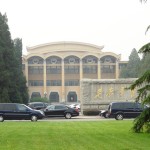
CCCP building. Cenotaph reads: "To seek truth from facts"

By Ron Huisken 24 September 2015 I. Introduction China is an ancient and accomplished nation with an essentially unbroken tradition of authoritarian governance. China’s contemporary  governance arrangements, which include a fondness for qualifying an objective or commitment  with the words ‘with Chinese characteristics’, have both deliberate and inadvertent consequences that should be an important consideration […]

Energy sector cooperation with the DPRK in support of a regional Nuclear Weapons Free Zone

In this paper, we describe the DPRK energy economy, including a description of recent trends in DPRK energy supply and demand. We then summarize the DPRK’s energy security situation and energy sector needs, along with a brief description of potential regional/international cooperation options for providing energy sector development assistance to DPRK. These options include conventional energy, energy efficiency, and renewable energy. They are followed with more general approaches to engagement and an example “package” of cooperation measures. These non-nuclear options are benchmarked to a quantitative estimate of the net present value of the two light water reactors that were to be provided in the US-DPRK Agreed Framework but never completed, as a reasonable benchmark, followed by a review of the DPRK nuclear energy sector and related potential cooperation options and issues related to the DPRK domestic pilot light water reactor and enrichment programs. We conclude by highlighting key insights and opportunities for increasing the DPRK’s energy security in the context of regional energy development in which all states have a stake.

Nautilus Peace and Security Network – 17 September 2015

DETERRENCE: Obama to host Washington summit on nuclear proliferation
DPRK: Reforming North Korea: Law, politics, and the market economy
GOVERNANCE AND CIVIL SOCIETY: Can South Korea lead nuclear cooperation in northeast Asia?

Complexity and Weapons of Mass Destruction in Northeast Asia

by Peter Hayes and Roger Cavazos 14 September 2015 I. Introduction Peter Hayes and Roger Cavazos write “This chapter examines the increasingly complex problem of the threat posed by nuclear weapons of mass destruction (WMD) in Northeast Asia. The first section sketches the recent evolution of the role played by nuclear weapons in international affairs […]

Nautilus Peace and Security Network – 10 September 2015

DETERRENCE: Anxiety rises over Abe omitting non-nuclear principles from Hiroshima speech
DPRK: North Korea’s digital transformation: Implications for North Korea policy
GOVERNANCE AND CIVIL SOCIETY: Japan’s nuclear gypsies: The homeless, jobless and Fukushima

Nautilus Peace and Security – 3 September 2015

DETERRENCE: Obama pledged to reduce nuclear arsenal, then came this weapon
DPRK: Unprecedented nuclear strikes of the invincible army
GOVERNANCE AND CIVIL SOCIETY: China explosions: Tianjin residents hold protests
AUSTRAL PEACE AND SECURITY: Turning back the clock on UNCLOS

The Search for Interim Spent Nuclear Fuel Storage in South Korea

Plans call for a continued expansion in South Korea’s fleet of nuclear reactors, but at the same time, facilities for the temporary storage of spent fuel, mostly in at-reactor pools, continue to fill up. Negotiations between the nuclear industry and central government agencies on one side, and local host communities on the other, for siting of interim spent fuel storage facilities, let alone permanent waste disposal facilities, have been largely ineffective to date, due in large part to a combination of the tactics used by authorities in approaching local communities, and a lack of unbiased information about nuclear facilities on the part of local stakeholders. In the last few years, a new effort to engage host communities has been undertaken, and shows some promise, though much work remains before agreements on facility siting can be reached.