

1. Framework for Enabling Climate Adaptation
2. Application of GIS to Support Urban Water Management
3. The Coming Financial Climate
4. Climate Change Adaptation Plans
5. Changes in Observed Climate Extremes in Global Urban Areas
6. Conference – Democracy and Resilience in the Anthropocene
Author Archives: Nautilus Institute
Japan’s Bid to Become a World Leader in Renewable Energy

by Andrew De Wit 26 October 2015 II. Introduction The present article argues that the LDP’s green-energy proponents aim at revitalizing local economies through renewable energy, growing strategic sectors of the economy, bolstering national security (especially energy security), enhancing resilience in the face of natural and other disasters, as well as dealing with the threat […]
Nautilus Peace and Security Network – 22 October 2015
Deterrence: DoD exercise simulates home-grown terrorists
Governance: Sino-Japan tensions rise over China’s Nanjing Massacre memory application
Mongolia’s Future Energy and Economic Development: Today’s Complex Choices Will Have Long-term Ramifications
“Perhaps no nation has at the same time both more diverse options for its energy and economic future and the potential to make those options reality than Mongolia.
“It will be up to Mongolian leaders, however, to make the difficult choice of a future direction for the Mongolian energy sector, a choice unique to Mongolia in the potential diversity of directions that are plausible for this sparsely-populated nation with a growing economy and many resources, but not, in general, dissimilar to the choices that many nations now face as they seek more climate-friendly energy paths.”
Nautilus Peace and Security Network 15 October 2015
Deterrence: A frightening thought: China erodes America’s submarine advantage
Governance: In S. Korea, historical distortions Abe could only dream of
Austral Peace and Security: We should bomb Syria because…? (part 2)
The SIGINT Satellites of Pine Gap: Conception, Development and in Orbit
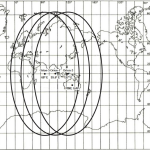
Pine Gap’s initial and still principal importance to the United States lies in its role as a ground control and processing station for geosynchronous signals intelligence satellites. Nine geosynchronous SIGINT (signals intelligence) satellites have been operated by Pine Gap over the past 45 years. That role has grown as the satellites and their associated ground systems have developed in size, capacity and range of applications far beyond what was envisaged half a century ago – or understood by the host government that accepted the base at that time. During the ground station site selection process in 1966, one of the main criteria was that the horizon angle from the floor of the selected location and over the surrounding hills ‘should not exceed six degrees’. From Pine Gap’s latitude of 23.80° S and longitude of 133.74° E, this would allow connectivity (for both command and control and for data reception) with satellites stationed as far west as 60° E (or as far east as 153° W if ever required). The stations of the current three Orion SIGINT satellites controlled by Pine Gap make possible the collection of a wide range of signals across more than half the surface of the planet outside the polar regions – every continent except the Americas and Antarctica, and every significant region of contemporary US military concern. There is now just one US highly integrated geosynchronous signals intelligence satellite system, with comparable satellites operated by Pine Gap and Menwith Hill, with much greater capacities and much more focussed military roles than their Cold War equivalents.
Nuclear threat and Korean reunification: Ultimately no avail
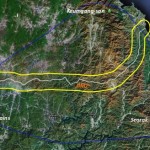
by Ke Chung Kim 12 October 2015 I. Introduction Recently, Peter Hayes presented an interesting paper “Nuclear Threat and Korean Reunification” in this Policy Forum.[1] His arguments prompted me to recall fundamental arguments on the centrality of Korea’s environmental future in the rebuilding of North Korea and the reunification of Korea. Ever since the Korean vision […]
Nautilus Peace and Security Network – 9 October 2015
Deterrence: Russia successfully test fires topol missile
Governance: China labor rights: Factory workers protest in Hong Kong, amid restrictions on mainland
Climate Change and Security: Dutch government ordered to cut back emissions in landmark court ruling
The Implications of Civic Diplomacy for ROK Foreign Policy

by Kiho Yi and Peter Hayes with Joan Diamond, Steven Denney, Christopher Green, and Jungmin Seo 5 October 2015…
Nautilus Peace and Security Network – 1 October 2015
Deterrence: Revealed: Russia’s ambitious new ICBM early warning system
Governance: Democracy takes shape through street protests over security bills, says leading scholar