Cyber threats and the challenge of de-alerting US and Russian nuclear forces

Andrew Futter writes ‘A quarter of a century after the end of the Cold War, both the United States and Russia retain a significant number of nuclear weapons … capable of inflicting almost unimaginable damage, death and devastation.’

Futter argues that ‘the logic of de-alerting these nuclear forces and enhancing the safety and security of nuclear systems is becoming increasingly persuasive and urgent….. [T]his appears to be becoming particularly pronounced as we move into a era increasingly dominated by the threat of “cyber attacks”.’
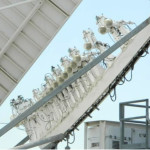
Expanded Communications Satellite Surveillance and Intelligence Activities Utilising Multi-beam Antenna Systems

by Desmond Ball, Duncan Campbell, Bill Robinson and Richard Tanter 28 May 2015 The full report is available here. I. Introduction The recent expansion of FORNSAT/COMSAT (foreign satellite/communications satellite) interception by the UKUSA or Five Eyes (FVEY) partners has involved the installation over the past eight years of multiple advanced quasi-parabolic multi-beam antennas, known as Torus, […]

A comprehensive agreement for security in Northeast Asia

by Morton Halperin 16 March 2015 Introduction In this Policy Forum Morton H. Halperin writes ‘A new approach is clearly needed to prevent the DPRK from testing and deploying its operational nuclear weapons capability and to persuade it to de-nuclearize.’ Halperin lays out a plan for achieving a comprehensive security agreement in Northeast Asia, ‘one […]

North Korea’s nuclear force roadmap: hard choices

by Peter Hayes and Roger Cavazos NAPSNet Special Report 2 March 2015 I. SUMMARY In this report Peter Hayes and Roger Cavazos lay out a possible roadmap for North Korea’s nuclear operational force. The authors state: “The laws of physics that determine how nuclear weapons and delivery systems perform are the same in North Korea […]

Nautilus Peace and Security Weekly – 10 October 2013

DETERRENCE: Scary Default Scenarios Based on Faulty Treasury Department Release DPRK: North Korea threatens preemptive attack on U.S., South Korea ENERGY SECURITY: IPCC Issues Stark Warning Over Global Warming: Call to ‘Stop Dithering About Fossil Fuel Cuts’ as Expert Panel Warns Entire Globe is Affected GOVERNANCE AND CIVIL SOCIETY: State Clumsy in Managing Conflicts CLIMATE CHANGE ADAPTATION: Understanding the Adaptive […]

Could a Maritime Conflict Start a Sino-American War?

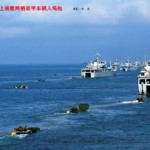
China’s amphibious warships conduct training session (sina.com)

Mark Valencia writes, “There is now little doubt that China and the West are going to clash. They are already competing in both military and civilian areas and more fundamentally in values and the pursuit of political power. The as yet unanswered questions are will the conflicts become “physical” and, if so, how and why?”

Mark Valencia is Senior Visiting Scholar at the National Institute for South China Sea Studies in Haikou, China and a Nautilus Institute Associate.

US-China: Joined At The Hip

by Peter Hayes June 27, 2013 I. Introduction Peter Hayes writes “The tug of war over Taiwan and the contest between the US and Chinese military to deny access to the other in China’s coastal zone and the western Pacific States is……simply the most dangerous possible conflict in the region….Yet even here, we find that […]

Rattling the American Cage: North Korean Nuclear Threats and Escalation Potential

Peter Hayes and Roger Cavazos write: “We do not believe that North Korea intends to attack South Korea, pre-emptively or otherwise, in the current cycle of threat projection. However, miscalculation, accidents, or “wild cards” can all activate an unstoppable chain of events that lead to uncontrollable escalation…Talk is cheap, valuable, and entails no concessions. In the current charged environment, the only way to obtain badly needed information about North Korean intentions and therefore, the real level of threat, is to talk to them.”

Peter Hayes is director of Nautilus Institute and Professor of International Relations at RMIT University in Melbourne. Roger Cavazos is an Associate of Nautilus Institute and retired US military intelligence officer.