Cyber threats and the challenge of de-alerting US and Russian nuclear forces

Andrew Futter writes ‘A quarter of a century after the end of the Cold War, both the United States and Russia retain a significant number of nuclear weapons … capable of inflicting almost unimaginable damage, death and devastation.’

Futter argues that ‘the logic of de-alerting these nuclear forces and enhancing the safety and security of nuclear systems is becoming increasingly persuasive and urgent….. [T]his appears to be becoming particularly pronounced as we move into a era increasingly dominated by the threat of “cyber attacks”.’

Expanded Communications Satellite Surveillance and Intelligence Activities Utilising Multi-beam Antenna Systems

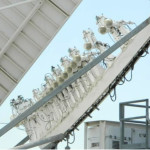
by Desmond Ball, Duncan Campbell, Bill Robinson and Richard Tanter 28 May 2015 The full report is available here. I. Introduction The recent expansion of FORNSAT/COMSAT (foreign satellite/communications satellite) interception by the UKUSA or Five Eyes (FVEY) partners has involved the installation over the past eight years of multiple advanced quasi-parabolic multi-beam antennas, known as Torus, […]

Shale Gas Revolution and Desperate “Eastward” Energy Policy of Russia

North America’s shale gas revolution has fundamentally changed North America’ s energy market, thereby bringing new opportunities and challenges to the Northeast Asian LNG market.

For North America, due to the increase in shale gas production, the export-import structure of gas in the US has been reversed, and the possibility of energy independence has increased. In the meantime, Canada, being almost fully dependent on the US for gas export, can not help but explore new markets, which is in fact the Asian market.

For major Northeast Asian gas importers, such as Japan and Korea, which are heavily dependent upon the Middle East and East Asia, Russia’s East Siberia is considered a new alternative for the purpose of diversifying LNG import sources for the past decade. Therefore, Northeast Asian countries tried their best to secure East Siberian gas through enhancing their bilateral relationships with Russia. However, due to the recent shale gas revolution in North America, the Northeast Asian region now encounters new opportunities in LNG contracts, which is totally different from the situation in the past.

In the mean time, once the negotiation on gas prices between Russia and China is settled, 38bcm of Russian gas will be introduced to China, In this regard, Korea and Japan should pay attention to the possible revamp in the Northeast Asian energy market and the impact related to securing energy supplying sources.

Under these circumstances, the introduction of American shale gas with a cheap price and favorable conditions Ci.e., Henry Hub price, without the clauses of take or pay and destination, etc.), or Canadian gas with relative advantages in terms of transportation distance and gas reserves, is predicted to exert a significant impact on the Northeast Asian LNG market.

Given that Northeast Asia has been significantly dependent on the Middle East or neighbouring East Asia in terms of energy security, if the region become the beneficiaries of North America ‘s shale gas revolution, the most notable thing would be that America and Canada, which have been alliances in political and military contexts, will become alliances of Korea and Japan in energy security as well. It can be referred to as a grand paradigm shift.

Apart from North America, Australia and East Africa have huge potential in gas production, which can enhance the buyers’ power in the Northeast Asian LNG market.

For Korea, the implication of East Siberian gas is not simply limited to the area of energy security, since the PNG project (gas pipeline linking Russia and South Korea via North Korea) based in East Siberian gas fields are considered as important methods to secure peace and prosperity on the Korean peninsula and in Northeast Asia. However, this project is thought to have missed a good time to be commenced, and Russian gas is losing its price competitiveness s compared to North America and Australia.

In conclusion, it is necessary to establish new rules and policies in the Northeast Asian energy market and within the regional situation as a whole. Initiatives on the LNG trading hub in the Asian region should be pushed forward through closer regional cooperation. In particular, Korea, Japan, and China, as major consumers, have to share common interests and make the maximum use of the favorable conditions of the shale gas revolution. Furthermore, the scope of cooperation should not be limited to Northeast Asia, which includes Korea, Japan, China, etc., but be expanded to the Asia Pacific region including North America.


The Impact of the “Shale Gas Revolution” on Russian Energy Strategy

The successful development of shale gas extraction and production in North America has spread a positive outlook within the international energy community, which envisages that a great availability of gas in the next years will contribute to diversifying the energy mix, reducing emissions, and enhancing energy security. However, the emergence of the “shale revolution” is perceived as a serious energy threat by Russia, because it could severely affect its role as a major gas supplier. Thanks to the combination of LNG developments and shale gas production, a growing gas availability in global markets poses questions about the ability of Russia to keep gas exports to Europe at current levels and to develop the Eastern vector through growing gas exports to Asian markets.
Fabio Indeo holds a Ph.D in Geopolitics, Geostrategy and Geoeconomy at the University of Trieste (Italy). Currently he is EGS researcher and lecturer on “Conflicts and energy resources” at the Master in Peacekeeping and Security Studies (University of Roma Tre, Italy). His research fields are energy security, and geopolitics of pipelines and energy transport routes.

Rethinking Energy Security in Northeast Asia

In this Special Report, Younkyoo Kim writes that despite both governments’ endless profession of an identity of interests between Russia and China, the truth is quite different. On global issues like intervention in third countries, non-proliferation, democracy promotion and Central Asia, Russia and China jointly act to resist US notions of a liberal world order dominated by its power. However, in regard to the regional security agenda in Asia we find only barely concealed and even potentially serious, if unadvertised, rivalries, e.g. in regard to Japan and Southeast Asia. Thus Russia is trying to do two contradictory things at the same time, namely bandwagon with China on the global and anti-American agenda, while attempting to carve out an independent balancing act directed to constrain China at the regional level. Kim contests that the deep-seated regional divergences between Moscow and Beijing throughout Asia have not been resolved and may not be capable of resolution given the dynamic forces at play throughout these areas.

Younkyoo Kim is Director of the Center for Energy Governance & Security and Associate Professor in the Division of International Studies, Hanyang University, Seoul, Korea.

A Red Hunt In October – For Pirates, Hooligans and Spies…

photo © Denis Sinyakov / Greenpeace A Russian Coast guard officer is seen pointing a knife at a Greenpeace International activist as five activists attempt to climb the 'Prirazlomnaya,' an oil platform operated by Russian state-owned energy giant Gazprom platform in Russia’s Pechora Sea

In this essay, Nikhil Desai criticizes the violent Russian attack on the Greenpeace ship and the subsequent pre-trial detention of 30 activists. He argues that if concerns of energy security are allowed to degenerate into hallucinations of dominating the Arctic and brutal treatment of non-violent civic action, Russia or other such countries cannot be held to be responsible members of the international community of law-abiding states. The most powerful man in the world may now also be the most dreadful.

Nikhil Desai is an energy and environmental economist now dividing his time between Washington, DC and Ahmedabad, India.