

Cities have become complex systems by virtue of their intersection with multiple global problems. Cities face …
Cities have become complex systems by virtue of their intersection with multiple global problems. Cities face …
by David von Hippel Contributing authors: Yi Wang, Kae Takase, Tetsunari Iida, Myungrae Cho, and Sun-Jin Yun 28 July 2015 I. Introduction David von Hippel writes that following the Fukushima nuclear disaster, there is an increasing ‘recognition that new paradigms are needed to deal with expanding complexity in the relationships between the issues and actors […]
by Peter Hayes, Yi Kiho and Joan Diamond 2 July 2015 I. INTRODUCTION This Special Report is an extract (Preface and Introduction) to the book Complexity, Security and Civil Society in East Asia, edited by Peter Hayes and Yi Kiho, published by Open Book Publishers in June 2015 (http://www.openbookpublishers.com/product/326/). This book is devoted to improving our understanding […]
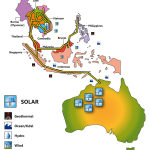
By Samantha Mella 19 May 2015 I. Introduction Samantha Mella writes that, despite climate concerns, the current Australian government is fixated on supporting and expanding the Australian coal industry. Mella argues that ‘Australia may benefit from reconsidering what it means to be an energy superpower in 2015. In the era of an altered climate and carbon […]
by Morton Halperin 16 March 2015 Introduction In this Policy Forum Morton H. Halperin writes ‘A new approach is clearly needed to prevent the DPRK from testing and deploying its operational nuclear weapons capability and to persuade it to de-nuclearize.’ Halperin lays out a plan for achieving a comprehensive security agreement in Northeast Asia, ‘one […]
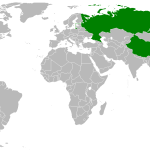
In this Special Report, Younkyoo Kim writes that despite both governments’ endless profession of an identity of interests between Russia and China, the truth is quite different. On global issues like intervention in third countries, non-proliferation, democracy promotion and Central Asia, Russia and China jointly act to resist US notions of a liberal world order dominated by its power. However, in regard to the regional security agenda in Asia we find only barely concealed and even potentially serious, if unadvertised, rivalries, e.g. in regard to Japan and Southeast Asia. Thus Russia is trying to do two contradictory things at the same time, namely bandwagon with China on the global and anti-American agenda, while attempting to carve out an independent balancing act directed to constrain China at the regional level. Kim contests that the deep-seated regional divergences between Moscow and Beijing throughout Asia have not been resolved and may not be capable of resolution given the dynamic forces at play throughout these areas.
Younkyoo Kim is Director of the Center for Energy Governance & Security and Associate Professor in the Division of International Studies, Hanyang University, Seoul, Korea.
In this Special Report David von Hippel first provides a general description of the elements of the full energy cycle that should be included in any comparison of different options for supplying electricity, followed by a description of the potential categories of “costs”, broadly defined to include a wide range of costs and impacts, that may be incurred as a part of each element of the energy cycle. He then applies these fuel cycle elements and costs to qualitatively examine some of the key potential relative costs and impacts of three potential options for providing electricity in Northeast Asia—coal-fired, gas-fired, and nuclear power. Following this qualitative treatment, von Hippel presents the assumptions and results of an initial quantitative analysis at two specific categories of costs/impacts for these generation options: direct costs and greenhouse gas emissions, focusing on coal- and gas-fired options in NEA fired with fuels imported from the United States (or North America more generally). A concluding section summarizes the findings of this Working Paper.
David F. von Hippel is a Nautilus Institute Senior Associate. His work with Nautilus has centered on energy and environmental issues in Asia, with a particular emphasis on Northeast Asia and North Korea.
Donald Emmerson explores how the Treaty of Amity and Cooperation in Southeast Asia could provide a useful model for a comprehensive agreement on peace and security in Northeast Asia. Although unlikely in the short term in Emmerson’s view, he also explores the means by which such a treaty might be established.
This report was originally presented at the New Approach to Security in Northeast Asia: Breaking the Gridlock workshop held on October 9th and 10th, 2012 in Washington, DC.
Donald Emmerson is the Director of the Southeast Asia Forum (SEAF); Affiliated Faculty, CDDRL; Affiliated Scholar, Abbasi Program in Islamic Studies; and Senior Fellow Emeritus, FSI at Stanford University.