

DETERRENCE: Command and Control: Nuclear Weapons, the Damascus Accident, and the Illusion of Safety DPRK: North Korea Restarting its 5MW Reactor ENERGY SECURITY: Arctic Sea Ice Melting Faster Than Expected, UN Report Finds GOVERNANCE AND CIVIL SOCIETY: Japan Grapples with Rise in Hate Groups CLIMATE CHANGE ADAPTATION: Floods in the WHO European Region: Health Effects and their Prevention AUSTRAL PEACE […]
Tag Archives: Japan
Green Shoot: Abenomics and the 3rd Arrow
This article describes the impressive, resilience-targeted greening of Japan, evident in nationwide deployments of renewable energy, radical efficiency, and other core aspects of sustainability. These developments are already underway, and include public- and private-sector actors as well as community groups. The greening also has promising stamina due to being increasingly deeply inscribed in the fiscal, regulatory and other mechanisms of a rapidly emergent industrial policy.
Andrew DeWit is Professor in the School of Policy Studies at Rikkyo University and an Asia-Pacific Journal coordinator. With Iida Tetsunari and Kaneko Masaru, he is coauthor of “Fukushima and the Political Economy of Power Policy in Japan,” in Jeff Kingston (ed.) Natural Disaster and Nuclear Crisis in Japan.
Re-Branding Abe-Nationalism
Tessa Morris-Suzuki writes ‘in recent months sections of the media in Japan, and even internationally, have gone into overdrive to sell the message that Japanese Prime Minister Shinzo Abe is not a nationalist.
‘Those who care about the future of Japanese society should not allow the dazzle of verbal juggling to induce a political version of the Gruen Transfer. The prime minister’s ideology may be re-branded for the global market, but the old adage remains: buyer beware.’
Tessa Morris-Suzuki is a historian of modern Japan and Korea. She is Professor in the School of Culture, History and Language, College of Asia and the Pacific, the Australian National University.
An Emerging Fukushima Model?
Andrew Dewit discusses Japan’s plans to build the world’s largest offshore wind farm near Fukushima as part of plans to reconstruct the area stricken by nuclear disaster in 2011. He writes “that if one looks closely at Fukushima, as well as Japan’s subnational governments in general, one finds plenty of political will and concrete action. This comes as something of a surprise, to be frank, as the general narrative on Japan and its power holders has been that the dominance of the nuclear-favouring Abe regime means the decline of the pro-renewable and anti-nuclear movement spawned by Fukushima. The evidence suggests, however, that Japanese power policy and politics is becoming decentralized and distributed.”
Andrew Dewit is Professor in the School of Policy Studies at Rikkyo University and an Asia-Pacific Journal coordinator.
Rising Sun, Morning Calm, Redeeming Step
Roger Cavazos writes “Both Japan and North Korea are presently taking concrete steps, and responding primarily to their own perceived national interest. The path to redemption is rarely linear and never easy. North Korea’s tentative reaching out should be met with reversible actions and Japan’s bold steps should be encouraged – maybe even followed.”
Roger Cavazos is a Nautilus Institute Associate and retired US military intelligence officer.
U.S-Japan Core Issues

Sheila Smith writes: “The proposal for A New Approach to Security in Northeast Asia: Breaking the Gridlock offers a fresh perspective on the diplomatic framework for negotiating peace and stability for Northeast Asia. This memo responds to this initiative from the perspective of Japanese security and the shared strategic goals of the U.S.-Japan alliance.”
Sheila A. Smith is a Senior Fellow for Japan Studies at the Council on Foreign Relations.
This report was originally presented at the New Approach to Security in Northeast Asia: Breaking the Gridlock workshop held on October 9th and 10th, 2012 in Washington, DC.
Consideration of the Possibility of Deep Borehole Disposal in Japan
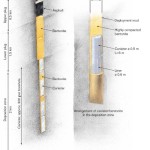
In the following report, Tomochika Tokunaga provides an overview of the applicability of deep borehole disposal for radioactive waste in Japan. Tokunaga summarizes the history of deep drilling activities in Japan, the present high-level radioactive wastes disposal program, and describes the general concept of deep borehole disposal. Possible problems for deep borehole disposal related to the active migration of deep-seated fluids and stress conditions in and around Japan are also discussed.
Tomochika Tokunaga is an Associate Professor in the Department of Environment Systems, University of Tokyo.