NUCLEAR WEAPONS LAW ONLINE COURSE AVAILABLE NOW

Dear colleague, We are pleased to announce the on-line short course: Nuclear Weapons Law. Taught by some of the world’s foremost experts in the field, this course takes students through the diverse elements of laws governing armed conflict and the use of nuclear weapons.  At a time when the risk of nuclear war is increasing, it […]

NUCLEAR SANITY: RECOGNISING AND RESTORING THE SALIENCE OF INTERNATIONAL LAW

  GARETH EVANS AUGUST 31 2026 I.  INTRODUCTION Gareth Evans argues that it is imperative to educate government policymakers and military practitioners–and those advising or influencing them–on all the ways in which existing international law constrains both the use and threat of use of nuclear weahttps://nautilus.org/announcements/books/the-law-on-nuclear-weapons/pons, and the critical importance of restoring its salience. “An […]

ANALYSIS OF USSTRATCOM STRATEGIC INSTRUCTION 534-16 “MISSILE WARNING AND NUDET DETECTION OPERATIONS”–IMPLICATIONS FOR NC3

PETER HAYES JULY 15 2026 I.  INTRODUCTION Peter Hayes summarizes USSTRATCOM Special Instruction 534-16 in 15 key points covering the mission of strategic early warning of attack on the United States with nuclear weapons delivered by missiles, the early warning command hierarchy and architecture, measures of effectiveness, procedures and measures to avoid and then manage […]

PERFORMING FEALTY IN A NUCLEAR ALLIANCE: ‘UNDERSTANDING AND RESPECTING’ AND ‘NEITHER CONFIRM NOR DENY’

VINCE SCAPPATURA AND RICHARD TANTER APRIL 19, 2026 I. INTRODUCTION Vince Scappatura and Richard Tanter examine the relationship between Australia’s deepening position in relation to United States nuclear weapons and strains in government legitimation practices. Australia’s involvement in U.S. nuclear weapons operations has deepened from longstanding reliance on extended deterrence and the hosting of major U.S. […]

THE NEED FOR AN INTERNATIONAL LAW-INFORMED CODE OF CONDUCT FOR NUCLEAR COMMAND, CONTROL AND COMMUNICATION (NC3)

EMILY CRAWFORD MARCH 16 2026 I.  INTRODUCTION Emily Crawford argues that nuclear command, control and communications (NC3) systems are beset by vulnerabilities, including susceptibility to cyber and other remote attacks, as well as weaknesses due to obsolete legacy technologies and complex command and communication structures.”  She concludes: “For NC3 systems to effectively and accurately fulfil […]

US STRATEGIC COMMAND ON NUCLEAR WEAPONS & LAWS OF ARMED CONFLICT

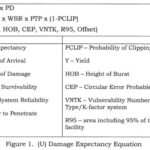
PETER HAYES FEBRUARY 22 2026 I.  INTRODUCTION This special report written and edited by Peter Hayes summarizes and provides copies of 10 documents released under the US Freedom of Information Act on legal guidance on STRATCOM’s compliance with the laws of armed conflict in relation to nuclear weapons. Peter Hayes is Director of the Nautilus […]

THE NUCLEAR NON-PROLIFERATION TREATY’S GORDIAN KNOT: THE INTRACTABLE PROBLEM OF THE LEGALITY OF NUCLEAR SHARING

ANNA HOOD FEBRUARY 20 2026 I.       INTRODUCTION Anna Hood analyses whether Articles I and II of the Nuclear Non-Proliferation Treaty (NPT) permit nuclear sharing. She argues—contrary to previous research—that the ordinary meaning of Articles I and II, the NPT’s travaux préparatoires and subsequent agreements and practice point to a deep ambiguity as to whether nuclear […]

ESCALATION DYNAMICS UNDER THE NUCLEAR SHADOW—INDIA’S APPROACH

RAKESH SOOD FEBRUARY 10, 2026s I.  INTRODUCTION Rakesh Sood concludes that “While nuclear weapons will induce restraint and neither country is likely to engage in an all-out war to change the territorial status quo, the likelihood of cross-border terrorist attacks followed by kinetic retaliation and consequent escalation cannot be ruled out…Since the doctrines and the […]