

China to the left, Japan to the right, and a silent Korea
by Yi Kiho – Governance and Civil Society Contributor
Candidates for the next president and prime ministerial elections in South Korea and Japan were determined during the past two weeks…
China to the left, Japan to the right, and a silent Korea
by Yi Kiho – Governance and Civil Society Contributor
Candidates for the next president and prime ministerial elections in South Korea and Japan were determined during the past two weeks…
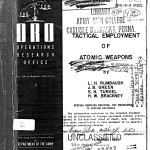
By 1951 it was apparent that the Soviet nuclear explosion in 1949 had already cut short the era of U.S. nuclear omnipotence and in Korea, the U.S. military’s began to worry about nuclear attack. “In the problem of defense,” advises this March 1951 Johns Hopkins report by to General MacArthur, “there is the question as to whether one’s own forces and installations are so disposed as to be vulnerable and, if so, what more suitable dispositions and defenses are possible.”
To answer this question, the report analyzes whether UN Command field troops, army and air force headquarters at Taegu, and UN airfields would have been lucrative nuclear targets; and whether Pusan, the logistical port through which poured 80 percent of the supplies to fight the war, was vulnerable.
The report shows that each of these targets was indeed vulnerable. Each target was sufficiently valuable to justify using nuclear weapons; each target could be identified; and none of them could assuredly stop a nuclear attack.
This report was released to the Nautilus Institute under the US Freedom of Information Act (FOIA).
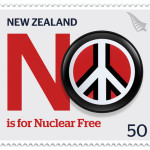
Richard Tanter writes that the recent rapprochement between New Zealand and the United States is born of both shared concerns about the rise of China and American recognition “that the Lange Labour Government’s 1984 policy of banning the entry of nuclear-armed ships is not incompatible with an alliance with the United States.” Tanter concludes that the morale of the story remains that “passage to a nuclear free world will require surely require more New Zealands.
Standing upright there: the New Zealand path to a nuclear-free world
–Richard Tanter, NAPSNet Contributor
The New Zealand visit of US Defense Secretary Leon Panetta to announce resumption of military and intelligence cooperation was a long overdue recognition…

This 1971 case study by Colonel William Roche explores the future role of U.S. air bases in the Pacific with regards to relations with the Republic of Korea, China, Japan (with emphasis on Okinawa) and the Philippines.
Roche states, “The current trend in the pacific, as elsewhere, is to reduce forces, economize and encourage other nations to assume a greater share of the defense burden. This is being accomplished by withdrawal of some units and consolidation of other units, utilizing the same facilities. It also requires continued military assistance to certain Asian allies for a number of years.” (page 10)
This report was released to the Nautilus Institute under the US Freedom of Information Act (FOIA).
South Korea experienced rapid economic growth in the 1970s which pushed the nation out of it’s post-war destitution. At the time, the Park Chung-hee administration invested massively in heavy industries and, in order to supply more electricity for the country’s new industries and growing citizenry, Park also invested in nuclear energy.
This 1979 report from the Export-Import Bank of the United States examines the finances, project costs, and benefits of lending capital to two nuclear plants in the southwestern area of South Korea known as Units 7 and 8.
This report was released to the Nautilus Institute under the US Freedom of Information Act (FOIA)
Role of leadership in managing disaster risk
–Saleem Janjua, NAPSNet Contributor
Climate variability and the extreme events (causing floods, droughts and storms) are one of the greatest global concerns. These global concerns have many implications at the local level.
CONTENTS DETERRENCE: US Ex-Im Bank backs $2 bln loan for UAE nuclear plant, Reuters, September 8, 2012 DPRK: US Japan agree to deploy another X-band missile defence radar ENERGY SECURITY: In wake of Fukushima disaster, Japan to end nuclear power by 2030s GOVERNANCE AND CIVIL SOCIETY: South Korean software mogul to stand for presidency CLIMATE CHANGE ADAPTATION: Making cities resilient report […]