Cyber threats and the challenge of de-alerting US and Russian nuclear forces

Andrew Futter writes ‘A quarter of a century after the end of the Cold War, both the United States and Russia retain a significant number of nuclear weapons … capable of inflicting almost unimaginable damage, death and devastation.’

Futter argues that ‘the logic of de-alerting these nuclear forces and enhancing the safety and security of nuclear systems is becoming increasingly persuasive and urgent….. [T]his appears to be becoming particularly pronounced as we move into a era increasingly dominated by the threat of “cyber attacks”.’

Nautilus Peace and Security Network: 12 June 2015

DETERRENCE: US finds peeling back the Iran sanctions onion no easy task DPRK: Adherence to and compliance with arms control, nonproliferation and disarmament agreements and commitments GOVERNANCE AND CIVIL SOCIETY: Seoul gay pride organizers vow to defy police ban CLIMATE CHANGE ADAPTATION: Sendai framework for disaster risk reduction 2015-2030 AUSTRAL PEACE AND SECURITY: Iraq: an avoidable catastrophe? DETERRENCE: US finds peeling back […]

Opportunities beyond the Australian Energy White Paper

by Samantha Mella and Geoff James 8 June 2015 I. Introduction Samantha Mella and Geoff James write “The (Australian Energy) White Paper’s framework of competition, productivity and investment provides a good platform for discussion, but a number of important issues are not addressed. These include the development of Australia’s abundant renewable energy resources, the consideration […]

Nautilus Peace and Security Network – 4 June 2015

DETERRENCE: Prompt global strike: China and the spear DPRK: N. Korea mum on fresh U.S. dialogue offer: sources GOVERNANCE AND CIVIL SOCIETY: With rural Japan shrinking and aging, a small town seeks to stem the trend CLIMATE CHANGE ADAPTATION: Challenges of urban resilience in India AUSTRAL PEACE AND SECURITY: Spooks admit it in private: Snowden has made them rethink their methods […]

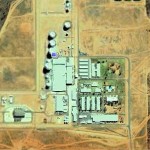
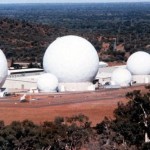
Secret life of Pine Gap gets airing

The report’s authors are Australian ­National University emeritus professor Des Ball, British investigative journalist Duncan Campbell, Canadian intelligence researcher Bill Robinson and Melbourne University professor Richard Tanter.

Pine Gap’s new spy role revealed

The new report by Australian National University emeritus professor Des Ball, British investigative journalist Duncan Campbell, Canadian intelligence researcher Bill Robinson and Melbourne University professor and Nautilus Institute researcher Richard Tanter, an independent policy think tank, draws upon secret intelligence documents leaked by former American intelligence contractor Edward Snowden and a wide range of publicly […]

Pine Gap shines in global snooping: report

Public awareness of the Torus program is largely a product of revelations by former National Security Agency (NSA) contractor Edward Snowden. So says a report released last week by a team from the Nautilus Institute for Security and Sustainability, in Berkeley, California, including Desmond Ball, Emeritus Professor at the Australian National University.

Nuclear Threat and Korean Reunification

by Peter Hayes 1 June 2015 I. Introduction In this Policy Forum Peter Hayes writes that “reunification will become harder and increase in social, economic, and security cost the longer and deeper the DPRK develops nuclear weapons. The faster nuclear weapons are removed from the scene, the sooner reunification can commence at a cheaper cost, with […]