

DETERRENCE: Park Pledges Strong Defense To Render N. Korean Nukes Useless DPRK: Intergovernmental Consultative Committee Meeting Between Mongolia And North Korea ENERGY SECURITY: UN Climate Panel Stresses Solidity of New Report on Global Warming GOVERNANCE AND CIVIL SOCIETY: Popular Ex-PM Koizumi Comes Out Against Nuclear Power CLIMATE CHANGE ADAPTATION: Climate Change Adaptation in the Boardroom AUSTRAL PEACE AND SECURITY: ALP Nuclear […]
Tag Archives: South Korea
A New Day in Northeast Asia?
James Goodby and Markku Heiskanen assess the significance of the recently reached agreement to reopen the Kaesong Industrial Complex. They write: “it shows a readiness to negotiate on both sides and could be seen as a first success for “trustpolitik,” President Park’s description of her hopes for North-South relations. Perhaps it signals the beginning of a new day in Korea.”
James Goodby is a former US ambassador to Finland now affiliated with Stanford University’s Hoover Institution and with the Center for Northeast Asian Policy Studies at the Brookings Institution.
Markku Heiskanen is a retired Finnish diplomat, now program director of The Asia Institute in Seoul.
Defining denuclearization
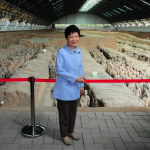
In this Policy Forum Roger Cavazos explores the definition of ‘denuclearization’. He writes “Denuclearization …
South Korea can get more than symbols from Beijing, Peter Hayes, Global Times
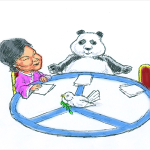
Peter Hayes writes: Whether South Korean President Park Geun-hye’s “trustpolitik” is merely a slogan or a solid policy strategy will be revealed during her visit to China starting on Thursday.
Superficially, the combined US and North Korean hard lines leave little space for Park to obtain more from China than a similar joint statement to that issued by Chinese President Xi Jinping and his US counterpart Barack Obama at their recent summit.
Although useful to Park for domestic consumption, a joint statement that a nuclear-armed North Korea is not acceptable will do nothing to resolve the fundamental nuclear problem with North Korea.
Park Geun-Hye’s China Challenge
Is it possible for President Park to get China to commit to more than a symbolic statement regarding North Korea’s nuclear weapons program during her upcoming meeting with President Xi Jinping? According to Peter Hayes, “The answer is definitely yes. South Korea can propose at least three types of “three party talks” at the Summit that would put South Korea in the driver’s seat, and break the deadlock with North Korea. These are all consistent with the eventual resumption of the Six Party Talks, although they do not depend upon this happening to have positive effects.” He goes on to state that, “At this juncture, only President Park can provide the necessary leadership to move this agenda forward.”
Peter Hayes is the Executive Director of the Nautilus Institute and a Professor at RMIT University.
A Regional Framework for a Comprehensive Security Settlement in the Korean Peninsula
James Goodby writes that if the Administration’s “pivot to Asia” is meant to signal a new era of American activism in the Asia-Pacific region, the president should describe to his partners in Asia how he sees the elements of a comprehensive security settlement coming together. A beginning can be made by defining the categories of security issues that need to be addressed, and by which states. The three main categories are:
(1) issues left over from the 1950-53 Korean War and the elements of a North-South peace regime (most of which have solutions that have been formally agreed upon in past statements issued by the North and South Korean Governments and many have been at least implicitly endorsed this year by Kim Jong-un)
(2) issues related to North Korea’s nuclear weapons program (and President Obama’s call for “a world without nuclear weapons” could be a device for placing a de facto nuclear weapons-free zone on the agenda to address this), and
(3) issues related to regional inter-state relations in Northeast Asia (one approach to solving these would be to organize something like an Organization for Security and Cooperation in Europe (OSCE) for Northeast Asia).
James Goodby is a Nonresident Senior Fellow at the Center for Northeast Asia Policy Studies, The Brookings Institution. Ambassador Goodby’s analysis does not necessarily reflect the opinions of the institutions with which he is affiliated.
노틸러스연구소 “한국, 원전 도입 초기부터 심각한 안전불감증, KyeongIn News
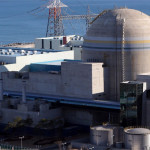
원자력발전소 부품 비리가 잇따라 적발되고 있는 가운데 우리나라가 원전 도입 초기부터 심각한 ‘안전 불감증’ 에 빠져 있었음을 보여 주는 대외비 보고서가 31년만에 공개됐다.
지난 11일 미국의 안보·환경·자원분야 정책연구 민간기관인 노틸러스연구소는 ‘대한민국의 핵 발전프로그램의 안전성 업데이트 리뷰’ 문건을 공개했다.
이 대외비 보고서는 미국 캘리포니아 소재 S. 레비 주식회사가 세계은행과 유엔개발기구(UNDP)의 요청으로 1982년 4월 작성한 것으로 노틸러스연구소를 통해 지난 2010년 12월 확보한 것이다.
취재파일] 한국 원전, 초기부터 안전불감증?, SBS News

최근 원전 발전소 부품 관련 비리가 잇따라 적발되는 가운데 우리나라가 원전 도입 초기부터 이미 심각한 ‘안전 불감증’에 빠져 있었음을 보여주는 대외비 보고서가 31년 만에 공개됐습니다. 해당 문건은 미국 안보, 환경, 자원분야 정책연구 민간기관인 노틸러스연구소(Nautilus Institute)가 정보공개 청구를 통해 지난 2010년 12월 확보한 것입니다. 문서 제목은 ‘한국의 핵 발전 프로그램의 안전 측면 업데이트 리뷰(Update Review of Safety Aspects of Nuclear Power Program in the Republic of Korea)’인데요. 이 대외비 문건은 미 캘리포니아 소재 S. 레비 주식회사가 세계은행과 유엔개발기구(UNDP)의 요청으로 1982년 4월 작성했습니다.
한국 원전 안전불감증, 1982년부터?, E Today News

한국 원전 안전불감증을 지적한 1982년 보고서가 31년만에 공개됐다.
미국의 안보·환경·자원 분야 정책 연구기관인 노틸러스연구소는 ‘한국 핵 발전 프로그램의 안전 업데이트 리뷰’ 라는 제목의 대외비 보고서를 11일(현지시각) 공개했다.
1982년 4월 작성된 이 보고서는 한국 원전 안전불감증에 대해 “제3자에 의한 독립적인 품질과 안전 감사가 최저 수준”이라며 “안전과 품질을 맡은 사람이 일을 늘리지 않도록 조직적인 압력을 받는 것으로 보인다”고 지적했다.
미국 노틸러스연구소, “한국 원전도입 초기부터 문제”, AJ News
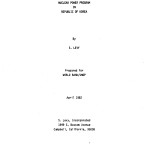
아주경제 김근정 기자= 미국의 안보·환경·자원분야 정책연구 민간기관으로 알려젼 노틸러스 연구소가 한국의 안전불감증 문제를 지적한 보고서를 31년만에 공개했다.
최근 원자력발전소 부품 비리가 잇따라 적발되며 사회문제로 떠오른 가운데 보고서의 등장으로 우리나라가 원전도입 초기부터 심각한 안전불감증에 빠져있음이 증명됐다.
노틸러스 연구소가 11일 공개한 ‘대한민국의 핵발전 프로그램의 안전측면 업데이트 리뷰’ 보고서는 세계은행과 유엔개발기구(UNDP)의 요청으로 S. 레비 주식회사가 1982년 4월에 작성한 문건이다.