CLIMATE-AMPLIFIED DISASTER EMERGENCY ENERGY RESPONSE
A TWO-HOUR ONLINE WORKSHOP:
CLICK HERE TO REGISTER
BOTTOM-UP, COMMUNITY-GENERATED AND -BASED TOOLS TO ANTICIPATE AND RESPOND TO EXTREME EVENTS:
CROSS-SECTORAL LINKAGES (ENERGY↔WATER, ENERGY↔COMMUNICATIONS, COMMUNICATIONS↔WATER)
Thursday, November 19, 2026, 4–6 p.m. EST (Washington DC/NY); 1–3 p.m. PST (CA/OR)
Friday, November 20, 2026, 7:30 a.m. ACDT (Adelaide); 8–10 a.m. AEDT (Sydney)
Livestreamed via Zoom and Recorded
Subject to Adjustment
Click any speaker’s name for a brief biography
| Speaker/Moderator | Topic |
|---|---|
| Moderator: Rena Frohman Convenor, Evans Area Resilience Network (EARN); Program Director, Plan C |
SESSION 1 |
| Rena Frohman | Acknowledgment of Country; Workshop Introduction |
| Global-local climate overview, impacts, adaption, disaster response, linkages | |
| Peter Hayes Executive Director, Nautilus Institute; Honorary Professor, Center for International Security Studies, Sydney University, Australia |
Climate Change Impacts, Disaster Scenarios, Tools Overview |
| Peter Gleick Senior Fellow, Co-Founder, and President Emeritus, Pacific Institute |
Disaster Response and Water Resilience |
| Utility-level energy and water utility local disaster responses | |
| Kevin Morley Senior Manager — Federal Relations, American Water Works Association |
“Building Resilience in the Water Sector” (Water Utility Emergency Disaster Responses) |
| Heather Smith Electrical Engineer; policy advisor on energy and climate change; Convenor, Coalition for Community Energy (C4CE) and its Knowledge Hub |
Essential Energy Outages Case Studies and Analysis (U.S.) |
| Local bottom-up application of community-level tools | |
| David von Hippel Senior Associate, Nautilus Institute |
CADEER Energy Disaster Strategies Analysis |
| Shannon McNeeley Associate Director, Water and Climate Equity Program lead, Pacific Institute |
Building Rural Water Resilience: Community-Driven Decision Support for Climate Disasters |
| INTERMISSION | |
| Moderator: Lyuba Zarsky Evans Area Resilience Network; Senior Associate, Nautilus Institute |
SESSION 2 |
| Local community response | |
| Anita van Breda | Not Every Flood Has to Be a Disaster: Nature-based Flood Risk Management and Opportunities for Community Engagement |
| Chris Greacen Engineer with expertise in home and community renewable energy systems (solar electricity, wind, and micro-hydroelectricity) |
Washington State Island School District Renewables Hub |
| Matthew Wittemeier CEO, Rainbow Power Co., Nimbin NSW, Australia |
Empowering Resilient Communities through Sustainable Energy |
| Cross-sectoral linkages: energy↔water, energy↔communications, communications↔water | |
| Stuart Bunn Professor Emeritus, Griffith University, Australian Rivers Institute, Brisbane, Australia; member of EARN |
Evans water-energy linkages |
| Andrew Russell Secretary, Byron Community Hubs; active in other community resilience efforts |
Community Hubs — Communication & Collaboration: Creating Systems that Work |
| Peter Hayes Lyuba Zarsky Peter Gleick |
CONCLUDING REMARKS |
| Rena Frohman | Farewell |
Stuart BUNN 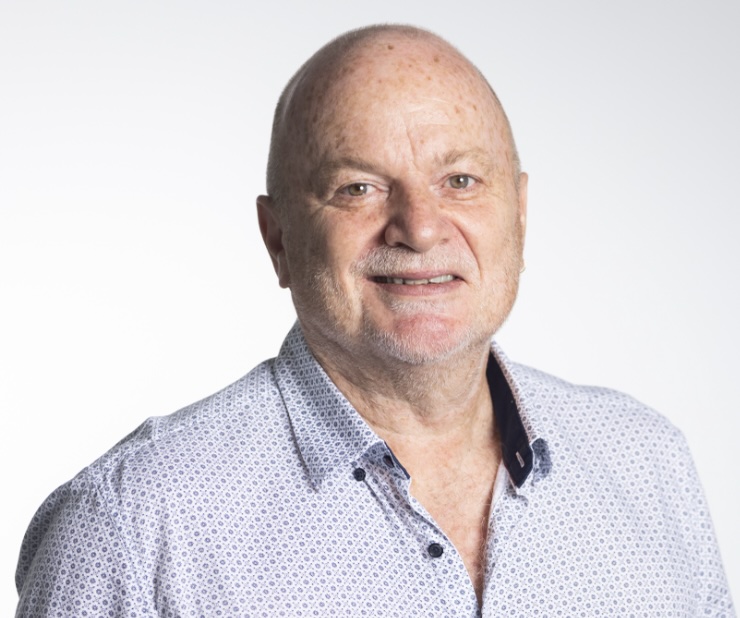 |
Stuart Bunn is Founding Director (until July 2022) and Professor Emeritus at the Australian Rivers Institute at Griffith University in Brisbane. Stuart’s major research interests are in the ecology of river and wetland systems with a particular focus on the science to underpin river management. He has extensive experience working with international and Australian government agencies and industry on water resource management issues. He is currently a member of the Murray-Darling Basin Authority and has previously served as a National Water Commissioner and as a Director of Land and Water Australia. He was appointed to the Earth Commission in 2019, and in 2022 was elected as a Fellow of the Australian Academy of Science. More… |
Rena FROHMAN  |
Rena Frohman is co-founder of the Evans Area Resilience Network, which emerged as a grassroots community response to the 2022 floods, and Programs Director of Plan C, a not-for-profit Northern Rivers (NSW) organization that focuses on building the resilience and regenerative capacities of Northern Rivers and Australian communities in the face of disasters and crises. With over 35 years of teacher training and community development leadership in national and international contexts, Rena is committed to learning and working with communities to create stronger social harmony. Rena lives on Bandjalang Country of the Bundjalung Nation (Evans Head), and pays respect to the learnings and caring for Country that First Nations can teach us. More… |
Peter GLEICK  |
Peter Gleick is a Senior Fellow, Co-Founder, and President Emeritus at the Pacific Institute. A world-renowned expert, innovator, and communicator on water and climate issues, Peter developed one of the first analyses of climate change impacts on water resources, the earliest comprehensive work on water and conflict, and defined a basic human need and right to water — work that has been used by the United Nations and in human rights court cases. He developed and advanced the concepts of the “soft path for water” and “peak water.” he is a member of the National Academy of Sciences (U.S.), and has authored or co-authored many scientific papers and 13 books. He is a MacArthur Fellow. More… |
Chris GREACEN 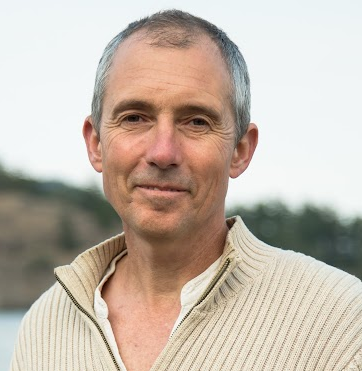 |
Chris Greacen works on policy and hands-on implementation of renewable energy projects from the village to the national level. He has worked on rural renewable electricity projects or policies in more than 20 countries, including Haiti, Liberia, Nepal, Nigeria, North Korea, and Tanzania. He helped Thailand develop the region’s first regulations supporting grid-connected renewable energy, now accounting for over 5 GW of small grid-connected renewables. Since 2007 he has worked as consultant to the World Bank’s ESMAP, developing country programs and regulatory frameworks for mini grids in countries in Sub-Saharan Africa and Southeast Asia. He lives on Lopez Island, Washington, where he serves on the San Juan County Climate and Sustainability citizens advisory committee. More… |
Peter HAYES  |
Peter Hayes is Honorary Professor, Centre for International Security Studies, Sydney University, Australia, and Executive Director of the Nautilus Institute for Security and Sustainability. He works at the nexus of security, environment, and energy policy. Best known for innovative cooperative engagement strategies in North Korea, he has developed techniques at Nautilus for seeking near-term solutions to global security and sustainability problems and applied them in East Asia, Australia, and South Asia. Peter has worked for many international organizations including the UN Development Programme, the Asian Development Bank, and the Global Environment Facility. He was founding director of the Environment Liaison Centre in Kenya in 1975. He has traveled, lived, and worked in Asia, North America, Europe, and Africa. He has visited North Korea seven times. He is a MacArthur Fellow. More… |
Shannon McNEELEY  |
Shannon McNeeley, Pacific Institute Associate Director, serves as the lead for the Water and Climate Equity Program. Her work focuses on water and climate environmental justice for frontline communities, incorporating the social and natural sciences along with different ways of knowing to understand human-environment relationships and how people are impacted by and respond to environmental change. Her research has addressed climate change science and policy, water resources and drought preparedness, and climate planning and action, emphasizing supporting those at highest risk through just and equitable solutions. Shannon was formerly an associate scientist and Advanced Study Program Fellow at the National Center for Atmospheric Research and a research scientist at the North Central Climate Adaptation Science Center at Colorado State University, and served as an author on the third and fourth U.S. National Climate Assessments. More… |
Kevin MORLEY 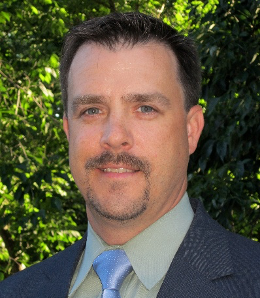 |
Kevin Morley is Senior Manager — Federal Relations at the American Water Works Association. For more than 20 years, he has played a central role in advancing national efforts on water sector risk and resilience. His contributions include leading the development of ANSI standards, providing expert testimony before Congress, serving as a Disaster Resilience Fellow at the National Institute of Standards and Technology, and contributing as a former member of the President’s National Infrastructure Advisory Council. He also serves as a technical advisor to the Water Sector Coordinating Council. His research at George Mason University produced the Utility Resilience Index (URI). More… |
Andrew RUSSELL  |
Andrew Russell plays active roles in a number of community organizations. He is founding member and Co-Chair of Minyon Resilience Network; Secretary of the Byron CHUBS (Community Hubs); Secretary of the Repentance Creek Public Hall; and a firefighter and Secretary of the Rosebank RFS. During his career, he specialized in supporting organizations and leaders to implement lasting transformational change. As founder and Executive Director of Actrua Performance Cultures for 22 years, he led a team that delivered safety, culture, and leadership programs in 26 countries. More… |
Heather SMITH 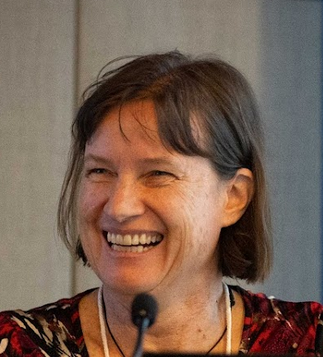 |
Heather Smith is an electrical engineer, policy and strategy adviser on energy and climate change, and convenor of the Coalition for Community Energy (C4CE) and its knowledge hub. More… |
Anita VAN BREDA  |
Anita van Breda is Senior Director, Environment and Disaster Management at the World Wildlife Fund. She is a disaster risk management and resilience leader with more than 20 years of experience bridging conservation, resilience, and humanitarian action. At WWF, she leads work advancing environmentally responsible, climate-informed recovery, reconstruction, risk reduction, policy and practice. She helped develop WWF’s Green Recovery and Reconstruction: Training Toolkit for Humanitarian Aid and leads training on Natural and Nature-Based Flood Management: A Green Guide. Anita has worked with the US Army Corps of Engineers and the United Nations on nature-based disaster risk solutions and serves on global climate, environment, and humanitarian advisory committees. More… |
David VON HIPPEL 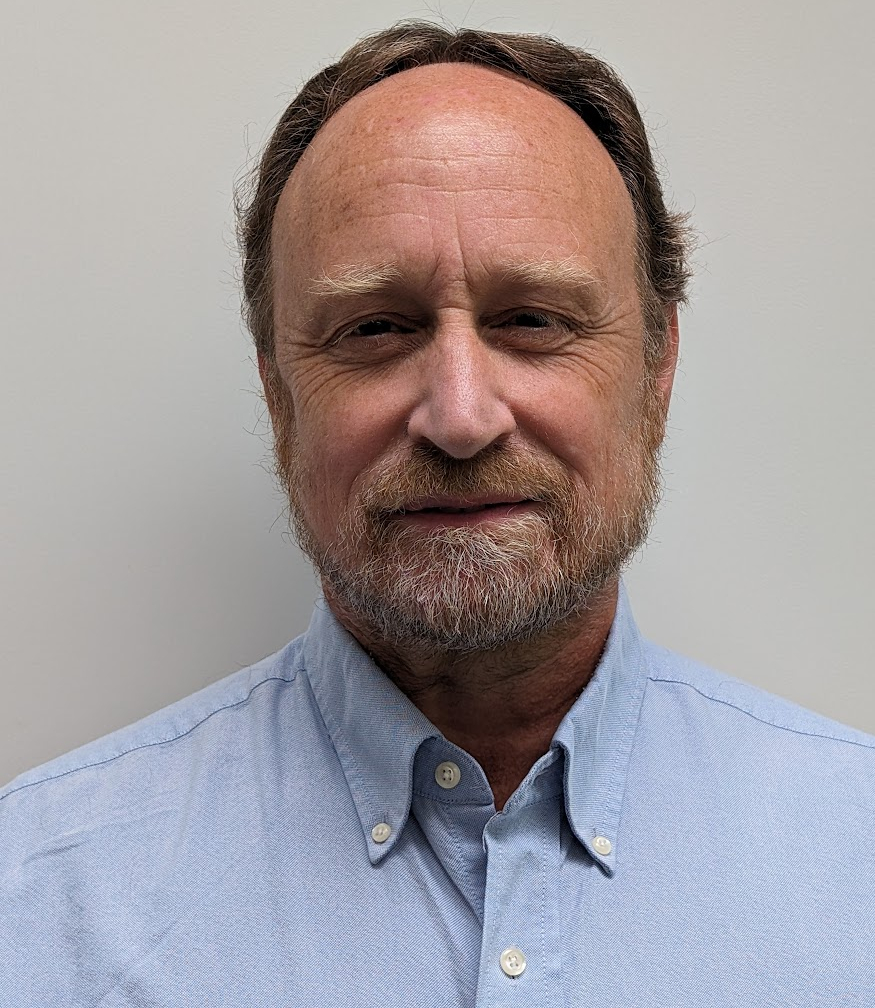 |
David von Hippel is an independent consultant and Nautilus Institute Senior Associate based in Eugene, Oregon. His work with Nautilus has centered on energy and environmental issues in Asia, particularly in Northeast Asia. He was recently the technical leader of the Reducing the Risk of Nuclear Weapons Use In Northeast Asia (NU-NEA) project identifying and elaborating plausible nuclear use/nuclear conflict “use cases” in East Asia, evaluating the impacts of those cases, and evaluating potential policies that could reduce the likelihood of nuclear weapons use. From 2017 through 2021 he co-led a multi-nation Regional Energy Security Project for Nautilus Institute, centered around energy paths analysis in each of the countries of Northeast Asia, and the related East Asia Science and Security Network and follow-on projects that focused on potential nuclear materials issues in the region and on the impacts of accidents and attacks at nuclear energy facilities. More… |
Matthew WITTEMEIER  |
Matthew Wittemeier is Chief Executive Officer at Rainbow Power Company, a regional leader in renewable energy solutions based in Nimbin, New South Wales. Drawing on nearly two decades in senior marketing and management roles, including heading Marketing and Sales at global AI company INFORM and contributing to multiple industry publications and conferences — having published more than 85 articles on AI and sustainable energy — he now focuses on growing community-centered solar and battery projects that accelerate Australia’s transition to sustainable energy. He is co-author of the multi-award-winning 2038: A Smart Port Story, a member and judge at The Academy of Interactive and Visual Arts (AIVA), mentor at SCU and the Australian Marketing Institute (AMI), an AMI Certified Practicing Marketer, as well as an award-winning graphic designer. More… |
Lyuba ZARSKY  |
Lyuba Zarsky is a volunteer activist with the Evans Area Resilience Network and Professor Emerita in the Environmental Policy and Management Program of the Middlebury Institute of International Studies in Monterey, California. Her teaching, advocacy, and research interests focus on innovative approaches to climate resilience finance and sustainability-based market governance. In the 1990s, she co-founded and co-directed the Nautilus Institute for Security and Sustainability. She was also the Staff Economist at the Australian Government’s Commission for the Future, where she designed and directed a stakeholder-based national sustainable development strategy. She has consulted with a wide range of international organizations, including the OECD, the Asian Development Bank, and the UN Development Program. She is a Senior Fellow with the Nautilus Institute. |
CLICK HERE TO REGISTER