The Korean Peninsula: Challenges and Opportunities for Russia
Special Report, October 7th, 2010
Russian National Committee
Vyacheslav A. Nikonov (lead), Georgy D. Toloraya (editor), Alexander V. Vorotsov, Alexander Z. Zhebin, Ivan S. Zakharchenko, Grigory S. Logvinov, V.E. Novikov ,Alexander A. Pikaev, I.I. Sagitov.
——————–
CONTENTS
I. Introduction
II. Article by Russian National Committee
III. Citations
IV. Nautilus invites your responses
I. Introduction
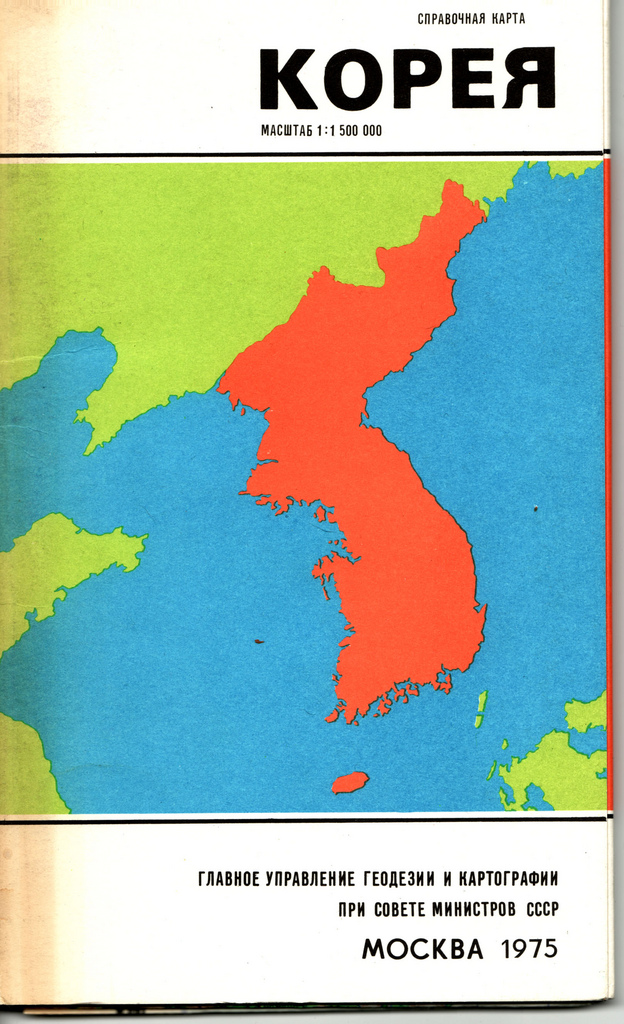
The Russian National Committee writes, “From the conceptual point of view, for Russia the most desired outcome is national reconciliation and the peaceful coexistence of the two Korean states on the path to an eventual unification of Korea over a long period of time. The appearance in the long-perspective of a unified Korea that seeks to maintain friendly, neighborly and cooperative relations with Russia does not contradict Russia’s core interests (in particular in comparison to other neighboring countries). At the same time, the prospects for a united Korea in the foreseeable future are quite low. However, it would be prudent to hedge our risks, as we cannot completely rule out the possibility of a sudden crisis that could lead to a rushed unification. The uncontrollable escalation of the Korean conflict remains a possibility, and the task of Russian policy is to not allow the “explosive” scenario to unfold and to explain that the most advantageous scenario is gradual convergence, which at the appropriate time would put voluntary rapprochement of state mechanisms on the agenda.”
The views expressed in this article are those of the author and do not necessarily reflect the official policy or position of the Nautilus Institute. Readers should note that Nautilus seeks a diversity of views and opinions on contentious topics in order to identify common ground.
II. Article by Russian National Committee
-“ The Korean Peninsula: Challenges and Opportunities for Russia”
By the Russian National Committee
The crisis along Russia’s far eastern borders has continued for decades – the rise and fall of tensions have on numerous occasions pushed the Korean peninsula to the brink of war. The most recent crisis episode was the sinking of the South Korean corvette Cheonan in March 2010 near the so-called Northern Limit Line. South Korea created an international commission (with experts from allied countries) which concluded that the ship was scuttled by a North Korean torpedo. This conclusion was not supported by China, and Russian experts did not find the results of the probe to be conclusive. As a result, there were mixed reactions in global community and UN Security Council to attempts to increase pressure and sanctions on North Korea following the incident. However, the sinking of the ship brought about a sharp worsening of situation on the Korean peninsula, and not only between the two Koreas but also between major powers, particularly between the United States and China. Meanwhile, in North Korea important, albeit latent, processes began in the development of new approaches to the governance of the country. For a large part of 2010, there were expectations in the West of an imminent crisis in North Korea and possible dramatic changes in the situation on the peninsula.
How great is the threat widely discussed in Western media that situation will spin out of control – the collapse of North Korea, a military conflict or perhaps the spontaneous reunification of North and South Korea? How should the issue of North Korea’s nuclear potential be addressed? Is there a real threat of its use in a military conflict or the proliferation of technologies for weapons of mass destruction? How might the domestic political situation develop in North Korea? Is the process of changing political leadership high on the agenda? Given the current situation, how should relations with North Korea’s leadership be developed? What should we be preparing for and what steps can Russia take to today? Considering Russia’s interests and its Far East territories, how do we best put to use relations with the dynamically developing South Korea, relations which are progressing toward that of a strategic partnership?
The North Korea Factor in the Regional and International Situation
The dead-end situation that has arisen in conflict resolution efforts with regard to the Korean peninsula is linked with the fact that North Korea has become a focal point of the rivalry between the United States and China, whose plans are being anxiously followed by South Korea. Both China and South Korea (with US participation) have developed “North Korean crisis response plans”, plans which in essence entail occupation. The military and political leadership of partners of North Korea, faced with a lack of clarity of prospects for the development of the domestic situation in the North, are forced to prepare for the most dramatic scenarios. Following the sinking of the Cheonan, the United States and South Korea have held a series of joint military exercises that were clearly hostile to North Korea. This created serious concerns for China, which responded reciprocally. The situation on the Korean peninsula has begun to resemble the worst of times of the standoff during the Cold War.
The confrontation of two systems on the Korean peninsula has a times boiled over into military conflicts. The Korean War of 1950-1953, which formally has not ended, was in essence a civil war, although the two sides were supported by outside forces. And this support continued through later periods. At the start North and South Korea had similar regimes – cruel dictatorships, attempts to transform the people, build a “new society”, etc. For a time the North, which received considerable assistance from the Soviet Union and China, even pull ahead of the South in terms of development. It was only in the 1970s that the breakthrough occurred in South Korea, when General Park Chung-Hee with assistance from the United States achieved the “South Korean economic miracle”, based on foreign investment, technology and forced export. Meanwhile, North Korea, which followed a policy of isolationism, entered a period of stagnation, despite cooperation with the USSR and China, who were competing for influence in the country.
The collapse of the USSR and the socialist system worldwide was a serious blow for North Korea. Foreign aid ceased and the factories built to fulfill orders from countries of the socialist bloc came to a standstill. The death of Kim Il-Sung in 1994 was followed by famine and natural disasters. The world expected the North Korean regime to collapse in a manner similar to other socialist countries. But these expectations turned out to be erroneous. The primary reason for this is that the North Korean political system, while in many was comparable to the Stalinist regime, has a somewhat different foundation. (In the new redaction of the constitution adopted in 1972 the term “communism” was replaced by the Juche Idea.) The North Korean regime is rooted not so much in Marxist-Leninist principles as in Confucian feudalist traditions and nationalism and, in part, in colonial Japan’s gendarmerie political structure. Having inherited political power from his father, Kim Jong-Il proclaimed the Songun policy – military first. The aim of this militarization was to ensure strict control over society. The North Korean leadership appeals to the “peculiarity” of the Korean people and to its cultural and historical heritage. The aim of this policy has been declared as “the building a strong and prosperous state” (an Eastern maxim with ancient roots). Furthermore, the country should “open the gates” to achieving this goal by 2012 (100th anniversary of the birth of Kim Il-Sung).
The North Korean government has been successful in maintaining social and political stability despite the chronic economic crisis. The planned economy has been paralyzed: the industrial sector with the exception of the military industrial complex is at a standstill and the energy and transport sectors are in desperate shape. The agricultural sector, due to a shortage of arable land and old technologies, is incapable of feeding the population.
Following the “difficult march” (famine and crisis) of the 1990s, the public distribution systems practically collapsed. The people survived by trading in the markets, shuttling goods from China and household industry. While this started in a disorganized manner, the process has begun to take on a more systematic form. A “gray” sector of the economy has emerged along with a new class that is linked to the market sector (among which there are some rather affluent people by Korean standards), and this has been accompanied by increased corruption.
The North Korean regime has periodically made efforts to contend with such “bourgeoisie” phenomena. The most recent example was the confiscatory monetary reforms (redenomination) in November 2009 aimed at expropriating funds primarily from “non-socialist” elements of society, liquidation of market trade and clamping down on foreign currency circulation. The reforms were a failure, which was recognized by the authorities, who took repressive actions against those who carried out the reforms. The development of a market economy continues to progress. The leadership of North Korea, it seems, has quietly come to terms with this and is trying to use such processes in its own interest. The government controls access to foreign aid (primarily from China), which is a critical factor for survival. Practically isolated from the national economy, the “open sector” (joint ventures, export zones, etc., which are not always successful), continues to expand while remaining under the control of the elite of the state’s power institutions.
The repressive regime of control over the population has in recent times shown glitches. Despite all the prohibitive measures, foreign imports have begun to make their way into the country, showing the North Koreans the extent to which their economy is underdeveloped. The ideas of freedom and mass culture, including South Korean, are also seeping through the country’s borders. At the very top there is a real fear that this “openness” will lead to a dilution of power, which is why North Korea is not borrowing from the Chinese model. The population, however, remains loyal to authorities, and the rare protests that do occur are strictly economic. Many years of propaganda has convinced a substantial portion of the North Korean population that expressions of disloyalty toward the country’s leadership, a “betrayal of ideals”, will have catastrophic consequences, not only for them individually but also for the fate of the “most superior” Korean nation. There is a fear of being “subjugated by the imperialists and South Koreans”. Society remains highly stratified. The official division of the population into fifty or so categories has augmented material inequality. Nonetheless, North Korean society remains orderly, and many are afraid of exchanging this idiosyncratic stability for freedom and chaos, although the new class is demonstrating an alternative way of life.
Kim Jong-Il, who headed the crony feudalist system of power following the death of his father, has proven himself as a capable leader, albeit one with unconventional manners and methods from point of view of Western politicians. At the same time, there is no reason to expect something different from a leader who inherited a monolithic, totalitarian system. The stereotype of an unpredictable and extravagant dictator, as he is persistently portrayed in Western media, is far from the reality. Among other things, the “Russian soul” played a substantial role in the formation of his personality, and our country, despite political differences, is not alien to the North Korean leader. Kim Jong-Il’s actions are, as a rule, thought through and calculated many steps ahead, and they are based on consensus among the leadership of the country.
The leadership of North Korea, however, remains a hostage of the system, and the logic of their behavior is wholly dictated by the task of self-preservation and not by development. In contrast to other former socialist countries, the deconstruction of the regime means not only a change of the political system and ruling elite but also a threat to the statehood of North Korea: the North could be immediately assimilated into South Korea.
The survival of the political system depends not only on internal but also on external factors. If during the reign of Kim Il-Sung, North Korea balanced itself between the USSR and China, it seems that the leadership seeks to play a similar game in relation to the United States and China in order to preserve its independence and benefit from the competition of the two powers. The establishment of dialog and modus vivendi with the United States is perhaps the most important foreign policy priority of the country.
At the beginning of the 21st century, having overcome a harsh economic crisis and famine in the mid-1990s, North Korea sought to improve relations with South Korea, normalize relations with Japan and the European Union, and make substantial progress with the United States. For a period of time it practically completely halted its nuclear and rocket programs, attempted to implement economic reforms and created an “open sector” in its economy. In doing so, the country indicated a possible alternative to isolation and Juche orthodoxy.
However, the North Korean regime’s efforts to attain international legitimacy clearly did not fit into the plans of the United States. Having raised the prospect of a largely contrived “secret uranium program”, the US cut short North Korea’s “peace offensive.” In Pyongyang this put an end to the illusion of the possibility to reach a compromise without engaging from a “position of strength”.
The Nuclear Issue.
Reasons, short history and assessment of potential
The start of North Korea’s nuclear program dates back to 1952, when at the height of the Korean War a decision was made to create the Atomic Energy Research Institute. The widespread construction of nuclear infrastructure began in the late 1950s. The nuclear program was aided by the USSR, which taught specialists and in the mid-1960s supplied the country with a research reactor under an agreement with the International Atomic Energy Agency. It should be noted that the North Koreans produced plutonium at a gas-graphite 5MWe reactor that they had independently modernized in Yongbyon (without the knowledge of the USSR) and developed radiochemical production on their own.
It appears that the first substantial batch of plutonium was produced in the early-1990s. Concerned about this development, Washington headed a crusade against Pyongyang’s nuclear program. In response North Korea announced in 1993 that it was withdrawing from the Nuclear Nonproliferation Treaty (the withdrawal was later “suspended”) and ceased cooperation with the International Atomic Energy Agency (IAEA). Tensions were hyped to the point that a military strike on North Korea’s nuclear infrastructure seemed imminent in 1994. However, following a meeting of former US President Jimmy Carter and Kim Il-Sung the so-called Agreed Framework was reached. The agreement in essence implied the freezing and subsequent liquidation of North Korea’s nuclear program in return for the ceasing of hostilities from the United States, including the eventual normalization of relations. The United States also was obliged to provide economic assistance and facilitate the construction in North Korea of nuclear power plant with two 1000 MW reactors by the Korean Peninsula Energy Development Organization (KEDO). However, as it later became apparent, the Clinton administration had expected the North Korean regime to collapse, and thus it was in no rush to either build to the power plant or truly recognize the legitimacy of the regime, which was most important for Pyongyang.
It cannot be ruled out that during that period Pyongyang carried out research on uranium enrichment as an alternative to plutonium as a source material for nuclear warheads, as it suspected that the United States might not fulfill its obligations of the deal. In Pakistan the North Koreans received 14 centrifuges and enrichment technology. Nonetheless, it was the accusations of the Bush administration in 2002 that led to the collapse of the Agreed Framework. In early 2003 North Korea unequivocally withdrew of the Nuclear Nonproliferation Treaty, expelled IAEA inspectors and began working on plutonium-fueled nuclear weapons. The amount of plutonium produced, according to various assessments, was sufficient to create 8-10 nuclear warheads, but it is not known how much of that plutonium was weapons-grade plutonium (two nuclear devices have already been detonated in test in 2006 and 2009). North Korea has also declared that it possesses the technology to enrich uranium and even thermonuclear fusion technology.
The current nuclear potential of North Korea bears, above all else, a political and psychological significance. From the military perspective, it does not yet represent a substantial threat due to, among other things, poorly developed weapon delivery capacity. The use of a nuclear weapon in a military conflict is unlikely, although it cannot be ruled out as a weapon of “last resort”. The likelihood of such a conflict is rather low (and the nuclear deterrence factor plays no small role here). The threat to Russia from North Korea’s weapons of mass destruction is limited to the danger of unintentional events or accidents.
However, the nuclear program of North Korea creates a serious threat to the nuclear nonproliferation efforts. It represents a provocation of Japan and, to a lesser degree, South Korea and Taiwan. The chance that nuclear materials from North Korea could fall into the hands of terrorists cannot be ruled out. The country’s rocket program is actively being developed.
[1] Further rocket and nuclear testing by North Korea, including the possibility of thermonuclear weapons, could lead to a change in the balance of military forces in the region, and thus Russia is interested in the halting of such programs of North Korea.
How should North Korea’s nuclear status be treated? Some experts believe that North Korea should be considered alongside the other de facto nuclear-armed states, such as India and Pakistan. North Korea cannot rejoin the Nuclear Nonproliferation Treaty as a nuclear power, and a return to its non-nuclear status within the framework of the current negotiation process seems would be very difficult to achieve. The concept of “denuclearization” is not quite clear, as the closed nature of the North Korean state seems to exclude verification.
[2] Denuclearization without a regime change would at best represent an unverifiable declaration.
Diplomatic resolution of the nuclear issue: Questions and options
The failures of the US attempts to halt the North Korean nuclear program on a bilateral track led to the creation in 2003 of multilateral dialog system, which was conceived by the United States as means for forming a united front against North Korea, mainly for the purpose of getting China in line on the issue. Although the idea itself was first put forward by Russia in 1994 (proceeding from valid concerns that there was no other way for Russian involvement resolving Korean issues), none of the initiators of the new format had intend to bring in Russia. It was only thanks to the North Koreans, who saw Russia as a balancer against a high degree of dependency on China, that our country ended up at the Six-Party Talks, which began in Beijing in August 2003.
A joint statement on September 19, 2005, stipulates North Korea’s obligations to abandon its pursuit of nuclear weapons and nuclear programs and return, at an early date, to the Treaty on the Non-Proliferation of Nuclear Weapons and to IAEA safeguards. Later the parties reached an agreement breaking down this process into several stages. The first stage entailed shutting down the reactor in Yongbyon. The second stage – in return for energy compensation to Pyongyang – was to be the decommissioning of five of North Korea’s nuclear facilities. Through to 2007, right-wing elements in the United States made attempts to torpedo the process. North Korea perceived the freezing of its accounts with Banco Delta Asia in Macau upon the request of the United States in late 2005 as an attempt to cut the country off from the global financial systems, and Pyongyang refused to continue negotiations. Having become convince that concessions produced little results, North Korea tested its first nuclear weapon in October 2006.
Reacting to this, in early 2007 the United States agreed to a compromise. North Korea, in exchange for economic assistance and steps toward normalization of relations, was to shut down and seal its reactor in Yongbyon and a complete declaration of all nuclear programs. Pyongyang did not take on any obligations with regard to other elements of its nuclear program, in particular with regard to atomic detonators and their production. However, due in part to Kim Jong-Il falling sick in 2008 and unscrupulous fulfillment of obligations by other participants of the negotiations (ending sanctions, economic aide), the North Koreans did not hurry to reach an agreement with the outgoing US administration. There is another, more profound reason for the halting of dialog. The agenda had already reached the point of actual abandonment of nuclear weapons and fissile materials. Prior to receiving guarantees of recognition and security, Pyongyang had no intention of doing this. And this is why North Korea declined a rather attractive set of proposals, according to some sources, by the Bush administration in late 2008.
Having reached the conclusion that the current negotiation format is not bring the country any closer to achieving its main goal – international legitimacy and preservation of the regime, North Korea upped the ante. In April 2009 it tested a ballistic missile and, using the sharp negative reaction of other members of the Six-Party Talks as an excuse, withdrew from negotiations and again tested a nuclear weapon (May 2009). Today North Korea openly positions itself as a nuclear power.
The prospects for restarting the negotiations are unclear. At first North Korea was against this, arguing that the negotiations had become and instrument for applying pressure while the United States fails to fulfill its obligations. Despite this, in the summer of 2010 North Korea began to raise the prospects of a return to negotiations (evidently trying to engage the United States in dialog following the worsening of the situation with the sinking of the Cheonan), but now South Korea strongly objects, demanding an apology for the sinking of its ship. South Korea is supported in this by Japan as well as by Washington, where contrary to the country’s interest there remains a strong lobby against any sort of dialog with North Korea. At the same time, given the clear necessity for the West to have a channel for discussing its concerns (primarily related to weapons of mass destruction) and also lobbying by the Chinese lobby, the negotiation process should be renewed, perhaps in a different format and with another agenda. Although there are really no alternatives to negotiations, the “old” six-party configuration has already played its role, and the question now is what kind of format and mandate is needed for a new round of negotiations.
Today the situation is such that it is unrealistic to make North Korea’s abandonment of nuclear weapons the central theme of negotiations. Given such conditions, the diplomatic process should focus on the task of halting North Korea’s nuclear development program with the declarative, unspecified aim of denuclearization in the distant future. Denuclearization in principle is possible only in the long-term perspective and only with the disappearance of the external threat along with the need for an “external enemy” in order to maintain control of the domestic situation within the country. But without a change of the country’s elite (or buying them out) North Korea’s abandonment of nuclear weapons is unlikely. Achievement of denuclearization is possible only through many years of concerted efforts in the context of generational change of the leadership of North Korea.
Interests of the Main International Players
The interests of the participants of the negotiation process are not very compatible and extend far beyond North Korea’s nuclear program. For the United States, Japan and South Korea, the nonproliferation agenda coincides with a regime change agenda: these countries are trying to broadly interpret and use UN sanctions and other mechanisms of pressuring North Korea as instruments for weakening not only the military but also the economic potential of North Korea. China and Russia, while in favor of denuclearization of the Korean peninsula, are not interested in the collapse or, in particular, a forced change of regime, and they would prefer its gradual and peaceful transformation.
Position of the United States
Washington’s view of Korean issues is formed under the influence of a whole range of factors: from the emotional-ideological factors linked to the psychological inertia of the Korean War (this is one of the reasons it is not prepared to use force) and the general allergic reaction to the North Korean regime to the real nuclear proliferation concerns and strategic military considerations.
It is clear that North Korea is something of a prickly irritant for the United States. This small state with no substantial military potential, an economy in ruins and a half-starving, freezing population somehow manages to stand in the way of the United States. The West in general, and the conservative wing of the US establishment in particular, is not ready to accept the existence of this totalitarian repressive regime in its current form for ideological reasons as well. However, the geopolitical motivation is of primary importance. International recognition of a “pariah regime” and normalization of the situation on the Korean peninsula would put in question the US military presence in the region and the creation of theater missile defense (TMD) systems in Northeast Asia. This would represent a serious setback for the objective of hindering the eventual emergence of Chinese dominance.
The most drastic option – the liquidation of North Korea – would represent not only a revision of the results of Korean War but also a reconsideration of the results of World War II in the Far East. The possible deployment of US forces with high-precision next-generation weapons along the 1400 km border with China and also along the border with Russia (albeit only 17 km) would represent a dramatic change in the military and political situation in the immediate region and the Asia-Pacific region as a whole.
At the same time, Washington is clearly not prepared for scenario involving the collapse of North Korea, and not only because of the implications for the regional and global economy but also due to reluctance to enter into a conflict with China over dividing spheres of influence in Korea and an eventual military alliance of a united Korea with the United States. Through closed channels the United States has already begun sound out China’s plans in the case of a crisis in North Korea.
In reality, a certain degree of tension and fluctuation in the region and even North Korea’s preservation of some rocket and nuclear potential is quite acceptable for the Americans.
US policy toward North Korea is highly influenced by domestic politics. In the 1990s the Republican majority in Congress practically paralyzed the Clinton administration’s efforts to follow through on agreements reached with North Korea in 1994. Following the arrival of the Republican administration in 2001, North Korea was included in the “Axis of Evil” which only served to prove correct Pyongyang’s fears of a repeat of the “Iraq scenario” in North Korea. Meanwhile, Pyongyang’s predictable lack of restraint in rocket and nuclear capacity development served as a convincing argument in favor of efforts to create a strategic missile defense system for the United States.
The Obama administration is forced pre-empt criticism from the Republicans and is continuing the stick and carrot routine – sanctions and promises – as a part of wait-and-see policy while trying not to be tripped up by North Korea’s provocations. The expert community in the United States continues to debate the modalities of dialog with Pyongyang. At the top of the list of issues is how to handle North Korea’s nuclear potential, keeping in mind the very slim chances of liquidating this potential. Following the Cheonan incident, Washington has been forced to pay more attention to the position of Seoul, which is demanding efforts to increase pressure on Pyongyang and isolate it. The Obama administration has yet to develop an articulate strategy with regard to North Korea. While listening to the ideas of its partners, the administration has not managed to coalesce them into a unified, purposeful approach. Thus the strategy of the current administration can be described as “strategic patience”, which in practice is playing out as a lack of dialog and continuation and strengthening of sanctions. This in turn feeds the fears of the North Korean elite that Washington is hoping for a cataclysm in North Korea and its absorption into South Korea or a leadership change that would make Pyangyong more malleable. At the same time, the American expert community in mid-2010 began to recognize that refusal to engage in dialog and “hiding one’s head in the sand” is detrimental to the situation, just as is the frustration over the need to appease Seoul, whose inflexibility has driven the situation to a dead end.
China’s Role
China is a decisive force in Korean affairs, and one that is not guided by the immediate considerations of the day but rather by a long-term, multifaceted strategy. China will not relinquish North Korea from its centuries-old sphere of influence for reasons both geopolitical and military (liquidation of the buffer between China and US military forces)
[3] , although China has been increasingly agitated by North Korea’s behavior in rocket and nuclear capacity development and the increasing potential for a military conflict with South Korea. China still remembers that hundreds of thousands of Chinese “volunteers” lost their lives defending the independence of North Korea during the Korean War, and the downfall of a “socialist government” in a neighboring state is not acceptable for political and psychological reasons.
Following internal discussions in 2008-2009, Beijing came to the conclusion that there is no good alternative to protecting the current government in North Korea. And Beijing was forced to go to great lengths to uphold this policy – it did not succumb to enormous pressure from South Korea and the United States, who sought to use the Cheonan incident to drive a wedge between Beijing and Pyongyang. China in essence acted as the sole defender of North Korea, not allowing adversaries of Pyongyang to employ decisive efforts to isolate and pressure North Korea that could have led to substantial weakening of the regime.
China had to pay a price for this crisis in terms of its relations with South Korea, aggravation of the geopolitical confrontation with the United States in East Asia – including a demonstration of military force (as both sides held a series of naval exercises). Despite this, during the two visits of Kim Jong-Il to China (May and August 2010), Beijing confirmed its support for him, reaching agreements to expand not only economic but also military cooperation, clearly presenting a challenge to the “crisis response plans for North Korea” of the US and South Korea. China has bolstered its efforts to increase its presence in the North Korean economy – investment plans totaling US $10 billion have been under discussion since February 2010.
For Beijing, Northeast Asia is a strategic launch pad for the realization of long-term objectives to project China’s political and economic influence on the entire Asia-Pacific region. The active employment of China’s favorite instrument – trade and investment cooperation – supplemented by theses on ethno-cultural affinity, shared values, etc., China aims to consolidate to the utmost degree possible the East Asia troika – China, South Korea and Japan – and create a stable and predictable situation in the region. In this scenario any US administration will unavoidably encounter increasing difficulty justifying billions of dollars in expenses on the maintenance of the American forces in the region, and subsequently will be forced in one way or another to reduce its presence, perhaps to the point of complete withdrawal.
Thus China’s objective to establish its complete dominance in Northeast Asia (with an understanding that this will occur when South Korea and Japan will no longer be able to compete economically with China) will be achieved without any real confrontation with the United States.
The existence of a divided but neutral Korea would be preferable for China, although in the long-term perspective Beijing might not seek to hinder the gradual resolution of the issue of the reunification of the Korean peninsula on the understanding that the Korean state would be militarily neutral and politically oriented toward China. The Chinese would like to see North Korea reformed along the lines of the model used in China. However, the current conservative leadership of North Korea is not prepared to launch such reforms, fearing a disruption of the system and an increase in Chinese influence.
Beijing cannot support North Korea’s rocket and nuclear programs and other reckless undertakings, as they serve to support the arguments of the US, South Korea and Japan in favor of an increased US military presence in the region and strengthening of bilateral military alliances. Furthermore, North Korea’s programs could provoke other countries in the region to acquire nuclear arms. However, Pyongyang’s possession of even just a “ghost of nuclear weapon” significantly minimizes the possibility that Seoul with support from the United States would succumb to the temptation of using its clear military advantage in the region to unite country.
China is a proponent of the six-party process (which is has sponsored); however, its value to Beijing should not be overplayed. It is much lower on the list of priorities for Chinese diplomacy in comparison to maintaining relations with North Korea and with the United States. At the same time, China is actively working to renew the six-party negotiations, trying to reconcile the diverse array of interests of its participants.
Japan’s Interests
The Japanese are following an amorphous conglomerate of motives, among which are enmity toward the North Korean regime fed by centuries of ethnic conflict, fear of the systematic strengthening of China, and convulsive attempts to preserve Japan’s technological and economic superiority in the region. Japanese diplomacy is bantering back and forth between irreconcilable contradictions – between its strategic aim of increasing national security by seeking compromises with Pyongyang and its long-festering allergic reaction to North Korea. For Japan, North Korea is the embodiment of “the enemy”, particularly with regard to the abduction problem.
[4] Obsession with this bilateral issue has hindered the six-party negotiations and turned Tokyo into unenviable position of a saboteur of the diplomatic process since 2007. Japan was alone in its opposition to providing aid to North Korea.
It is difficult to say that Japan has a clearly formulated and limited set of interests, considering the social and economic difficulties the country has experienced over the past two decades and the chronic weakness of its constantly rotating government.
Today this is further compounded by the dilettantism of the Cabinet, which was formed by the Democratic Party, a party the throughout its entire history had always been in opposition. Tokyo expresses no enthusiasm for the prospects of a united Korea, as it fears the appearance of another major competitor in the region. Anti-Japanese sentiments are prevalent in both North and South Korea, which implies that relations between a united Korea and Japan could be complicated.
The Implications of Relations with North and South Korea for Russian Policy
In both parts of the Korean peninsula, the national division is perceived to be a result of collusion between the USSR and US following World War II. The unsuccessful attempts to unite Korea during the war in 1950-1953 only served to deepen the divisions. The national idea of both the North and the South remains the forced assimilation of one part of Korea into the other, and the relations between the two regimes has become a “zero-sum” game. At the same time, Koreans on both sides would prefer to avoid participating in such a conflict and once again play the role of toys in the hands of great powers. In this regard, the high level of dependency of South Korea creates a sort of moral and psychological superiority for North Korea, which has put an emphasis on self-sufficiency.
Up to the late 1980s, Pyongyang thought it was just a matter of choosing the right time to capture the South. And following the dissolution of the USSR, South Koreans began to seriously prepare for the collapse and subsequent absorption of the North.
However, in order to mask true intentions, the first official contacts between the two Koreas began back in the 1970s. North Korea proposed the idea of a confederation or unification along scheme, which was later used for China and Hong Kong. The South Korean proposal of a commonwealth implied the assimilation of North Korea into the socio-economic system of South Korea, which was not acceptable to Pyongyang. The North Korean idea of a confederation was perceived in the South as a propagandistic trick, although attitudes toward this idea became more constructive during the presidencies of the center-left Kim Dae-Jung and his successor Roh Moo-Hyun.
It was only during this period, as a result of the Sunshine Policy that began in 1998, that the prospect of peaceful co-existence of the North and South appeared. At the beginning of the 21st century cooperation between Pyongyang and Seoul as the second nuclear crisis broke out, contrary to conventional wisdom, not only did fall apart (as was usually the case during periods in increased tensions between the United States and North Korea) but seemed to catch a second wind. Two summits were held, dialog expanded, trade increased and joint projects were initiated, including an industrial complex in Kaesong and a tourism project in K?mgangsan financed by South Korea. However, disappointment grew in the South over ineffective aid (which the North took for granted), progress on joint projects, provocations, and the dependency and egoism of North Korean partners.
As a result, the administration of Lee Myung-Bak, which came to power in 2008 coalesced members of past regimes, tossed out the accomplishments of the “liberal decade” and began a policy of pressuring the North, which in turn interpreted this as another attempt at “regime change”. This was one of the key factors in Pyongyang’s return to making its rocket and nuclear capacities a central component of its policy in 2009 and the current crisis on the peninsula. Lee Myung-Bak, in trying to secure a leading role in the international discussion of the North Korean issue, declared the issue of denuclearization first and foremost on the agenda. However, according to North Korea, the nuclear issue is in no way related to South Korea. The South Korean president put forward the idea of a “big deal” (in which denuclearization would be rewarded with normalization of relations and economic aid), which, although correct in essence, was perceived in Pyongyang as demagoguery and a guise for plans to absorb the North. Recently in Seoul, where the lack of understanding of the situation in the North is causing increasing nervousness, some are seriously preparing for just such a possibility in the near future.
The escalation of tensions caused by the sinking of the Cheonan has largely been a result of a number of intentional actions taken by the South Korean government with support from the United States. Seoul has unleashed a campaign of unprecedented international pressure on North Korea, trying to achieve further isolation of Pyongyang, weakening of the regime and, subsequently, its capitulation. The path for achieving this is the strangling of North Korea through international pressure, bilateral sanctions and an economic blockade of the country, and a psychological war against Pyongyang aimed at breaking apart North Korean society from within. The success of such a policy, as they probably believe in Seoul, would allow its authors to inscribe their names in gold print in history as the “unifiers” of Korea. The stakes are high – if the Democratic opposition party comes to power in 2012 (and this party won in regional elections in early June 2010), investigations of corruption charges against might be restarted against Lee Myung-Bak and he may be accused of breaking economic cooperation agreements with North Korea. So long as the United States and Japan provide their whole-hearted support for the government Lee Myung-Bak, the policy of pressuring North Korea is not likely to be reversed. Given the lack of a mechanism for dialog and supporting peace in Korea, it is possible that new violent incidents, perhaps even significant than the sinking of the Cheonan, will occur between the two states.
At the same time, the majority of South Koreans understand that although the unification has been declared as a top state objective in the long-term perspective, the economic potential of the South is not sufficient to preserve the standard of living that took such great efforts to achieve in South Korea. The younger generation does not feel a particularly strong kinship with the North Koreans and is not burning with a desire to unite with them and thus threaten their own way of life.
For Russia the continuing conflict between North and South Korea hinders opportunities for cooperation with South Korea – a dynamic and promising state of the critically important East Asia region and a member of the G20 (hosting the 2010 summit in Seoul). Over the past two decades South Korea has made progress on the path of liberal-democratic development in the economic sphere. And, following the crisis of 1997-1998, it managed to join the ranks of developed countries with its new industrial economic model. South Korea is taking advantage of all opportunities appearing as a result of the global crisis and is actively globalizing its economy, successfully expanding foreign trade, particularly with the leading world economies.
Although in 2008 the leaders of Russia and South Korea declared a goal of moving toward strategic partnership, it remains unclear how to fill this declaration with content, except in the economic sector (there are some suspicions that South Korea is striving to attain the privileged status of Russia’s leading partner in Asia for the sole purpose of receiving discounted access to Russian resources, seeing the Russian Far East as a sort of energy and resource feeding trough). Twenty years following the normalization of relations, South Korea has become the third largest economic partner of Russia in the Asia-Pacific region. The scale cooperation continues to expand, with particular attention being paid to joint investment projects (the accumulative value of South Korean investments in the Russian economy in 2009 totaled US $1.5 billion). However, the national strategies of the two countries do not coincide: for Russia the top priorities are stability and development, promotion of its economic interests in the region with the aim of developing the Far East; while as for South Korea the top priority is the unification of Korea on its conditions.
Expansion of Russia’s economic cooperation with both Korean states could provide a positive impulse for the strengthening of cooperation in the Northeast Asia and in other spheres. The development of mutually beneficial dialog within the framework of trilateral or multilateral cooperation (with the inclusion of other Asian countries in projects) could substantially speed up the resolution of existing political contradictions and collusions. South Korea should not be considered second tier for bilateral economic projects (in favor of China and Japan).
Development Scenarios for the Korean Peninsula and Russia’s Interests
The Catastrophic Scenario
How realistic in the scenario so persistently discussed in the press of the collapse of North Korea given the escalation tensions with regard to North Korea’s nuclear program and relations with South Korea? For North Korea, which has lived in a state of siege for decades, these factors are not critical. However, we cannot completely rule out crisis (which the West is actively striving to provoke). Although the probability of a military conflict is not very high, the attempts to “strangle” North Korea could lead to a deep economic crisis and chaos, with the final result being the downfall of the regime.
The greatest potential danger is a potential crisis in the leadership of North Korea. In the North Korean political system, the national leader is an embodiment of the state. Following the sickness of Kim Jong-Il (purportedly a stroke or diabetic attack in August 2008), many concerns were raised outside the country regarding the adequacy of the inner circle of the national leader and his ability to control this group.
The danger of a crisis also lies in stagnation. The leadership of North Korea is a closed “club”, comprised of several dozen (perhaps up to 100) representatives of the upper echelon of the state and political elite, and to a large degree it is made up of members of the Kim family clan. Only this group has complete information on the situation in the country and outside. It has a broad scope of view and access to real instruments of power. If the “old guard”, considering its relatively old age and extremely low level of renewal and rotation, does not provide adequate continuity, then substantially less informed and less professionally prepared representatives of the regional elite from lower levels of the state apparatus may be thrust unprepared into positions of real power. And they may not be capable of handling this challenge, particularly in the event of the death of the national leader.
There could be multiple crisis scenarios in North Korea, but the number of outcomes is much fewer: the absorption of the country by South Korea or its falling into the more or less “soft” control of China.
Much conjecture is built on what could happen in North Korea in the case of the unexpected departure of its leader without a plan for the smooth transition of power in place. Internecine strife leading to a splitting of the elite, loss of control and complete collapse of the state cannot be ruled out.
The delays in the holding of the conference of the Worker’s Party of Korea to appoint the new governing bodies of the party gave rise to speculation that the search of compromises in post appointments was not going smoothly. Nonetheless, the results of the conference in September 2010 practically amounted to an announcement of the promotion to power of the youngest son of Kim Jung-Il – Kim Jong-Un – under the patronage of the older generation, in particular, members of the family clan. This significantly lowers the likelihood of events spiraling out of control. But even with a smooth transfer of power, problems are possible: the new elite that will inevitably replace the older generation could be substantially less competent and raised in an aggressive spirit. It could be more susceptible to provocation and incapable of assessing the limits of adversaries’ patience. A schism is also possible in the new elite, particularly is attempts are made to “modernize” the system. Reforms without preliminarily resolving the issue of external security comes with the threat of disrupting the balance of the political system and ruin of the state.
? In the case of such destabilization South Korea intends to take control of the North. The “hot heads” in Seoul have begun to believe that “the time for unification has finally come”, and North Koreans are only waiting to be “liberated from the oppression of dictatorship”. However, they do not take into consideration the fact that unification via absorption could bring about very negative consequences – not only for the Korean nation but for the entire region as well. It is quite likely that some of the proponents of Juche nationalism would take up arms against the “occupiers and compradors”. The people will have nothing to lose: South Korean society is not likely to absolve of responsibility for past transgressions figures of the “bloodied regime” or even their descendants. There is no doubt that such resistance plans, including partisan warfare, are in place in North Korea, and the corresponding bases are in place, possibly stocked with nuclear materials and weapons of mass destruction. The new authorities will encounter not just guerilla warfare of the type seen in Afghanistan but a full blown civil war with the possible use of WMD, and not only on the Korean peninsula.
Even if such a dramatic turn of events is avoided, the North Korean population, which is not prepared to assimilate into the capitalist economy and dissatisfied with its unavoidable role as second-class citizens in the united Korea, will be in constant opposition to the central authorities. This will create long-term instability in Korea.
? Another possibility is the active interference of China, which in a crisis situation could attempt to install a pro-China government in North Korea (at least in the northern bordering regions of the Korean peninsula, leaving the southern regions to South Korea). For the ruling elite in North Korea this is at least more acceptable than capitulating to South Korea. Perhaps a rational scenario for the behavior of North Korea’s elite would be to “sellout” to Beijing in the case of a crisis, thus preserving the borders of the country, statehood and perhaps even their own government posts. However, such a regime would face ostracism and pressure from the West and become a perennial problem for China and its position in the region, where fear of the hegemony of Beijing would run rampant. China is preparing for various scenarios, and an increase in military exercises has been seen in the provinces bordering North Korea.
Evolutionary Scenarios
Despite the possibilities discussed above, the probability of a collapse of the North Korean regime has not significantly increased, particularly considering China’s support.
If all goes according to plan, for the foreseeable future Kim Jong-Un, who at the party conference in September 2010 was appointed as a member of the central committee and deputy chairman of the military committee of the central committee, (even in the case of the death of his father) will most likely fulfill more of a representative role than a functional role. The practical management of state affairs will remain in the hands of the same tried and true state elite with an evolutionary change of generations. The question lies in how cohesive this group will remain without the presence of an “iron fist” and who will fulfill the role of coordinating functions and setting priorities. Power, however, will remain in the hands of the extensive Kim clan and their inner circle. With the highly stratified power structure of the ruling class bound together by thousands of family and social ties, all contenders for power will have to be taken into consideration if a change of the top leadership is on the agenda. Any new authority will be forced to find support in the elite, which numbers in the thousands and has been nurtured for decades based on bloodlines and in which there are no accidental members. Due to the restricted access to information and education system, there is no alternative power base.
Depending on the development of the international situation, there are two possible paths for the scenario under consideration.
? If there is a continuation of the nuclear crisis, international sanctions and strengthening of measures to isolation the country, North Korea will preserve is isolation and continue a policy of confrontation with the outside world, based on its unique experience of long existing in isolation of various degrees of severity. It credo is not to change anything. The mobilization model of a command economy oriented toward self-sufficiency and self-reliance has substantial reserves of durability and survival capability in crisis situations. There are no grounds to believe a domestic opposition movement will arise in North Korea – all dissident activities are cruelly suppressed and the conditions for its formation are absent. Such a stagnant option is least dangerous for the country’s elite.
? If there is a return to constructive negotiations and a policy of engagement, then gradual economic reforms aimed at a evolutionary transformation of North Korea becomes a possibility. Theoretically the Chinese model is quite applicable to North Korea, with an adjustment in favor of the preservation of isolation in the interest of not allowing fomentation even while permitting the development of market mechanism (which authorities are currently turning a blind eye toward). The achievement of a real political compromise in the spirit of the Joint Statement from September 19, 2005, would open up the path the economic interaction with the world community. In this case it should be aimed at the formation of a competitive market economy in the country on the basis of global allocation of labor (primarily supported by the resource basis and labor resources of the country) with minimal limitations of “sovereign autocracy”. This could help keep power in the hands of Democrats in the US following 2012 and a return of liberals to power in South Korea in 2013.
The regime in principle is capable of modernizing itself on the basis of Korean nationalism and restoration of communication with its South Korean neighbors. The entrepreneurial class that forms could, if unconditionally loyalty to the political leadership, become a driving force of economic change. In 10-15 years a North Korea capable of progress down the path of reform is no less likely than the Cambodia and Vietnam we see today. And this would create security guarantees for the country that would make its nuclear weapons and other WMD unnecessary.
Conclusions and Recommendations
From the conceptual point of view, for Russia the most desired outcome is national reconciliation and the peaceful coexistence of two Korean states on the path to an eventual unification of Korea over a long period of time. The appearance in the long-perspective of a unified Korea that seeks to maintain friendly, neighborly and cooperative relations with Russia does not contradict Russia’s core interests (in particular in comparison to other neighboring countries). At the same time, the prospects for a united Korea in the foreseeable future are quite low.
However, it would be prudent to hedge our risks, as we cannot completely rule out the possibility of a sudden crisis that could lead to a rushed unification. The uncontrollable escalation of the Korean conflict remains a possibility, and the task of Russian policy is to not allow the “explosive” scenario to unfold and to explain that the most advantageous scenario is gradual convergence, which at the appropriate time would put voluntary rapprochement of state mechanisms on the agenda. At the start this could possibly be some form of confederation on the path to a unified state, if this is what the populations of North and South want. Such an outcome, however, is not guaranteed. There are many examples in the world of ethnically affiliated states thriving in close contact but without unification. In any case, it would be preferable that the Korean state be neutral, peaceful and without a foreign military presence on its territory.
On the whole, for Russia, considering its current capabilities, the most relevant objective is not attaining predominate position in Korea but rather not allowing the situation to develop such that the entire peninsula to fall under the influence of another state, especially a state that is not on truly friendly terms with Russia. Considering the current balance of forces in Northeast Asia and our economic capabilities, the development of such a scenario cannot be completely ruled out. Thus for us in the short and mid-term perspective it is advantageous for North Korea to exist as a sovereign state, playing the role of a sort of buffer to the geopolitical ambitions of the United States in the region.
It is important to understand the limitations of the leverage Russia has in region and, even more so, to understand how to most proficiently use it.
- Although the possibility of drastic changes in North Korea remains small and the occurrence of a major crisis unlikely, it is necessary to constantly monitor the situation and maintain normal relations with the leadership of both South Korea and North Korea. Coming from a position of political realism, we should not ignore Russia’s unique political capital – its longstanding relations with the North Korean elite – regardless of negative perceptions in Russian society of the North Korean state structure. These relations are can and should be put to use not for the sake of preserving or indulging negative trends but rather to promote the positive evolution of the system and elite, particularly the upcoming younger generation. For the US, China and South Korea, Russia’s participation in six-party negotiations is only valued in so much as Russia can influence North Korea. While relations with South Korea are valuable in their own right, there are certain limits to this cooperation due to the strong American influence on the policies of its important ally in Asia.
- The only sensible path to resolving the nuclear issue is to take into consideration a number of concerns of Pyongyang with the aim of reducing the significance of the nuclear deterrence factor. Russian interests in promoting denuclearization coincide with those of the United State, Japan and South Korea. However, it should be recognized that, at least for Russia, outside the context of the resolution of Korean issues, the complete liquidation of North Korea’s nuclear potential is not an absolute or single most important priority, and it is of an ancillary nature in relation to other issues. If denuclearization takes place without the creation of a stable system of collective security, then the risks of military conflict may actually increase.
- Today’s agenda should probably include the freezing of the rocket and nuclear potential of North Korea along with the country’s acceptance of verifiable obligations without pretensions of recognition as a nuclear power and compliance with the requirements of Nuclear Nonproliferation Treaty, perhaps as a participant with a “special” status. Further down the road steps should be taken toward the abandonment of the military nuclear component in the future, when non-military mechanisms for providing for the security of North Korea are found, which could include the creation of a zone free of nuclear weapons. It would be prudent to launch initiatives to develop (perhaps in consultation with the Chinese sponsors of the negotiations) and propose to members of the Six-Party Talks and international organizations a “roadmap” for accomplishing these goals.
- As the six-party negotiation process wanes, Russia should come forward with its own initiatives in order to avoid being left out of future efforts to resolve Korean issues. For example, given the pause in six-party negotiations, we could put forward again our initiative to call a multilateral diplomatic conference on Korea (as the post-war agreements stipulated) with participation of the same six countries as well as the United Nations (possible under the auspices of this organization, which formally was a participant of the military conflict in Korea) and the International Atomic Energy Agency. There is danger that the decision-making process will shift to a format for discussing a new peacekeeping regime (US-South Korea-North Korea and China). It is in Russia’s interest to promote a concept for creating a multilateral mechanism for guaranteeing security in Northeast Asia as a new peacekeeping regime for Korea. [5] At the same time, the ideas of creating some sort of five-state effort coordination mechanism (under the leadership of the United States) in relation to Pyongyang is fraught with aggressive posturing and would present a risk of alienating North Korea from Russia.
- Moscow should bolster its efforts to preserve its position in North Korea, in particular in the economic and cultural spheres. Participation in sanctions should be examined with Russia’s long-term interests in mind. Finding a more flexible approach to resolving the issue of North Korea’s debt to Russia could serve as symbol of our recognition of the current reality and a demonstration political will to improve bilateral relations in the interest of strengthening security in this neighboring region.
-
Looking to the future we see a number of major projects that could be brought to life, for example, the linking of the Trans-Siberian railroad to Korea railroad infrastructure. A vivid example could be the revitalization of the project to build a line from Khasan to Rajin to transport containers from South Korea.
[6] It would be farsighted be keep on the front burners projects for building power lines across the territory of North Korea to South Korea as well as natural gas supply infrastructure throughout the Korean peninsula. Negotiations on denuclearization could also incorporate the construction of an atomic power plant in North Korea, and participation in such a project would require a significant amount to preparatory work.
[7]
-
Given the fact that the population and a good portion of the elite has a positive perception of Russian culture and “Russkiy Mir”, it would be appropriate to fully examine our approach to cultural cooperation with North Korea and to implement programs promoting Russian language and culture, particularly considering the fact that some progress has already been made.
-
In relations with South Korea the problems of the past have largely been liquidated or mitigated and a healthy political dialog has been established, including on global issues (in particular through the G20 format). Our strategy in relation to this country, which is an economic player not only on the regional but also on global level, should give priority to the economic component, with an aim of achieving partnership on equal footing and the participation of South Korea in the long-term development of Russia’s Far East. And this is where the strategic nature of our relations is to be found. South Korean should be seen not only as a market for our resources but also a market for our technologies, and on a mutually beneficial basis. The conditions are also ripe for cultural engagement. At the same time, Russia should carefully deflect attempts by Seoul to dictate our behavior on the Korean peninsula and in relations with North Korea, and thus position itself as a potential arbitrator of inter-Korean disputes.
III. Citations
[1] The remarkable achievements of North Korean researchers and engineers in the development of liquid-fueled multistage rockets (in particular the successful testing in April 2009 of a three-stage rocket) is a clear indication of Pyongyang’s intention to acquire rocket delivery vehicles with a reach of several thousand kilometers. The uncontrolled export of rockets and rocket technology, including to radical Islamic regimes (which serves as an important source of hard currency for Pyongyang), is something that troubles Russia.
[2] The complete abandonment by North Korea of its nuclear programs is not very likely, as stripping a country of its right to pursue peaceful nuclear programs contradicts the principles of the Nuclear Nonproliferation Treaty, which North Korea is being implored to rejoin. In principle it is possible to reach an agreement on the halting of production of new weapons grade nuclear materials and the dismantling of nuclear facilities (particularly those that produce their own fuel). However, the establishment of international control over nuclear materials and particularly nuclear weapons would require a major change in the situation. But in this case, as the experience in Iraq reminds us, we should not expect the North Korean leadership to agree to wide-scale intrusive inspections, access to North Korean nuclear specialists, and verification mechanisms sufficient to satisfy the global community.
[3] The possibility that a united Korea might have territorial claims against China cannot be ruled out.
[4] The possibility that a united Korea might have territorial claims against China cannot be ruled out. Several Japanese citizens were abducted by the North Korean regime in the 1970s for reconnaissance and sabotage purposes. The North Koreans did not find this practice to be particularly shameful, and considered them to prisoners of war and sources of information, given the fact that the war was never officially concluded. Kim Jong-Il and Japanese Prime Minister Junichiro Koizumi in 2002 attempted to resolve the issue – Kim Jong-Il admitted that the abductions had taken place and apologized. However, the Japanese public began to demand unrealistic penitence and compensation from Pyongyang.
[5] Efforts should be reinvigorated within the Working Group on a Northeast Asia Peace and Security Mechanism chaired by Russia, which has agreed upon the principle content of the Guiding Principles of Peace and Security in Northeast Asia as the first step toward a multilateral regional security system. It would be prudent to focus on reliable and effective security guarantees for all participating countries that would be obligatory nature and not dependent of domestic political development. Russia should authoritatively present this position to its negotiation partners. We should clearly articulate our opposition to foreign military presence in Korea following unification. Such a presence could only be targeted against China or Russia, particularly considering the frontline positioning of US military forces on the Korean peninsula and in Japan under the umbrella of the Theater Missile Defense system being set up by the Americans in the region.
[6] The operator of the project is Russian Railways, which is counting on South Korean investment in the project. Following Seoul’s shift toward a hard-line policy in relation to North Korea, the company is apprehensive about investing funds, and decisive steps by the Russian side could serve as a positive signal. The endless protraction of this relatively modest project devalues the political declarations by Russian leaders on this project. North Korea has on multiple occasions confirmed its interest in linking the trans-Korean railroad with the trans-Siberian railroad, and by all indications is prepared under certain conditions to offer its territory for the construction of electricity and gas lines from Russia to South Korea. The cautious approach of North Korea to trilateral projects can be explained by the high political risk that accompanies them. It is possible that if Russia takes these risks upon itself (for example, it will guarantee the gas and electricity supplies on DAF conditions to the demilitarized zone), then Seoul will agree to participate in such projects.
[7] Atomic power plants based on light-water reactors are quite critical to North Korea’s energy security, and to this day the agreement reached with the USSR in 1985 on the construction of an atomic power plant has not been canceled. However, such a project would be very difficult to implement given the high level of competition for the other countries of the six-party group, and particularly from South Korea. In this regard it might be more promising to begin our cooperation with North Korea under the framework of the International Uranium Enrichment Center, of course, under the condition that Pyongyang complies with the necessary international requirements and obligations. But this position needs to be expressed today.
IV. Nautilus invites your responses
The Northeast Asia Peace and Security Network invites your responses to this essay. Please send responses to: bscott@nautilus.org. Responses will be considered for redistribution to the network only if they include the author’s name, affiliation, and explicit consent.
Global Problem Solving Book: "Complexity, Security, and Civil Society in East Asia: Foreign Policies and the Korean Peninsula."
Download it free!

